7 Best Things to Do in Voidokilia, Peloponnese (2026 Guide)
Carved into the coast of Messenia, Voidokilia Beach is one of those rare places that actually looks better in real life than on Instagram. The perfect Omega curve might draw you in, but it is the raw, untreated energy of the landscape that makes you stay. Because if you look past the turquoise water, you will realize this isn’t just a beach—it is a living museum.
One moment you are watching migratory birds find sanctuary in the calm waters of the Gialova Lagoon, and the next, you are hiking up a steep path to the mythical Nestor’s Cave, tracing the footsteps of Homeric heroes. Whether you are chasing history or just the perfect swim, the best things to do in Voidokilia go far beyond the water’s edge. Here is your complete guide to exploring this mythical corner of the Peloponnese.
Inside this Guide
*
Best Things to Do in Voidokilia Beach
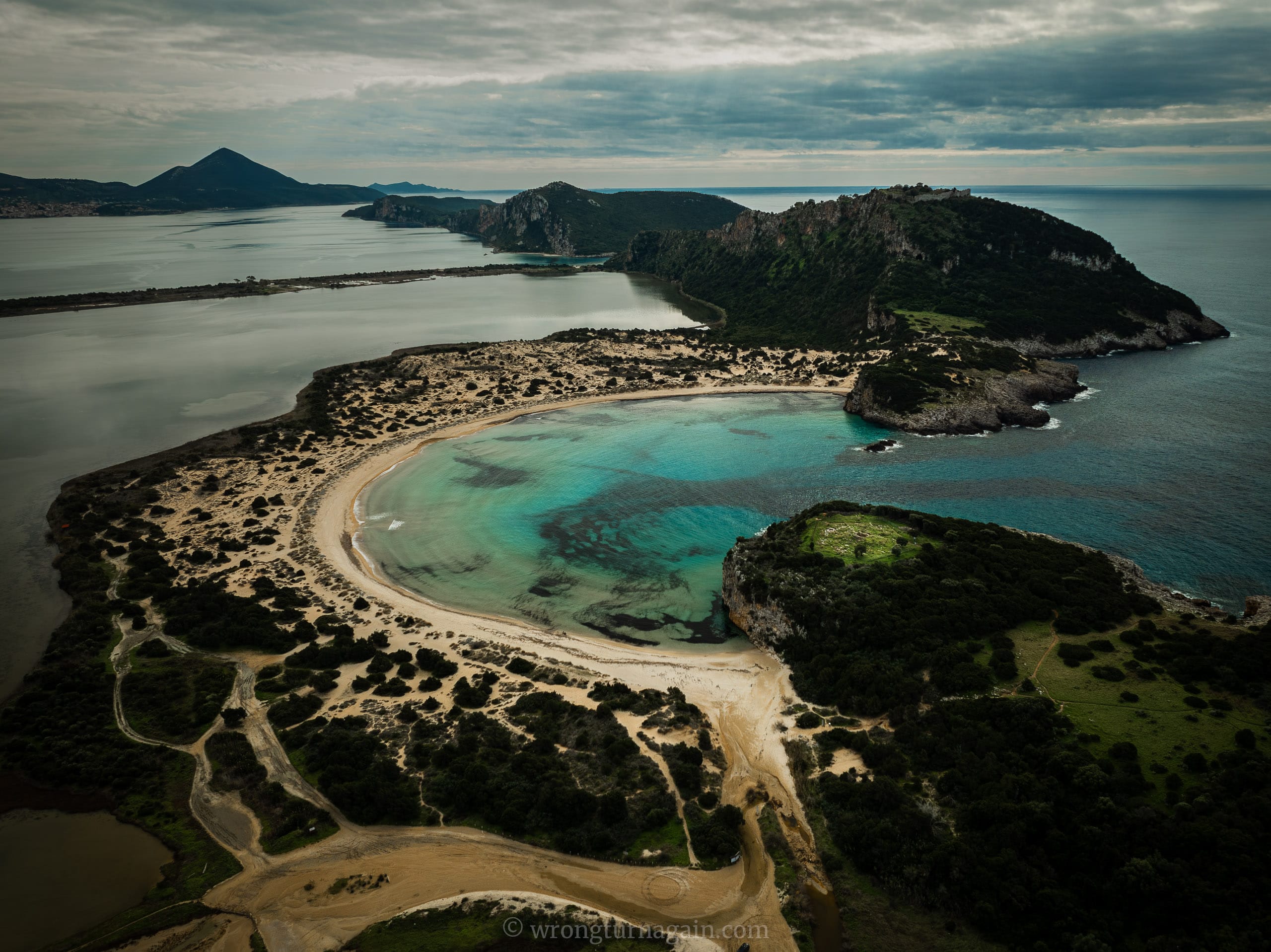
Welcome to the “Belly of the Ox.” It might sound like a strange name for a paradise, but once you see the coastline, everything makes sense. Located just minutes from Pylos, nature has carved this bay into a flawless Omega (Ω) shape, looking almost artificial—as if it were drawn by a giant compass. With its sheltered turquoise waters and rolling sand dunes, Voidokilia isn’t just the most photographed beach in the Peloponnese; it is a geological marvel that invites you to dive in.

This bay is also legendary. It is widely believed to be Homer’s “Sandy Pylos,” the very shore where Telemachus landed his black ships to seek news of his father, Odysseus, from the wise King Nestor.
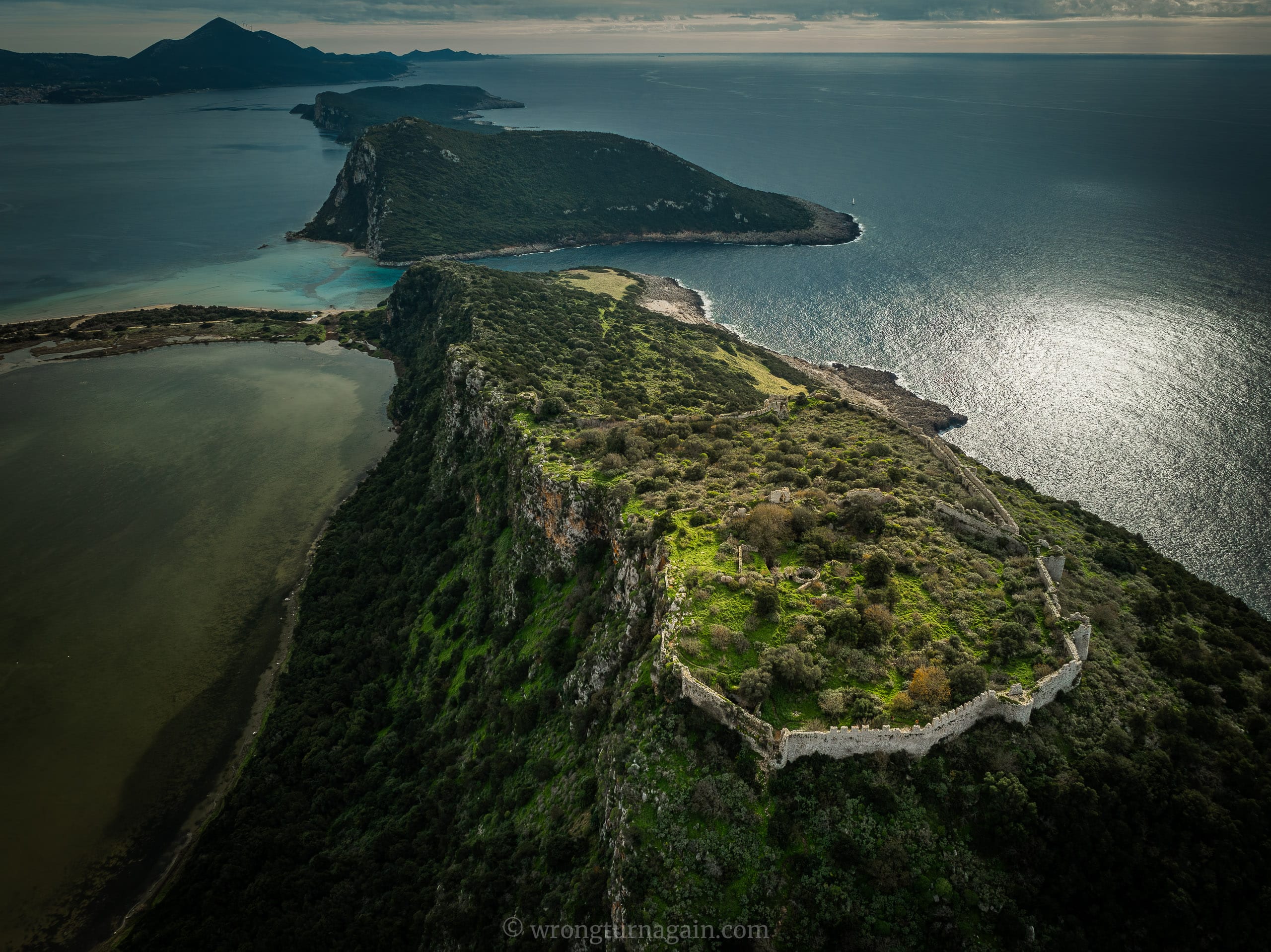
However, the famous Omega beach is just the tip of the iceberg. If you look closer, you will realize you are standing in the middle of a complex, aquatic sandwich. The heart of this ecosystem is the Gialova Lagoon (or Divari), a protected Natura 2000 wetland teeming with life. The geography here is fascinating: a single, fragile strip of dunes separates the lagoon from Voidokilia, while another thin line of sand divides it from the vast Navarino Bay and the rocky island of Sphacteria that guards the coast from the open sea.
And if that isn’t enough… Rising above this water-world, you will find the ruins of a Frankish castle, a Mycenaean royal tomb, and a mythical cave. So, don’t make the mistake of coming just for the swim or the Instagram-famous photo. Set aside at least 4 to 5 hours to explore this magical place where distinct worlds collide.
Here are 7 experiences that will turn your visit into your own personal odyssey.
1. Swim in the Mythical “Omega”
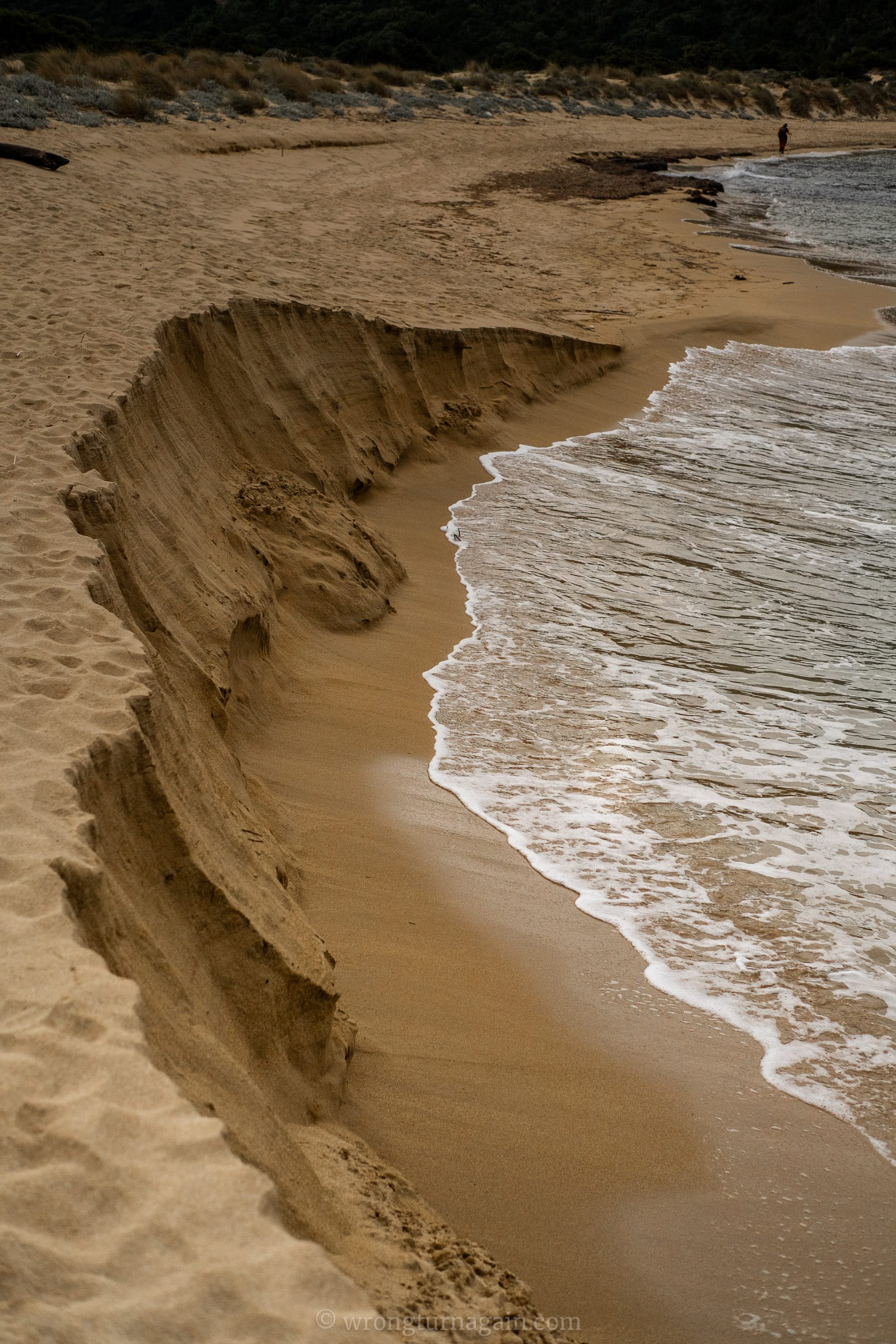
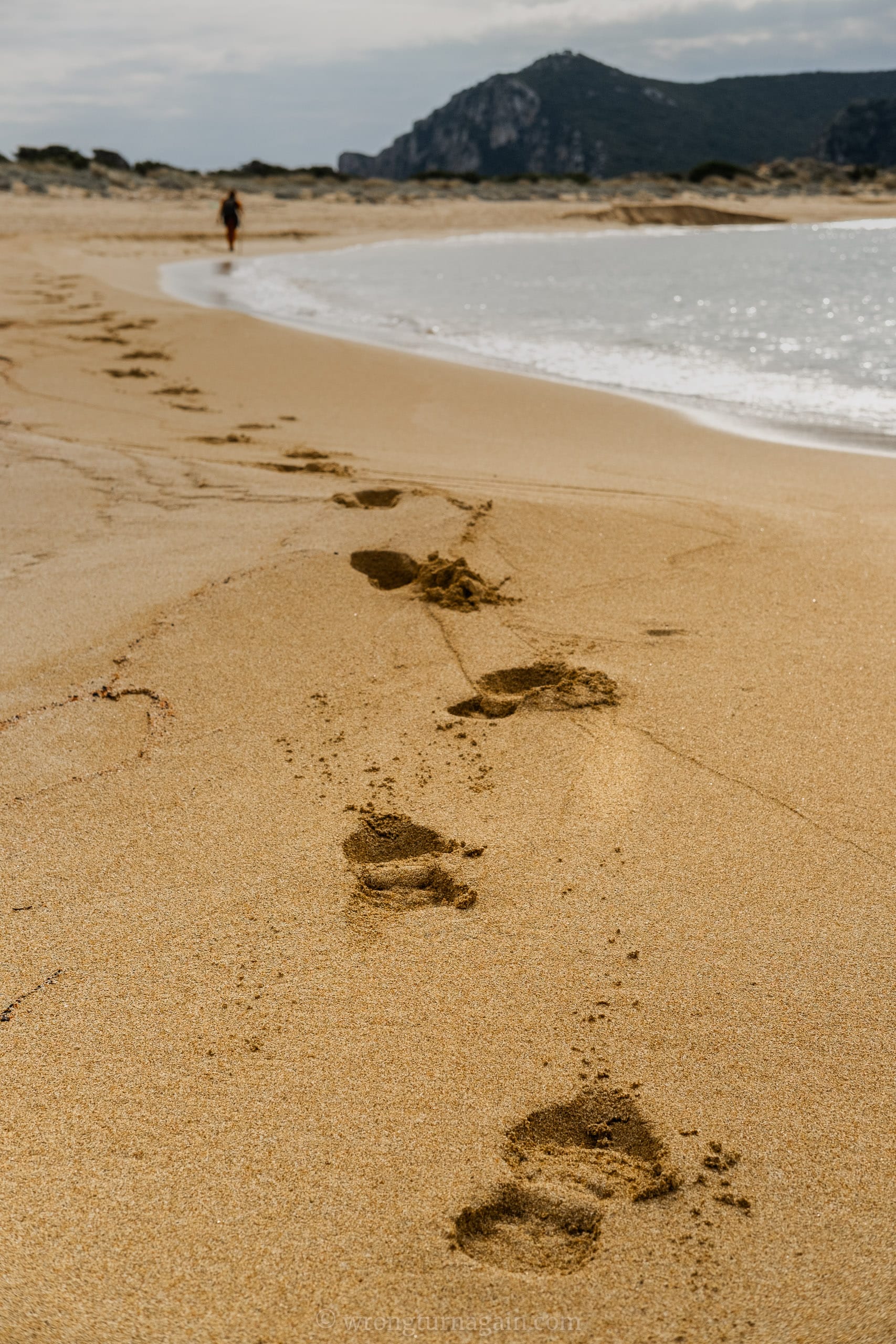
The first thing you must do is surrender to the rhythm of the bay. As you walk from the parking area through the low dunes, you are greeted by sand that is golden and fine as powder. The water here creates a stunning gradient, transitioning from a pale, almost transparent turquoise in the shallows to a deep, vibrant sapphire as you move towards the center.
This gentle depth—often staying at knee or waist height for a considerable distance—makes Voidokilia perhaps the most family-friendly beach in Messenia, offering a safe playground for small children.
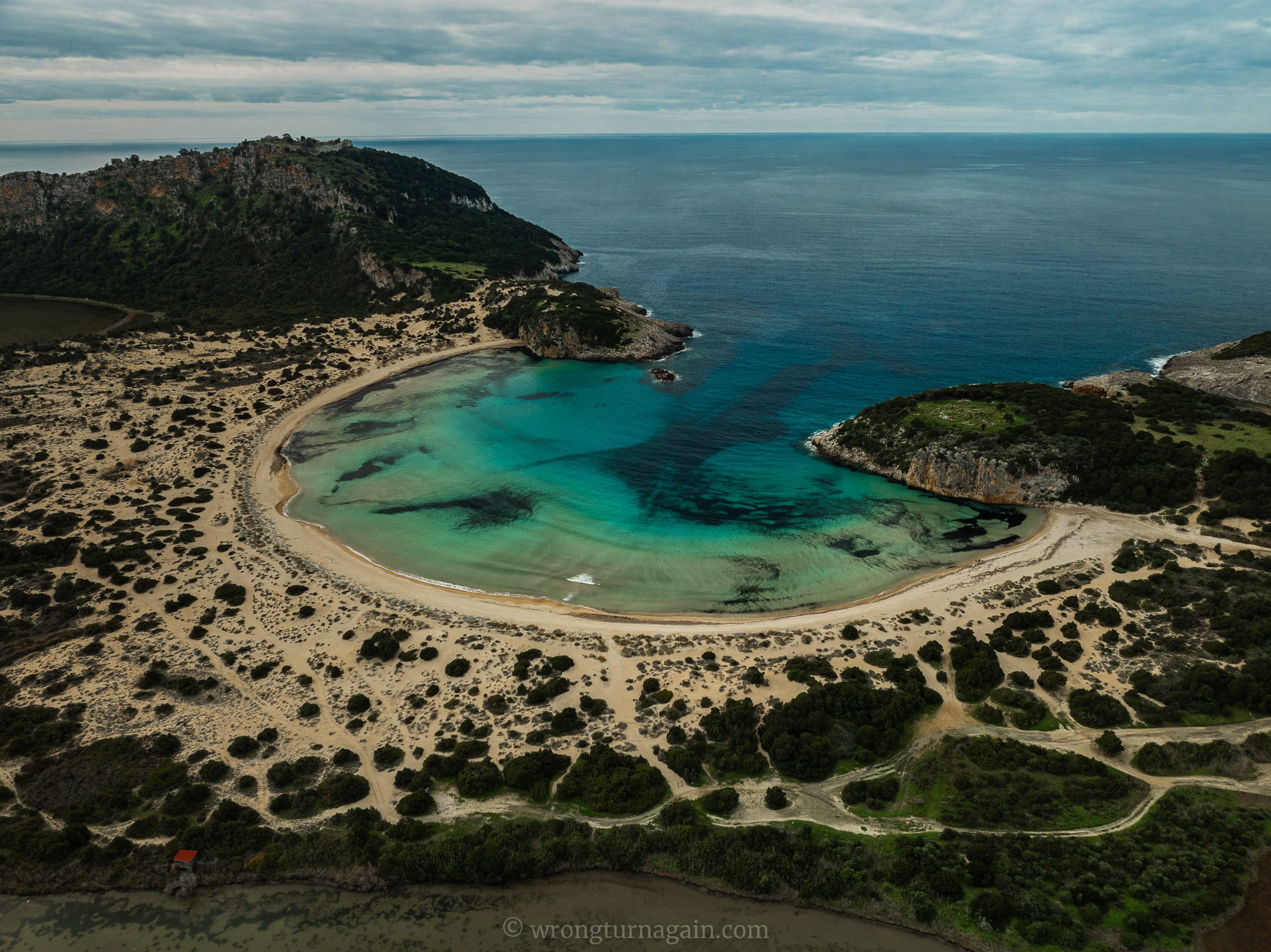
The Omega Shape
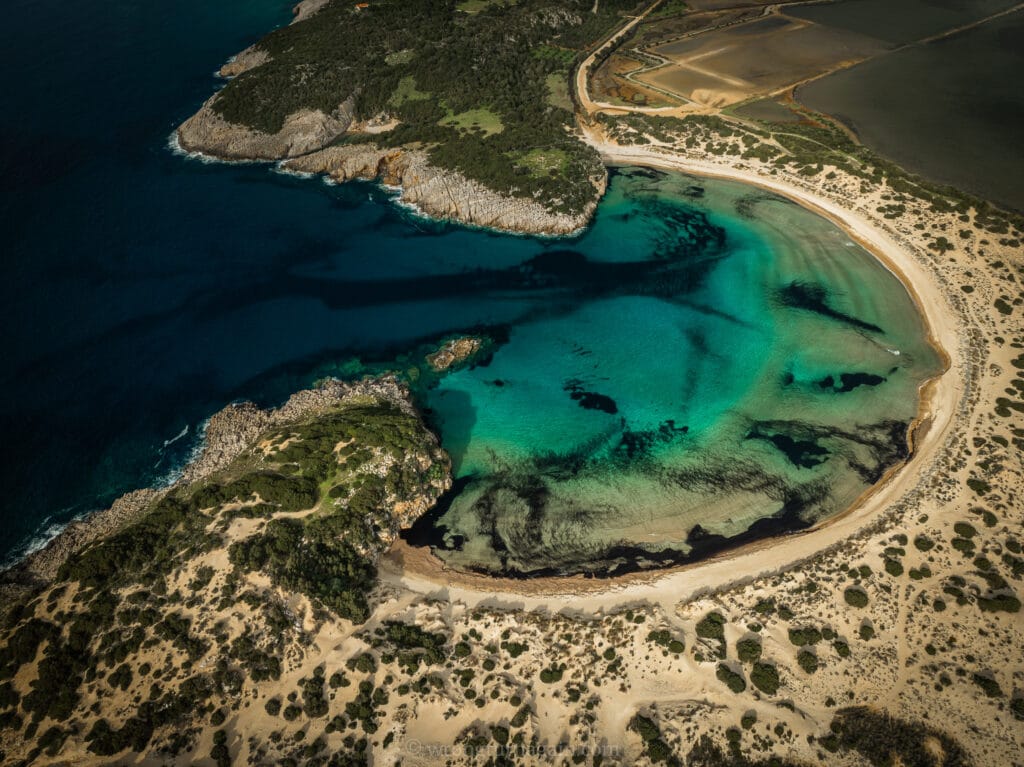
However, the true magic of this place lies in its geography. Voidokilia is world-famous for its perfect semicircular shape resembling the Greek letter Omega (Ω), a curve so precise it looks as if it were drawn with a compass.
The two large rocky headlands that frame the entrance act as a natural breakwater, shielding the bay from the open Ionian Sea. Consequently, even when the rest of the Messenian coastline is battered by waves, the waters inside the “Omega” usually remain as calm as a swimming pool.
While the bay is generally protected, it has a specific weakness. When strong West or North-West winds blow, the waves get trapped inside the curve of the “Omega.” The result is cloudy water filled with churned-up sand and seaweed. Always check the wind forecast before you drive there.
Survival Guide: The “Natura 2000” Rules
As a protected wildlife habitat, Voidokilia remains beautifully unorganized. You will not find beach bars, sunbeds, showers, or toilets here, so self-sufficiency is key.
First, ensure you stock up on plenty of water and snacks, as the nearest canteen is quite far from the actual beach entrance. Crucially, you must bring your own shade. The sun is relentless, and there is absolutely no natural cover on the sand, making a sturdy beach umbrella mandatory.
When choosing your spot, try to set up on the right side of the beach (as you face the sea). This area is generally better protected from the wind, ensuring your umbrella stays put and your day remains relaxing.
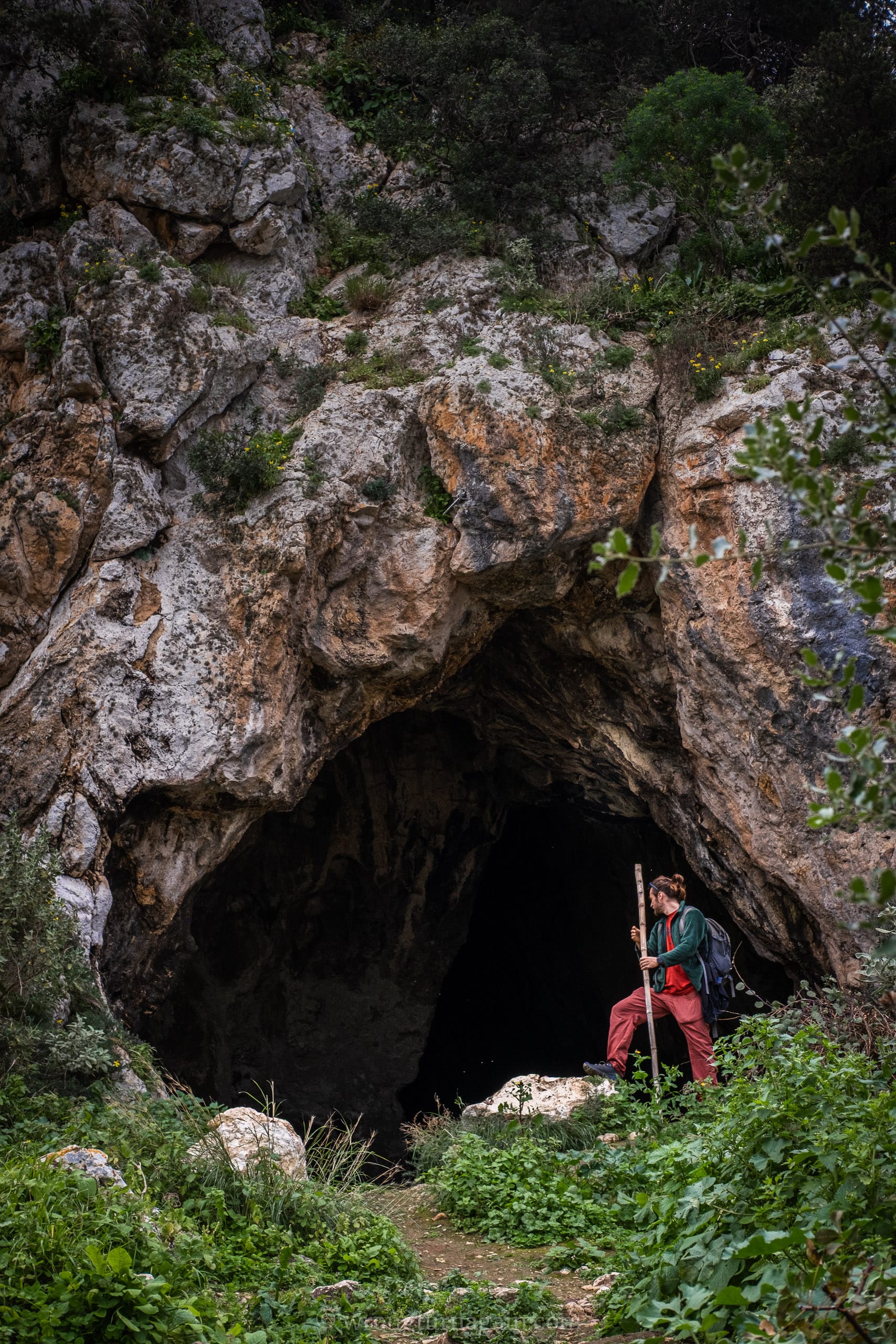
2. Hike to Nestor’s Cave (Spilia Nestora)
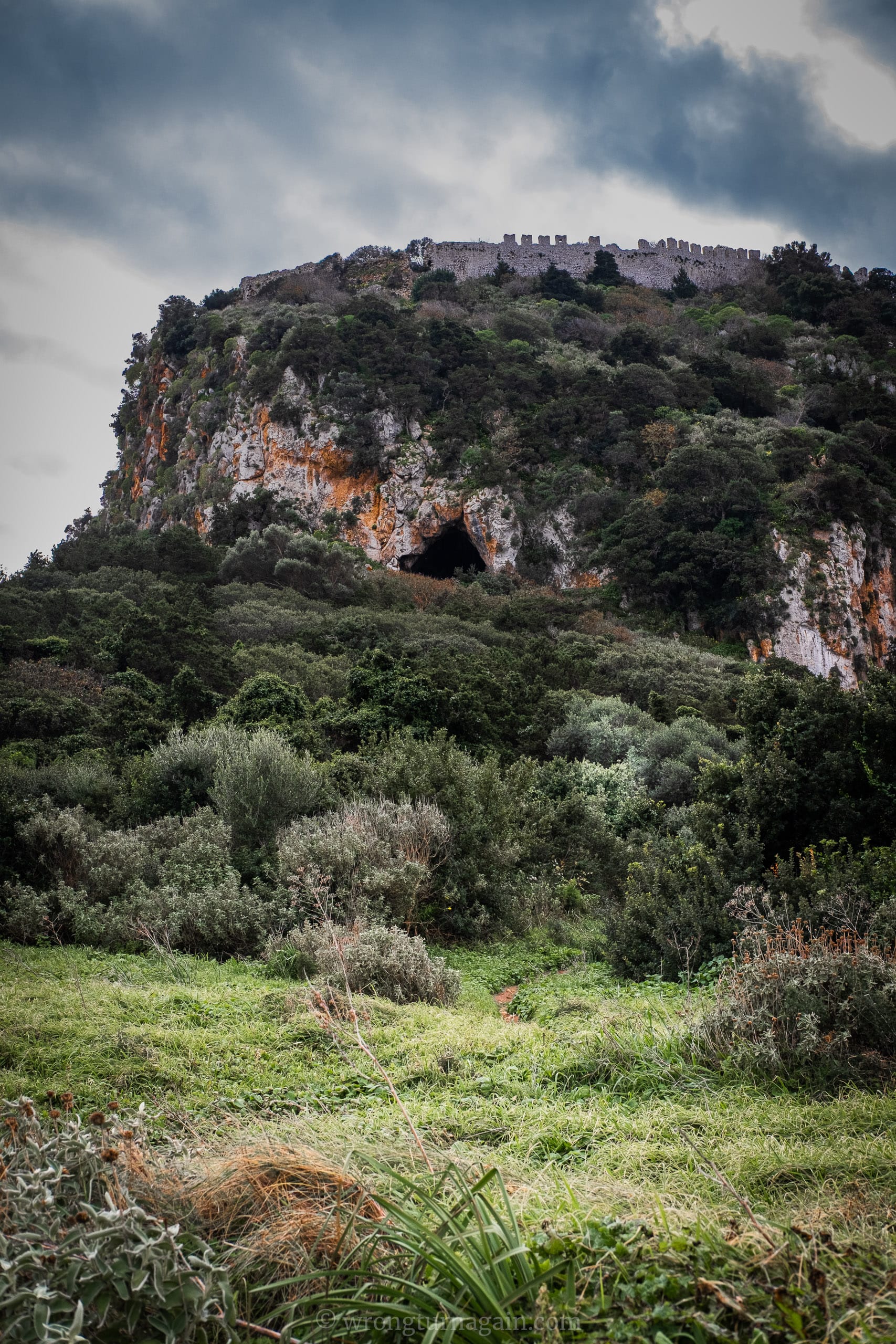
Once you’ve had your swim, look up towards the rocky hill on the left side of the bay (the northern side). That gaping hole in the cliff face is Nestor’s Cave. This isn’t just a geological formation; it is a legendary spot where, according to mythology, the god Hermes hid the cattle he stole from Apollo. It is also said to be the place where King Nestor kept his own oxen, hence the name.
The cave has been used since the Neolithic period (4000 BC). In 1874, the famous archaeologist Heinrich Schliemann visited the cave, believing it to be the royal stables mentioned by Homer. While no oxen remain, you might encounter the cave’s current residents: colonies of bats hanging from the ceiling!
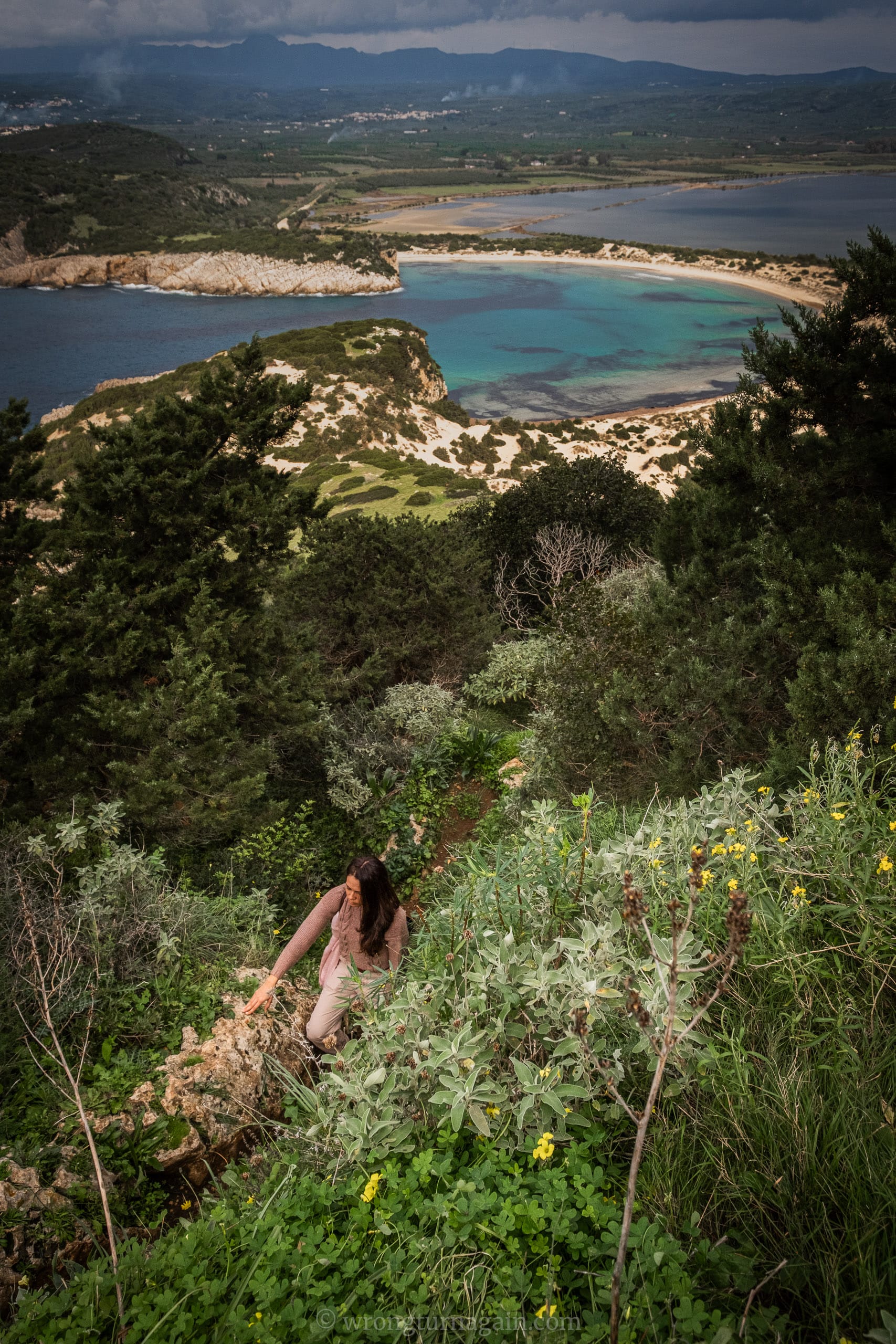

Hike Overview
The Ascent
To get there, follow the path that starts from the dunes on the far end of the beach. The trail begins with soft sand—which makes walking a bit tiring—but quickly turns into a steeper, rocky ascent. The hike is relatively short, taking about 10 minutes, but it requires some effort as the incline increases sharply near the top. Be warned, the rocks near the entrance have become polished and slippery from thousands of visitors, and the path has sharp stones.
When you reach the top, you will be greeted by the massive mouth of the cave. You may recognize this spot from popular photos where the jagged rocks naturally “frame” the Omega bay below. However, you will find signage prohibiting entry due to rock instability. We strongly advise you to respect these signsand remain at the entrance.
Don’t worry about missing the “perfect shot.” The real prize lies higher up: if you continue the trail toward Paleokastro, you will discover even more spectacular vantage points of the iconic coastline—without the safety risks.
3. Trek to Paleokastro (Old Navarino Castle)
If you are fit and wearing sneakers, do not stop at the cave. The path continues upward to the summit of the hill, leading you to the ruins of Paleokastro (Old Castle).
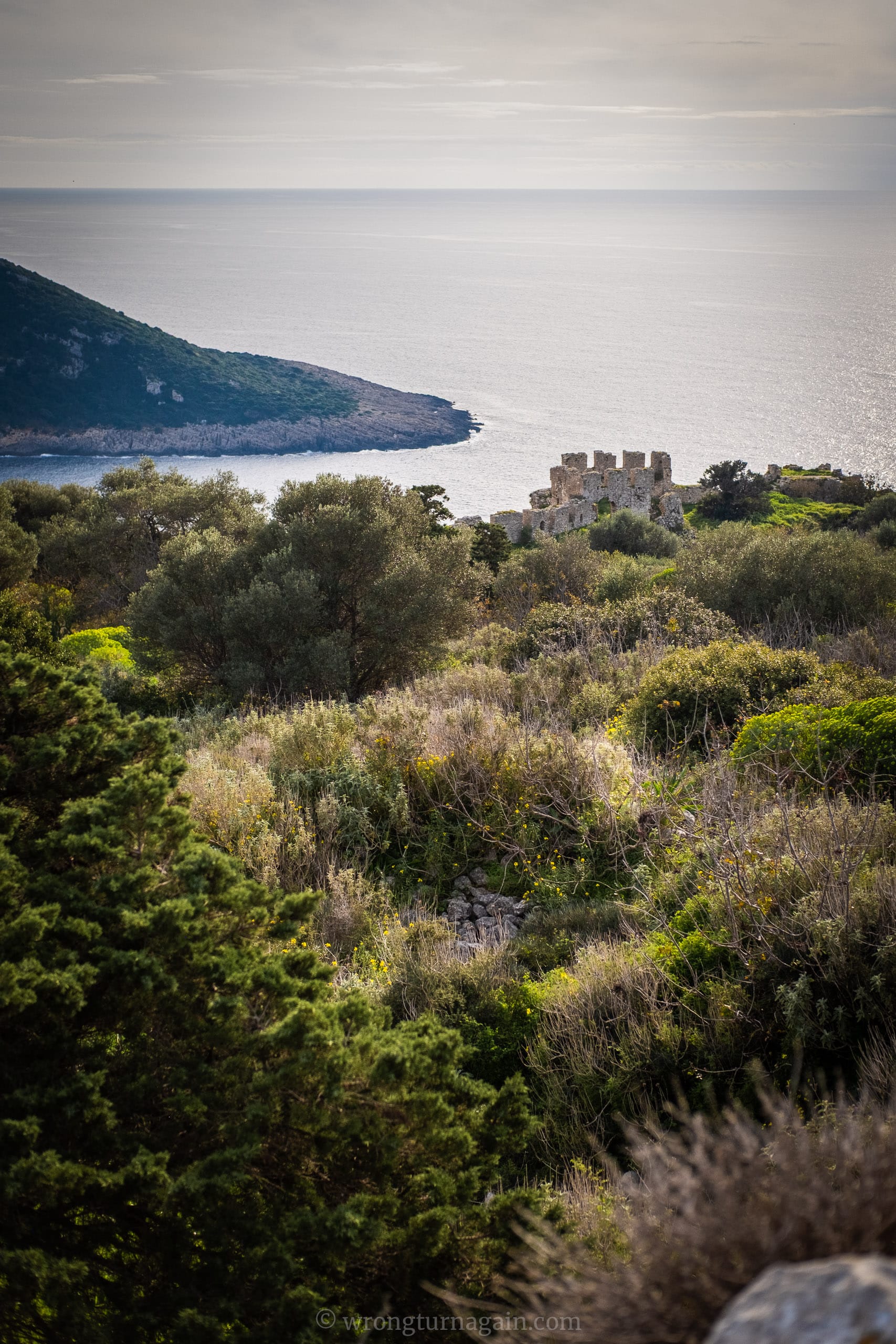
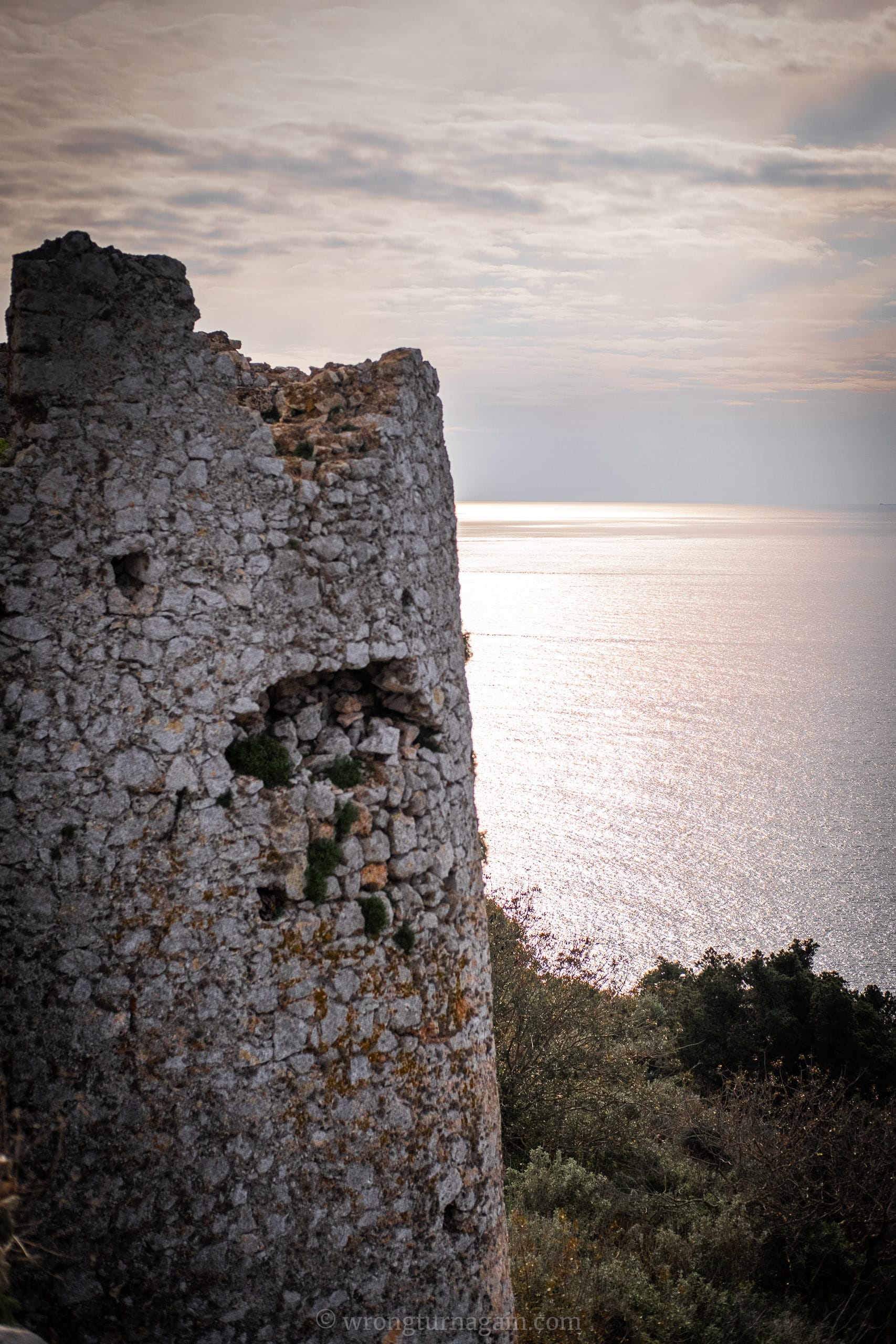
Built by the Franks in the 13th century on the site of the ancient acropolis of Pylos, this fortress feels completely different from the well-preserved castle you can see in Pylos town. Paleokastro is wild, unguarded, and overgrown with vegetation—a true explorer’s playground that feels abandoned in time.
Hike Overview
The Ascent
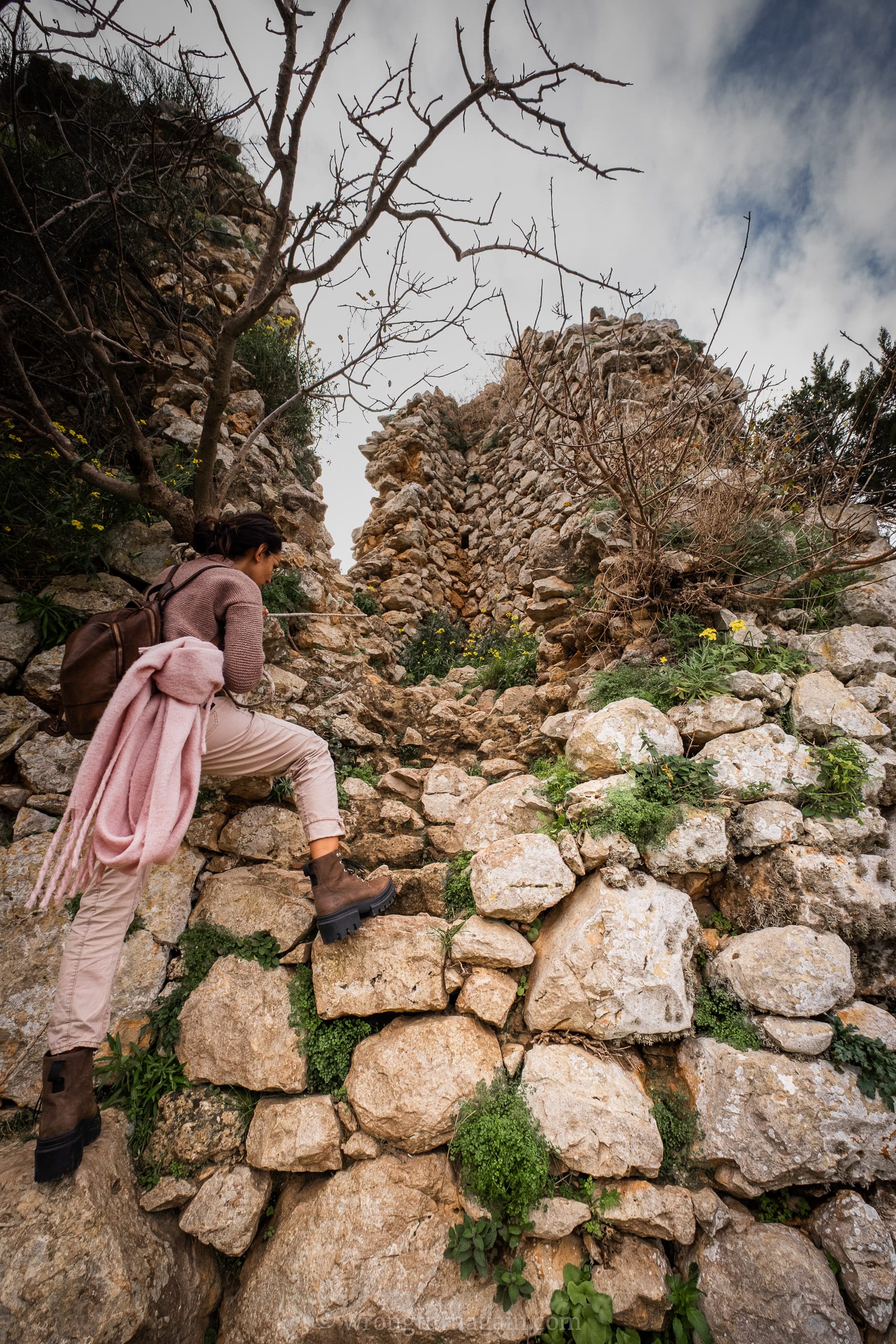
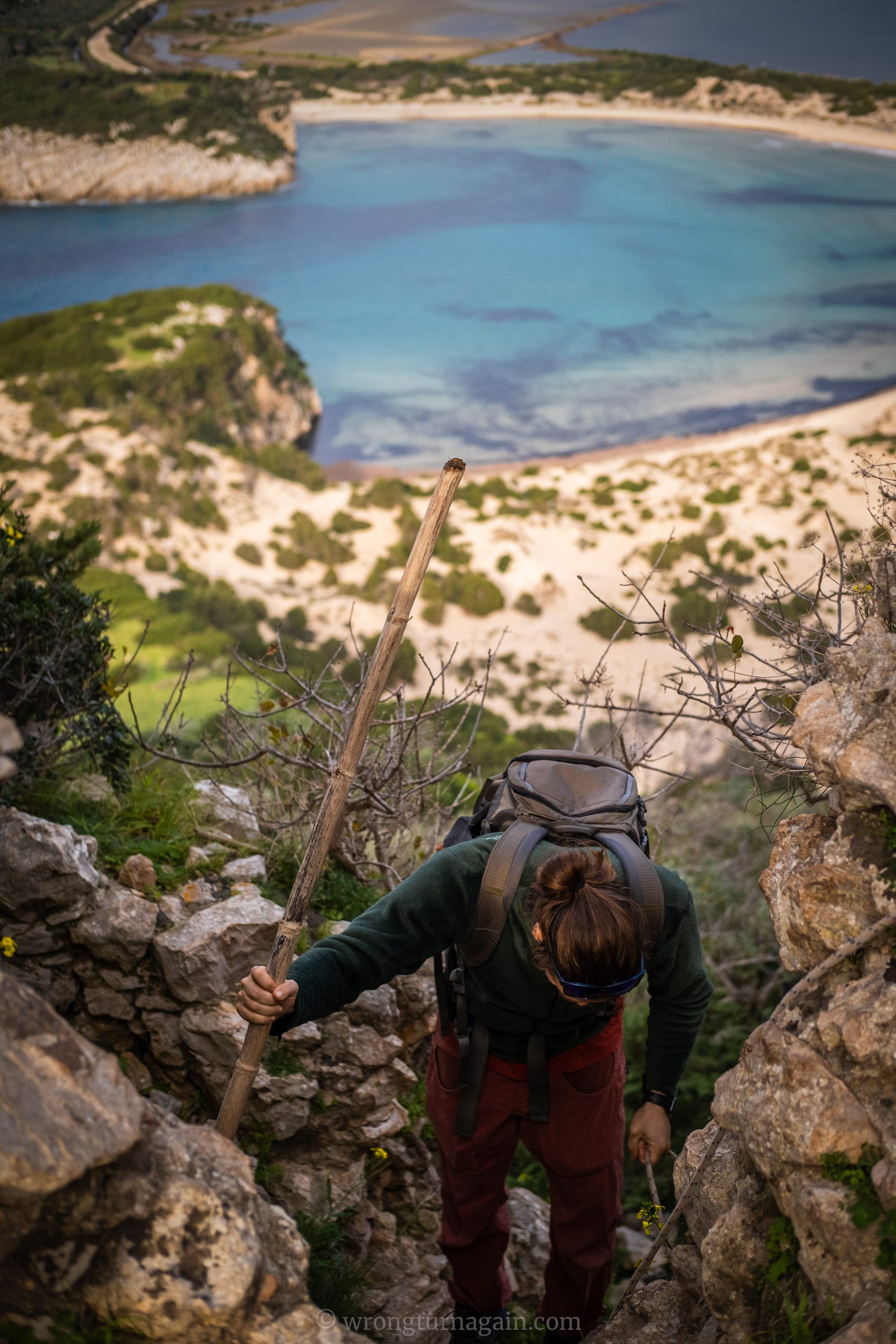
The trek from the cave to the castle takes about 15 minutes, but be prepared for a shift in terrain. The path becomes narrower and steeper here, often requiring you to scramble over ancient stones and roots to keep your balance. Since this is not an organized archaeological site, the beauty of the landscape comes with real risks that demand your attention:
- Steep Terrain & No Barriers: In the steepest sections of the ascent, you will often find ropes installed to help you pull yourself up. However, once you reach the castle walls, there are no guardrails, and the drop down the rocky cliff is steep and unprotected.
- Hidden Hazards: The tall grass often hides holes (such as old cisterns) or loose stones, so watch your step carefully.
- Wildlife: During summer, the rocky slopes are a natural habitat for the Mediterranean Viper. This shouldn’t stop you from visiting, but you must stick strictly to the beaten path and avoid walking through thick bushes or stepping on rocks where you can’t see what’s underneath.
- Insect Repellent: Being next to a lagoon means mosquitoes can be active, especially near sunset.
The “Money Shot”
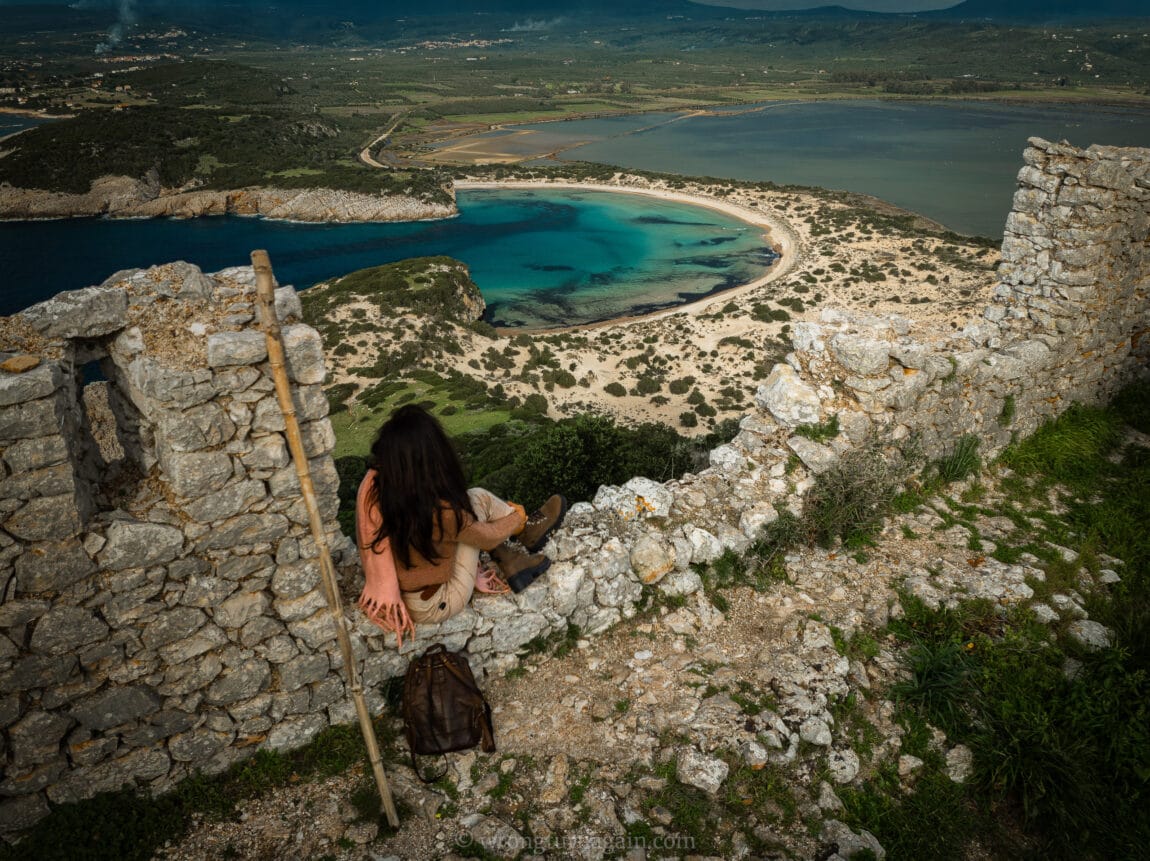
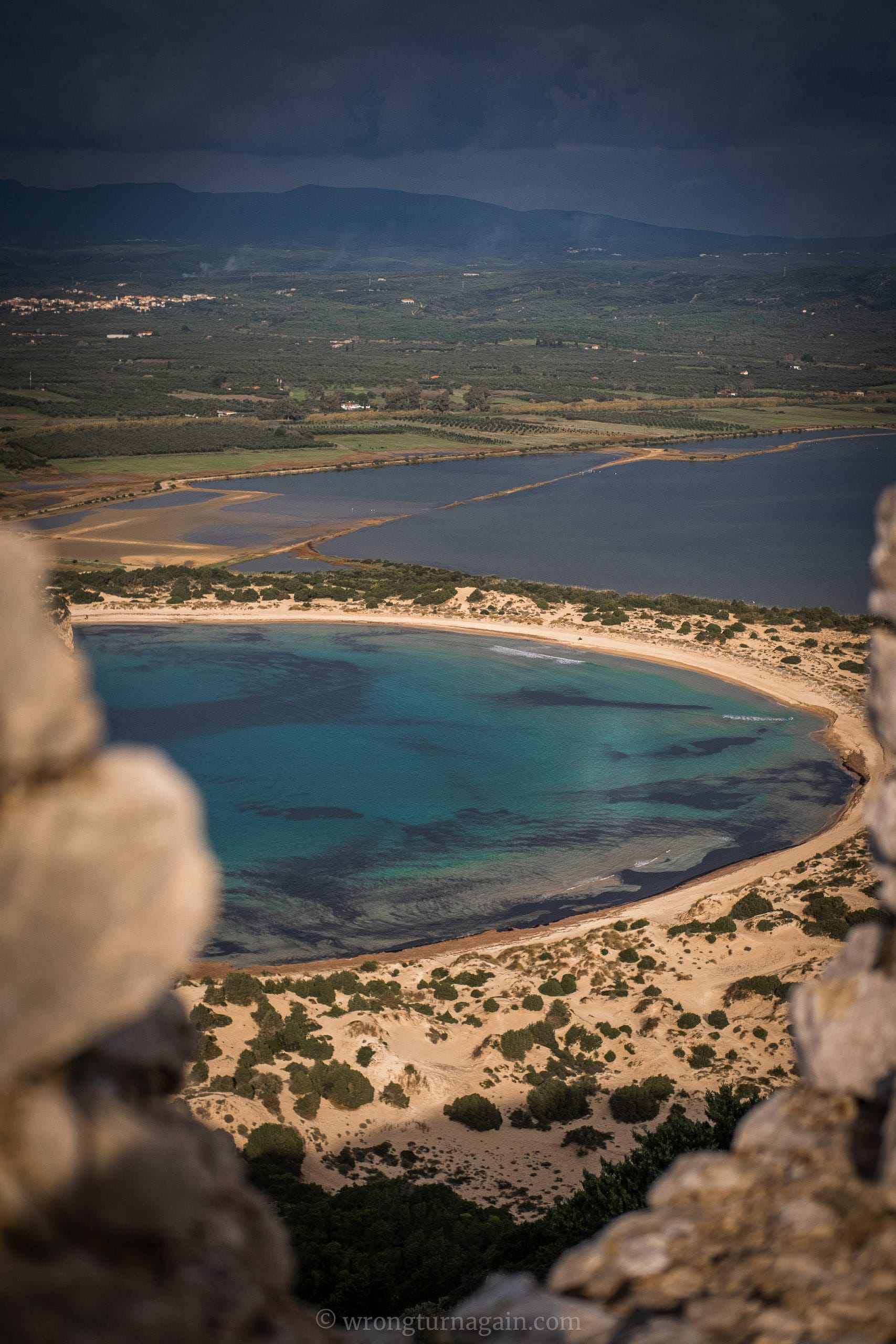
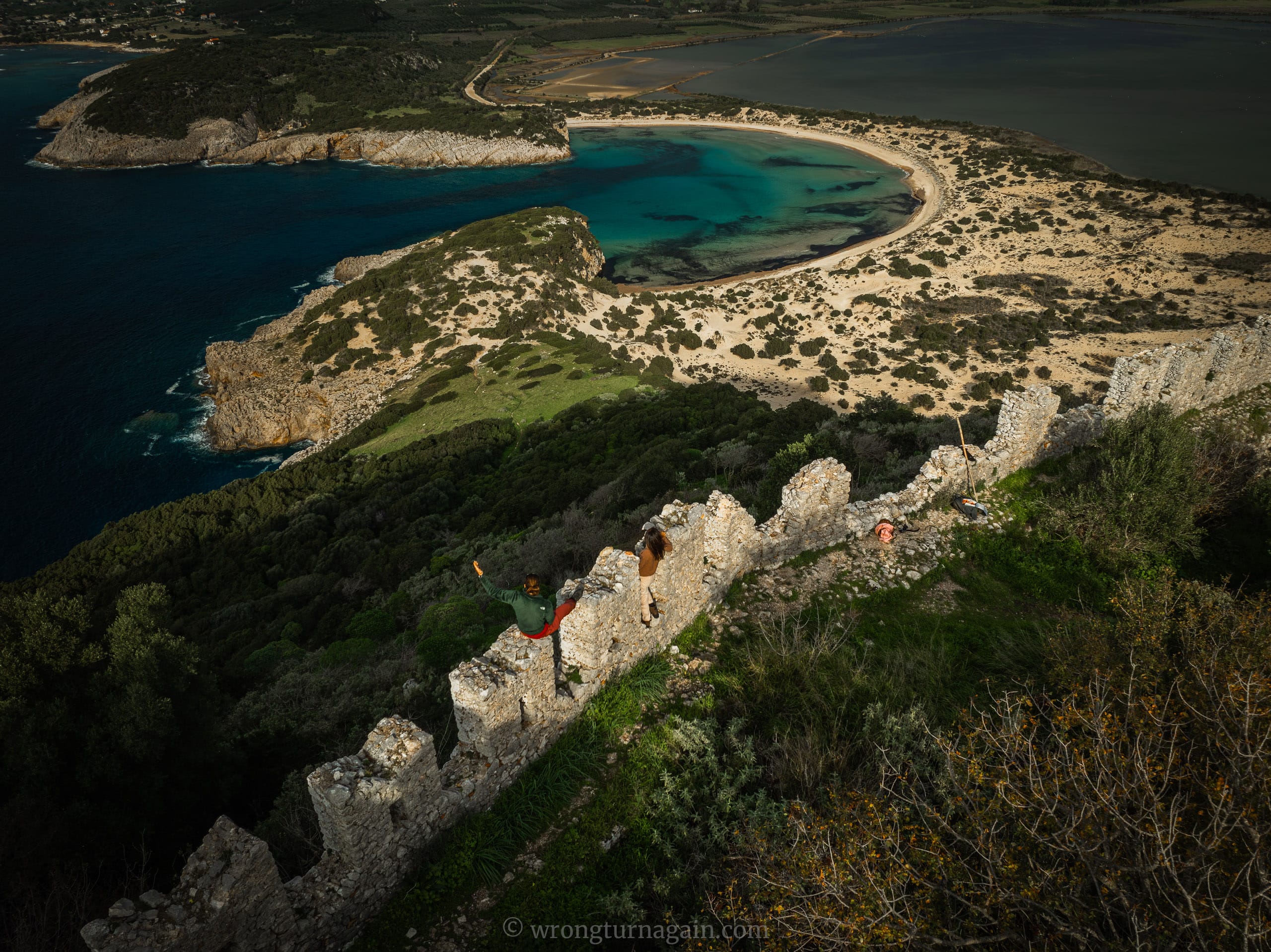
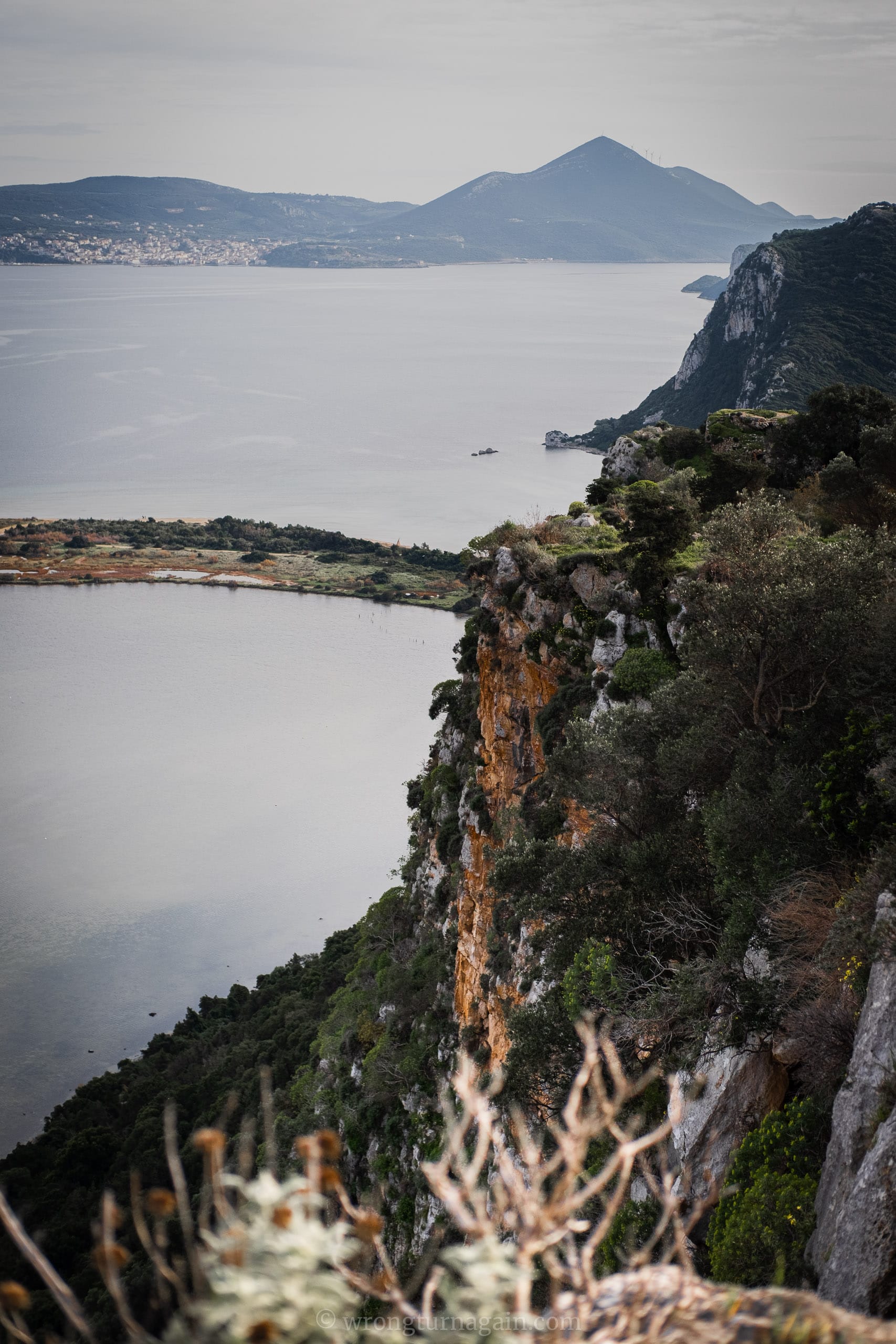
This is the main reason to make the climb. Walking along the crumbling southern walls, you will reach a vantage point that offers arguably the most spectacular panoramic view in the entire Peloponnese. From here, you can capture the famous “Instagram shot” that combines all the region’s landmarks in a single frame.
Looking North: You see the famous Omega (Ω) shape of Voidokilia Beach in its entirety. Looking South: You face the immense Bay of Navarino and the rocky island of Sphacteria that protects it. Looking East: The vast wetlands of the Gialova Lagoon stretch out.
4. Make it a Loop: Descent to Divari & The Lagoon
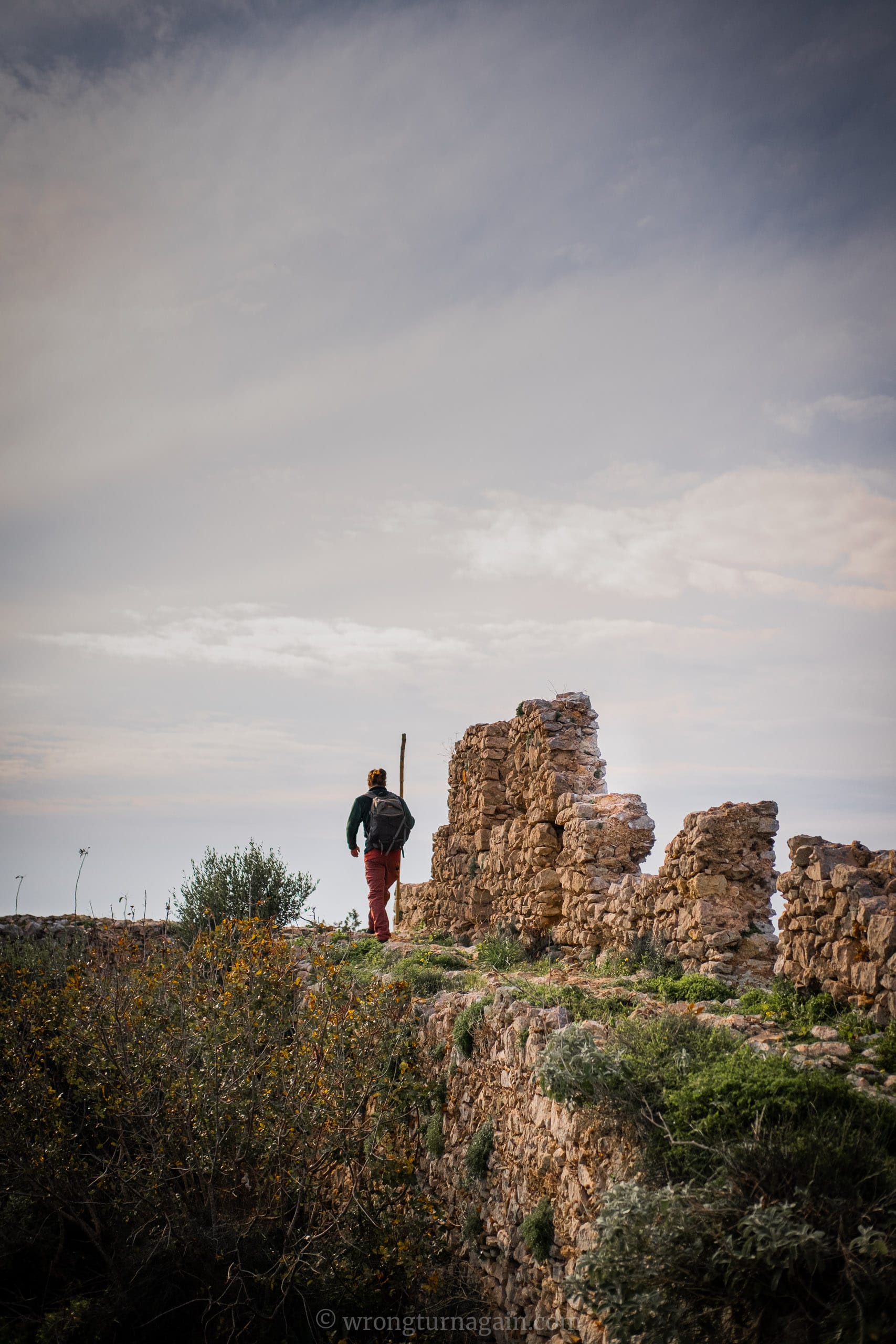
Instead of returning via the steep cave path, you have a brilliant alternative: make your hike circular. This route offers a gentler descent and takes you through a completely different landscape, leading you straight to the impressive “Sykia Pass” and the calm waters of the lagoon.
Hike Overview
The South Descent
From the south side of Paleokastro, a different trail begins. It is generally less vertical than the ascent via the cave, offering a steady decline that allows you to enjoy breathtaking close-ups of Sphacteria, the historic rocky island that essentially “locks” the Bay of Navarino, protecting it from the open sea.
Since this path is less traveled than the main cave route, it can be narrower due to vegetation. Be prepared for bushes (long pants are recommended) and the occasional spiderweb if you are the first hiker of the day.
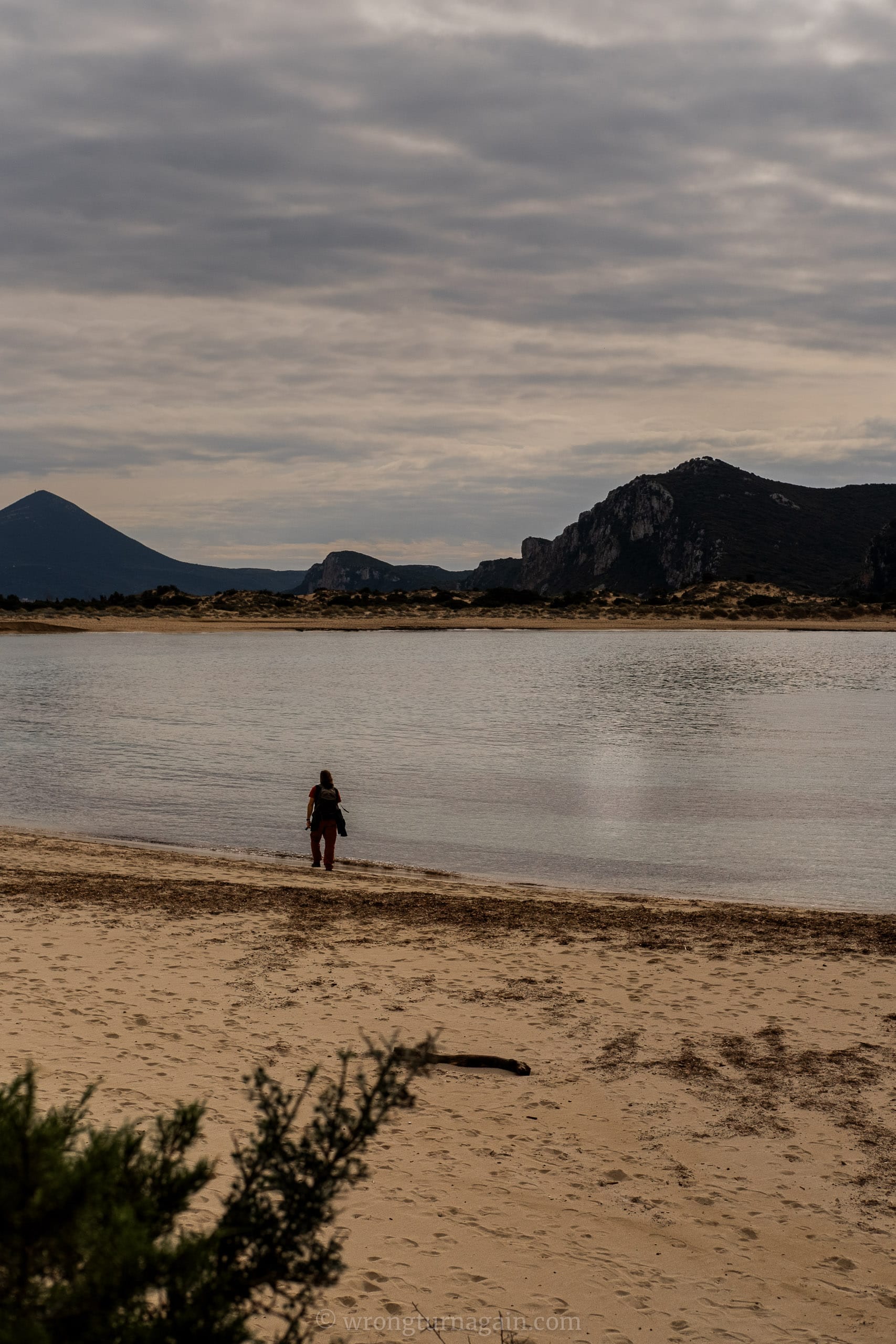
The descent ends at the “Sykia Pass”—the narrow, stunning channel of water that separates the mainland from Sphacteria. From there, you will begin your walk back towards the Voidokilia Beach. You are now walking on a narrow strip of land (the isthmus) that separates two distinct aquatic worlds. As you walk north:
- To your left stretches Divari Beach (also known as Golden Beach), facing the calm, blue waters of the Bay of Navarino.
- To your right lies the Gialova Lagoon (or Divari Lagoon), a protected brackish wetland and a key part of the Natura 2000 network.
This flat trail along Divari is widely considered one of the most magical spots in Messenia for a sunset walk. While the sun sets over the sea to your left, the colors reflect beautifully on the still, mirror-like waters of the lagoon to your right, creating a spectacle that rivals the famous sunsets of Santorini—but without the crowds.
Gialova Lagoon — A Biodiversity Hotspot
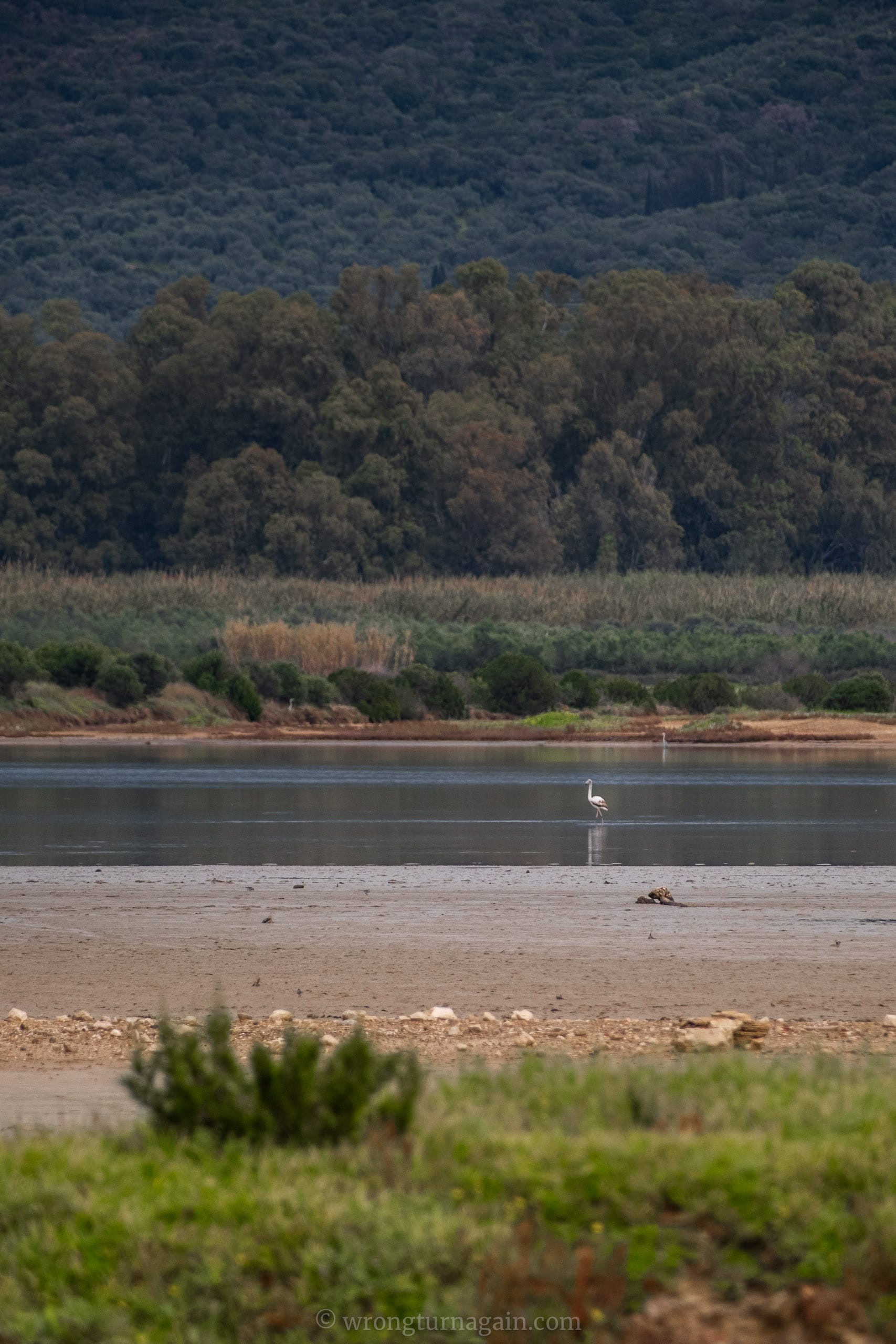
The walk back to Voidokilia Beach takes you along the edge of this fragile ecosystem. The lagoon is a birdwatcher’s paradise, serving as a vital stopover for migratory birds traveling between Africa and Europe. Keep your eyes peeled on the shallow waters; depending on the season, you might spot elegant herons, cormorants, or even flamingos.
The Gialova Lagoon is the only place in mainland Europe where the African Chameleon (Chamaeleo africanus) survives and reproduces. Unlike the common chameleon, this species is larger and famously shy. They blend perfectly into the bushes along the dunes, so if you walk quietly, you might be lucky enough to spot one hiding in the shrubs.
5. Discover the “Secret” Glossa Beach
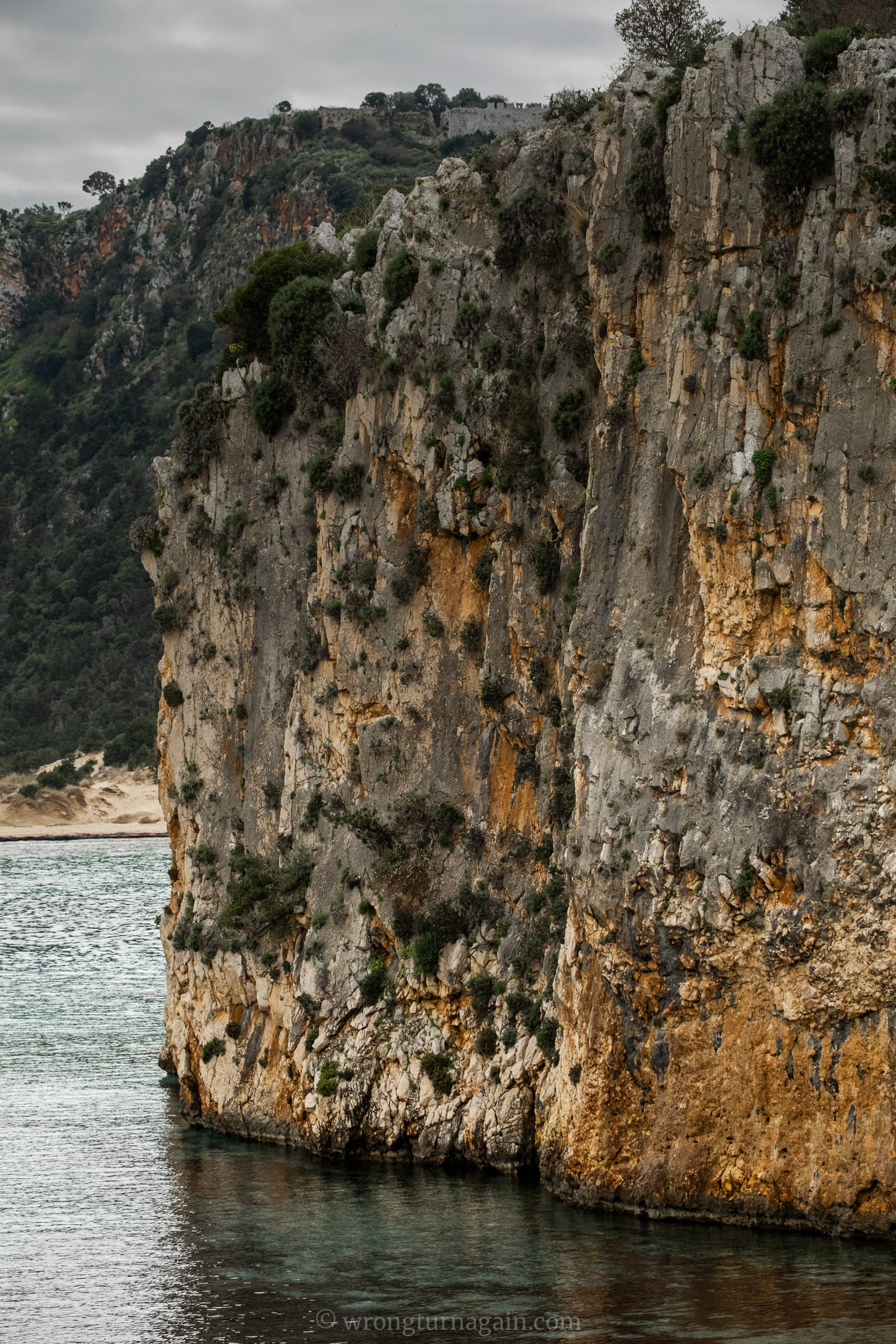
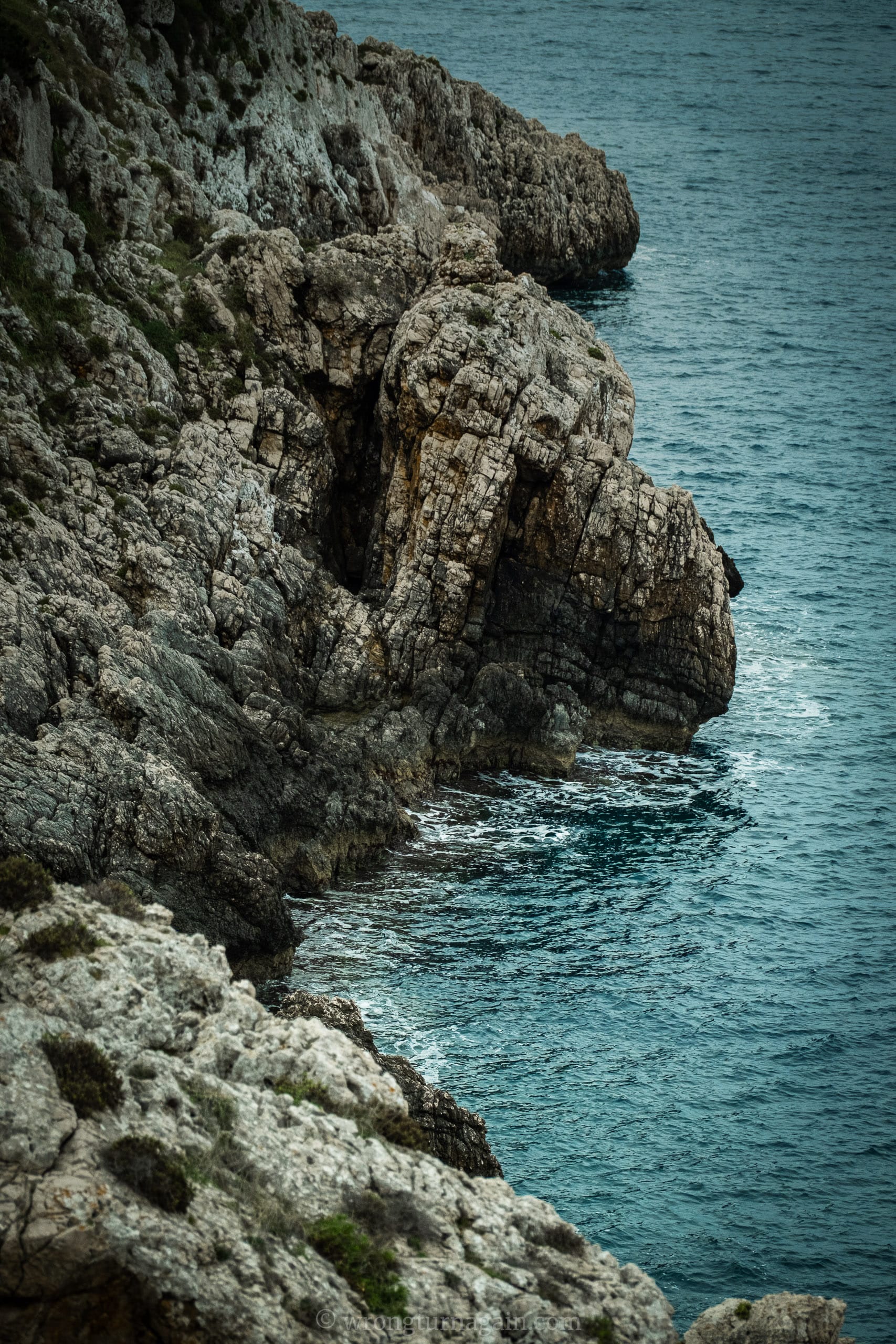
If Voidokilia feels too crowded or “tame” for your taste, there is a hidden alternative just a few minutes away. Glossa is a tiny, secluded cove with a wild mix of sand and fine pebbles tucked behind the northern hills of the main bay. Framed by towering vertical cliffs and dense vegetation, it offers a stark, rugged contrast to the perfect circle of Voidokilia.
Glossa, in Greek, means “Tongue”. The beach is named so after its unique shape: a narrow strip of crystal-clear sea penetrating the land, creating a secluded inlet that feels like a private escape.
How to Get to Glossa (The Hidden Path)
To find this secret spot, head to the northern end of the parking area, toward the rocky hills. Look for a small path leading into the bushes; after a short uphill walk, you will reach a fork in the trail.
The path to the left leads toward an ancient archaeological site (the Tomb of Thrasymedes), while the path to the rightdescends steeply toward the water. Follow the right-hand trail, and within a 5-to-7-minute scramble, you will emerge at the shore of Glossa.
On the right side of the beach, you might notice visitors rubbing mud onto their skin. The surrounding cliffs contain natural argil (clay), which is famous for its therapeutic properties. Feel free to join in for a DIY spa treatment by the sea!
Know Before You Go
While Glossa is breathtakingly beautiful, its wild nature means you should come prepared for a few specific conditions:
- Watch Your Step: The descent to the beach is steep and the rocks can be sharp. Avoid flip-flops for this part of your trip; sneakers will make the climb down much safer.
- Zero Facilities: There is absolutely nothing here—no water, no shade, and no canteens. You must bring everything you need with you.
- Clothing-Optional: Because of its extreme seclusion, Glossa has been a favorite sanctuary for nudists for decades. Expect a very liberated and quiet atmosphere.
6. The Vaulted Tomb of Thrasymedes
Located just a few steps from the path to Glossa, stands a monument often overlooked by beachgoers. This is a Tholos (Vaulted) Tomb, a grand burial structure reserved for royalty during the Mycenaean era (c. 1500 BC).
While it lacks the polished look of a museum—the dome collapsed centuries ago, and the site is now a rugged ruin protected by a simple fence—you can still clearly distinguish the massive circular foundation stones that once supported the roof.
The real magic happens when you look up from the ruins. From this spot, you have a direct line of sight across the bay to Nestor’s Cave on the opposite hill. It is the perfect spot to visualize how this landscape looked 3,500 years ago, when this bay was the bustling port of the Kingdom of Pylos.
The Hero: A Survivor of the Trojan Horse
But to whom did this grand structure belong? According to the ancient traveler Pausanias, this is the final resting place of Thrasymedes, the son of King Nestor. This wasn’t just any royal heir;
Thrasymedes was a warrior who fought at Troy and was one of the select few to hide inside the Trojan Horse. Unlike many who perished, he returned safely to these shores to rule alongside his father. Standing here, among these stones, you are visiting the grave of a genuine Iliad hero.
When archaeologists excavated the site in the 1950s, they confirmed its royal importance. Although grave robbers had visited the tomb centuries ago, researchers still found gold jewelry , amethyst and carnelian necklaces, and stone arrowheads. Yet the most fascinating find was not gold, but the complete, intact skeleton of an ox. Found within the tomb, it is believed to have been a rare sacrificial offering intended to honor the hero’s journey to the afterlife.

To find it, simply follow the uphill path from the parking area. When you reach the fork in the bushes, take the left trail (the opposite direction of Glossa beach). It is a short 2-minute walk.
7. Paragliding: The Ultimate Bird’s-Eye View
If the hike to the castle didn’t satisfy your thirst for adrenaline—or if you simply want the view without the sweat—there is one final way to experience Voidokilia: from the sky.
The hills surrounding the bay, specifically the peak of Prophet Elias rising above Glossa beach, serve as a prime launchpad for paragliding. Floating silently above the coast, you will see the perfect geometry of the “Omega” curve, the deep blue Ionian Sea, and the Gialova Lagoon all in one glance—a view usually reserved for drones.
How to Do It (Tandem Flights)
You don’t need to be a pilot to do this. Local adventure clubs (mostly based in nearby Kalamata) offer tandem flights, where you are strapped to an experienced instructor who handles all the controls. All you have to do is run a few steps for takeoff and then sit back and enjoy the ride.
Booking in advance is essential, but keep your schedule flexible. This activity is strictly weather-dependent; even confirmed bookings can be rescheduled if the wind direction isn’t perfect.
How to Get to Voidokilia Beach
Voidokilia is located in the region of Messenia, in the southwestern Peloponnese. The golden rule here is simple: the best (and practically only) way to explore this area fully is by car. While public transport can get you to the nearby villages, it stops short of the coast, meaning it cannot get you directly to the beach.
By Car
The recommended route is via the highway. Routes avoiding tolls exist (Old National Road), but they are winding, single-lane roads with heavy truck traffic that add 2+ hours to the trip.
Tolls: Approximately €15.00 one-way for passenger cars (lower for motorcycles, higher for vans). Payments accepted via cash, contactless card, or any Greek e-pass.
Follow the EO Pylou-Kalamatas road west towards Pylos. It is a scenic route through olive groves, but keep in mind it is a winding single-lane road without a divider.
Drive north towards Gialova village. Once there, follow the signs leading to the dunes and the parking area.
There is no official paved parking lot with lines. Parking consists of the dirt tracks behind the dunes (Google Maps Location), so it is free of charge.
Note: Be prepared for your car to get very dusty. In July and August (especially weekends), the area gets chaotic; try to arrive before 10:00 AM or after 5:00 PM to secure a spot.
By Bus
You can take a KTEL bus from Athens or Kalamata to Pylos or Gialova, but this is as far as you can get with public transport. There is no bus connecting Gialova to Voidokilia Beach.
- Taxi: You must arrange a pickup time for your return in advance, as no taxis wait at the beach.
- Walk: A flat, scenic route along the lagoon (approx. 45-50 min under the sun).
- E-Bike: Rent from Bike the Way (~€30-40/day).

Where to Eat near Voidokilia Beach
Before you head out, remember the Golden Rule: Voidokilia is a protected nature reserve, so there are no beach bars or cantinas on the sand. If you run out of water, you have to drive to get it.
For a proper meal or coffee nearby, your best bets are the boho-chic village of Petrochori (just north) or the bustling seaside promenade of Gialova (south), which offers a huge variety of dining options.
Lunch & Dinner
Coffee & Drink
Where to Stay near Voidokilia Beach
Since Voidokilia Beach is a protected Natura 2000 site, construction is strictly prohibited directly on the beach. You will need to base yourself in the nearby settlements. Here is a quick breakdown of the best areas to help you decide.
- Best for Convenience Gialova: The closest option to the lagoon. It is perfect if you want to walk to dinner along the promenade and drive just 10 minutes to Voidokilia.
- Best for Views & History Pylos Town: A historic town built amphitheatrically around a large harbor. Stay here for the “island vibe,” museums, and stunning views over Navarino Bay.
- Best for Luxury Costa Navarino: Located just north of the beach, this area hosts world-class resorts with golf courses and private infinity pools. The ultimate splurge.

Our Top Voidokilia Picks
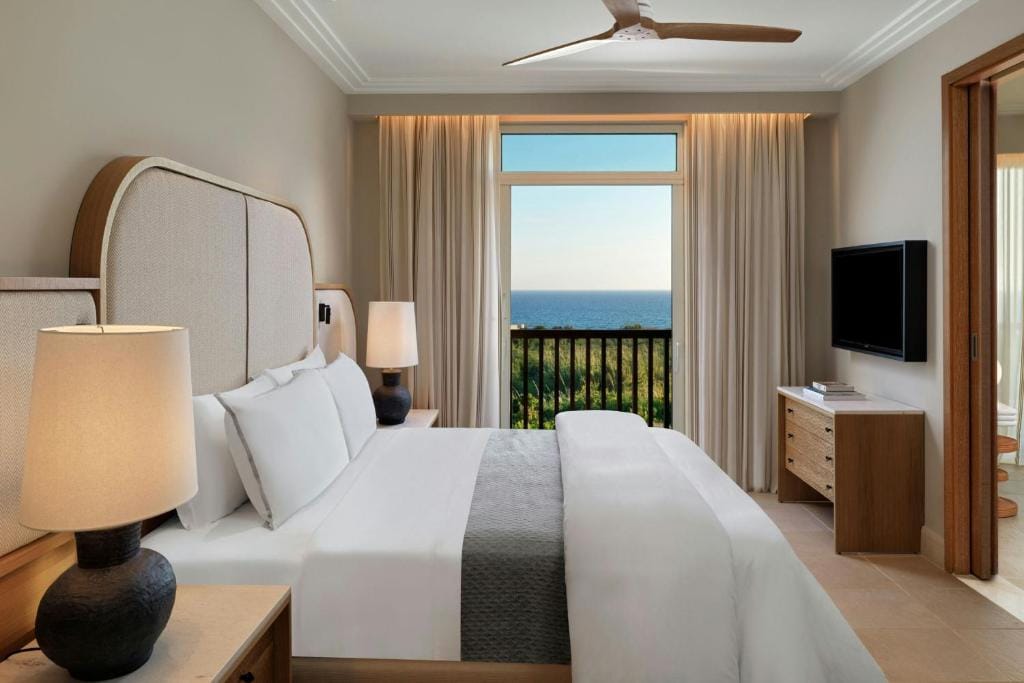 THE WESTIN RESORT
The definition of luxury. Features golf courses, multiple pools, and world-class service right next to the dunes.
 MYLOS APARTMENTS
Located in a quiet spot just a short walk from the promenade. Modern apartments perfect for relaxing after the beach.
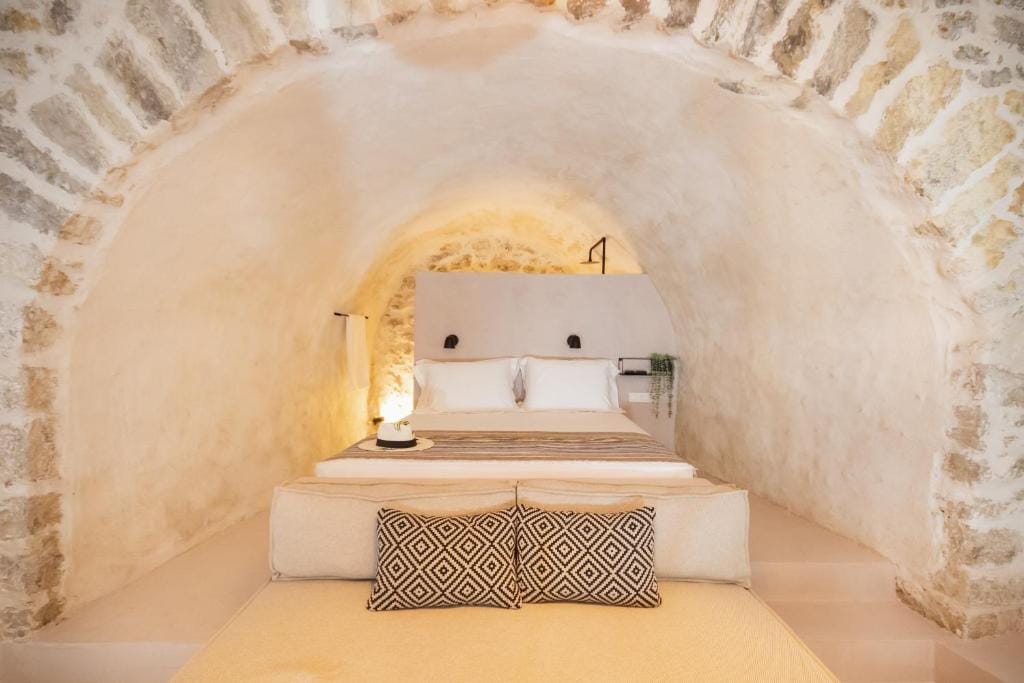 PYLI APARTMENTS
A great value choice near Pylos. Spacious rooms offering a perfect base for exploring the wider region.
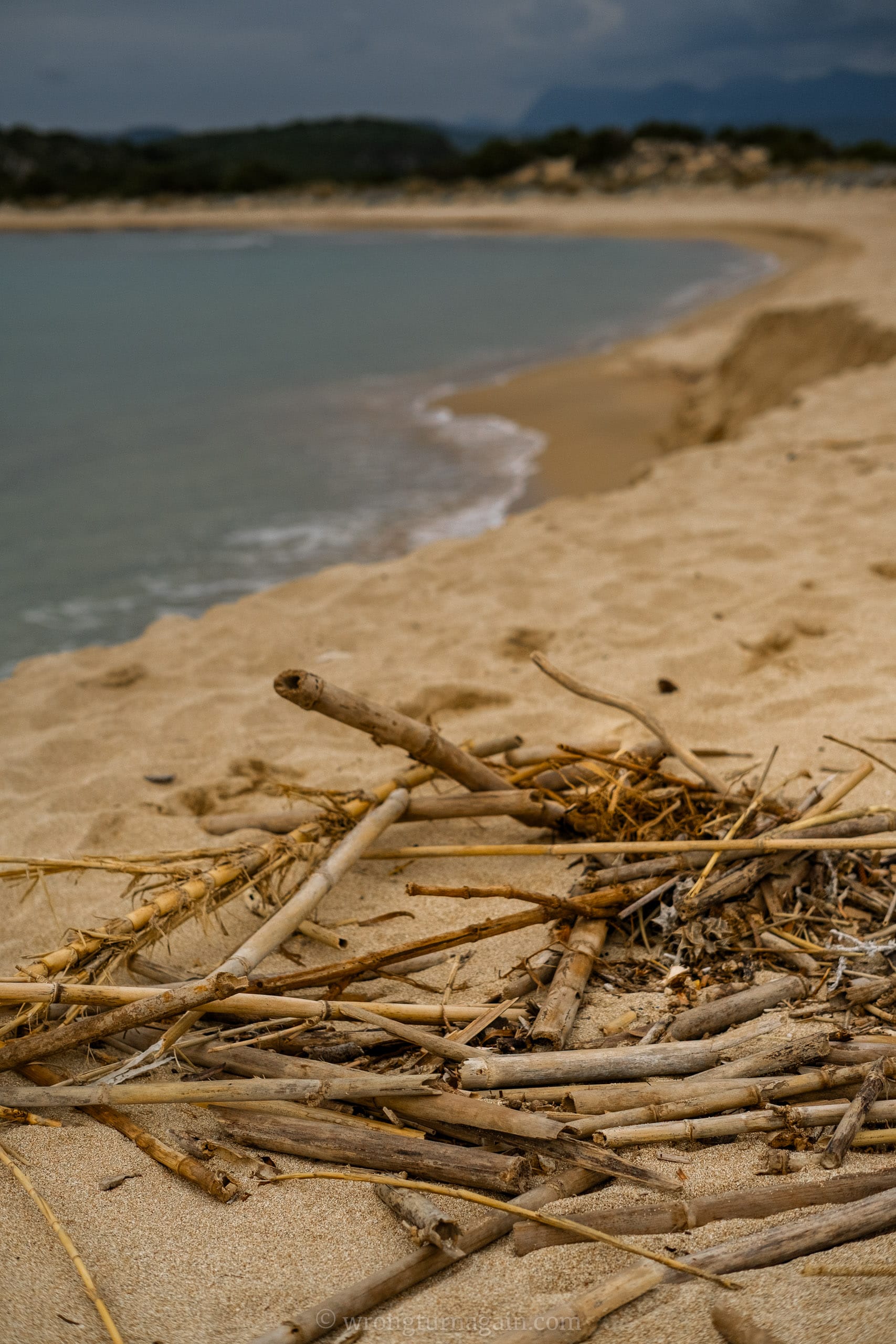
When to Visit Voidokilia Beach
The best time to visit depends entirely on your priorities.
- For Swimming: The sweet spot is the shoulder season (late May to June and September to early October). During these months, the water is warm enough for swimming, but the air temperature is pleasant enough for hiking to the castle without melting.
- For Hiking & Scenery: Don’t overlook the cooler months (November to March). The landscape turns lush green, the light is dramatic for photography, and the lagoon fills with migratory birds (flamingos). It is pure magic, minus the crowds.
While the sea is perfect in July and August, the heat can be brutal. Remember, Voidokilia has zero shade. If you visit in peak summer, you must arrive by 8:30 AM or after 6:00 PM to avoid the risk of heatstroke and the overwhelming crowds.
Voidokilia Beach Budget Breakdown
Is a trip to Voidokilia Beach expensive? The short answer is: it depends. The good news is that the main attractions—the beach, the castle, and the cave—are completely free. However, the surrounding area (especially Gialova and Costa Navarino) has developed into a premium destination. Below is a realistic daily budget estimate per person to help you plan your finances for a comfortable, mid-range trip.