From Methoni Castle to Sapienza Island: the Ultimate Methoni Travel Guide
Most travelers make the same mistake with Methoni. They treat it as a quick photo stop—a place to snap a picture of the famous stone bridge of the Castle, marvel at the Bourtzi tower, and drive on. But Methoni demands more than an hour of your time.
Sitting on the southwestern tip of the Peloponnese, this Messenian village is a place of dramatic contrasts: it is where a massive Venetian fortress meets the tropical turquoise waters of an uninhabited island, and where history lies both above the ground and deep beneath the waves.
If you are looking for a destination that combines medieval atmosphere with Caribbean-style swimming, you have come to the right place. Here are the absolute best things to do in Methoni.
Inside this Guide
Best Things to Do in Methoni
While the fortress dominates the view, the real magic of Methoni happens when you combine the stone with the sea. You don’t need a complicated itinerary here; your schedule essentially writes itself around three distinct pillars.
First, you walk through centuries of history inside the walls. Next, you leave civilization behind for a boat trip to an uninhabited island. And finally, you wash it all off in the crystal-clear waters of the Messinian Gulf. Here is how to make the most of it.
1. Explore Methoni Castle: The “Eyes of Venice”
Walking into Methoni Castle feels less like visiting an archaeological site and more like stepping onto a movie set. Unlike many Greek fortresses that are perched high on inaccessible mountains, Methoni sits heavily on the St. Nicholas peninsula, surrounded by the sea on three sides.
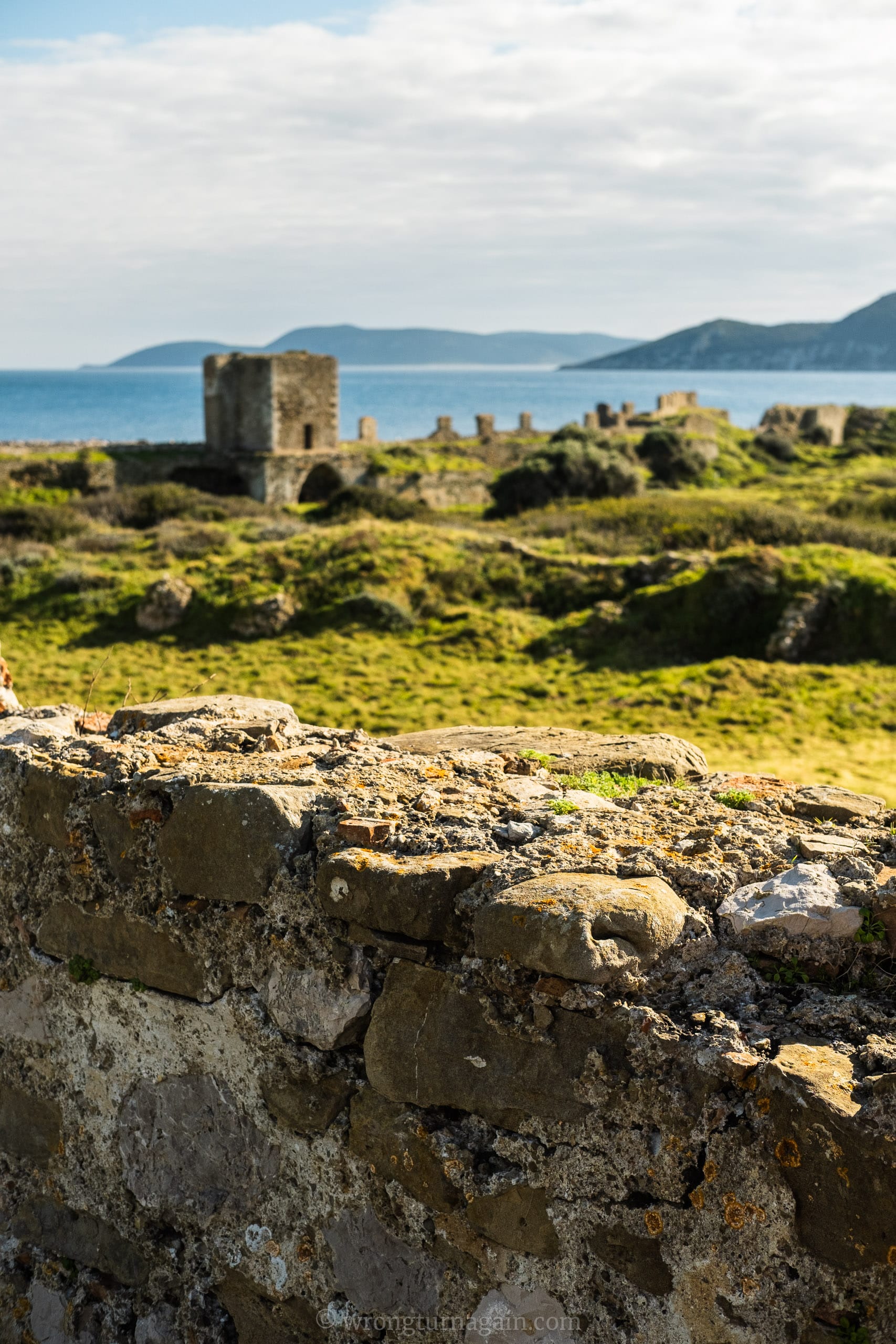
Covering a massive area of 93 acres, this wasn’t just a military fort; for centuries, it was a bustling city and a vital pit-stop. Because it sat squarely on the main maritime route to the East, it became a standard supply station for pilgrims and merchants traveling to the Holy Land. Along with neighboring Koroni, the Venetians called these twin castles the “Eyes of Venice”, keeping watch over the Mediterranean trade routes.

The castle is a patchwork of empires. The massive walls were mainly built by the Venetians. Later, the Ottomans took over and added their own touch—including the hammams and the Bourtzi tower. Finally, the French arrived in the 19th century to liberate the area; they are the ones who built the iconic stone bridge you see today, replacing the old wooden drawbridge.
Section A: The Bridge & The Gate
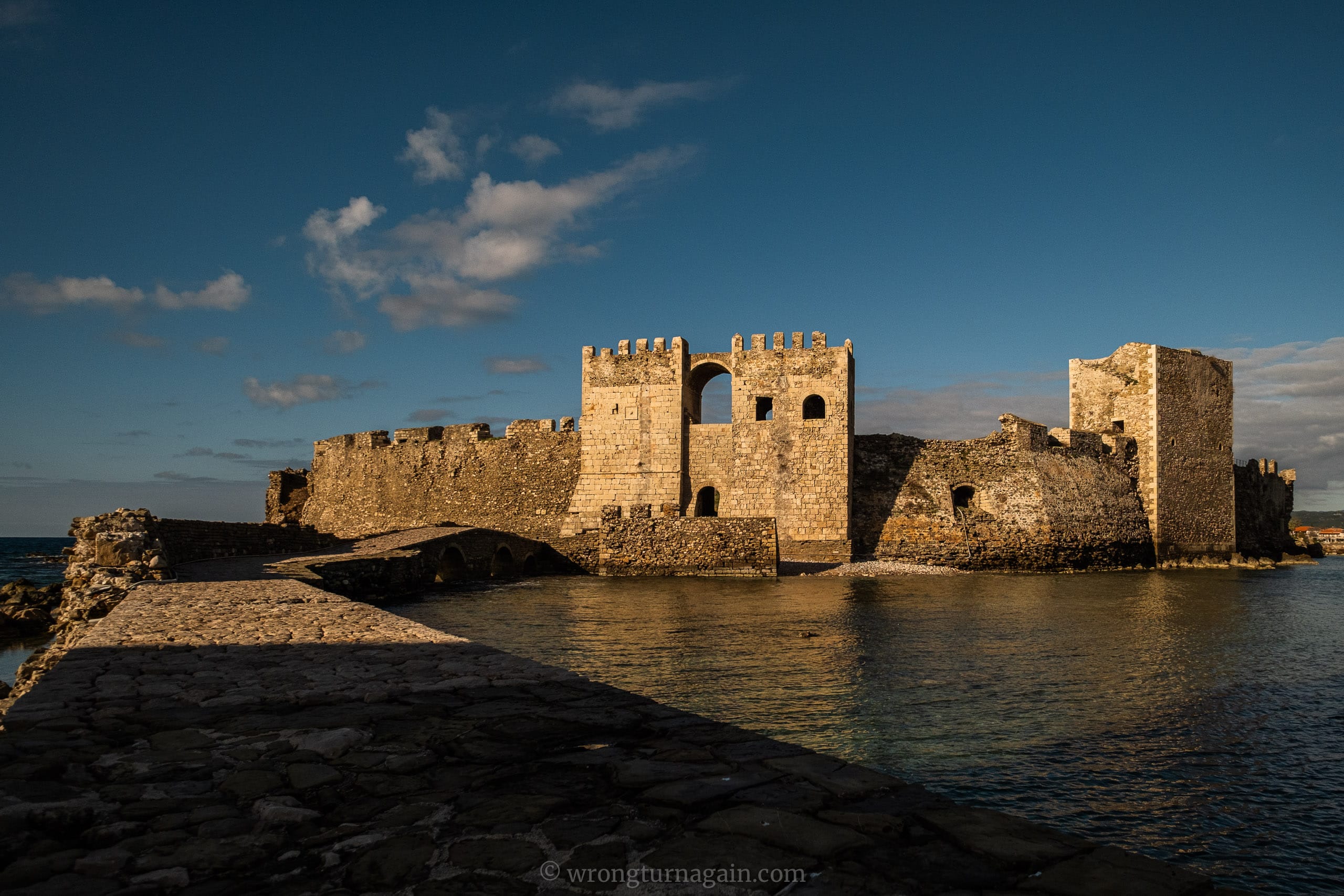
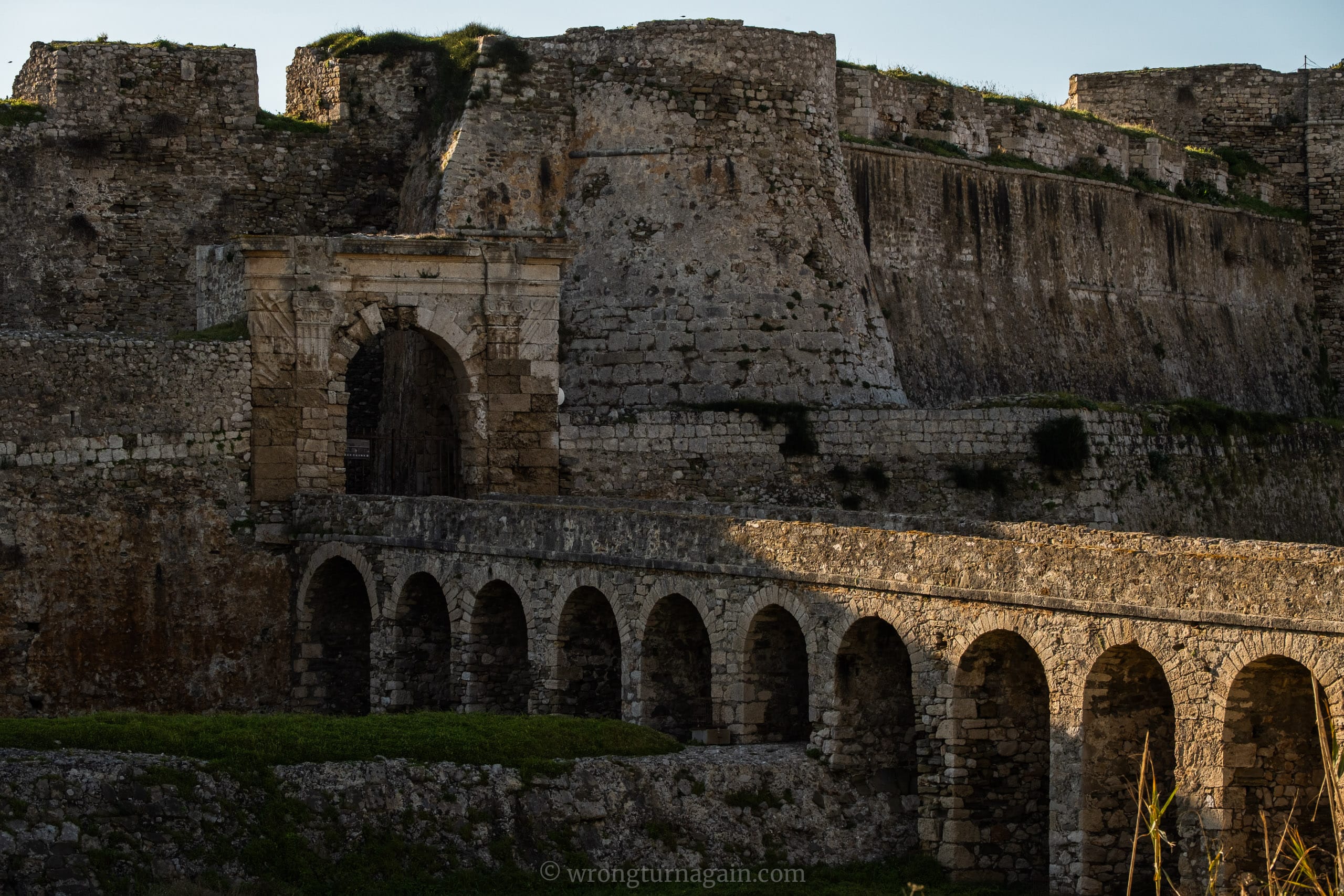
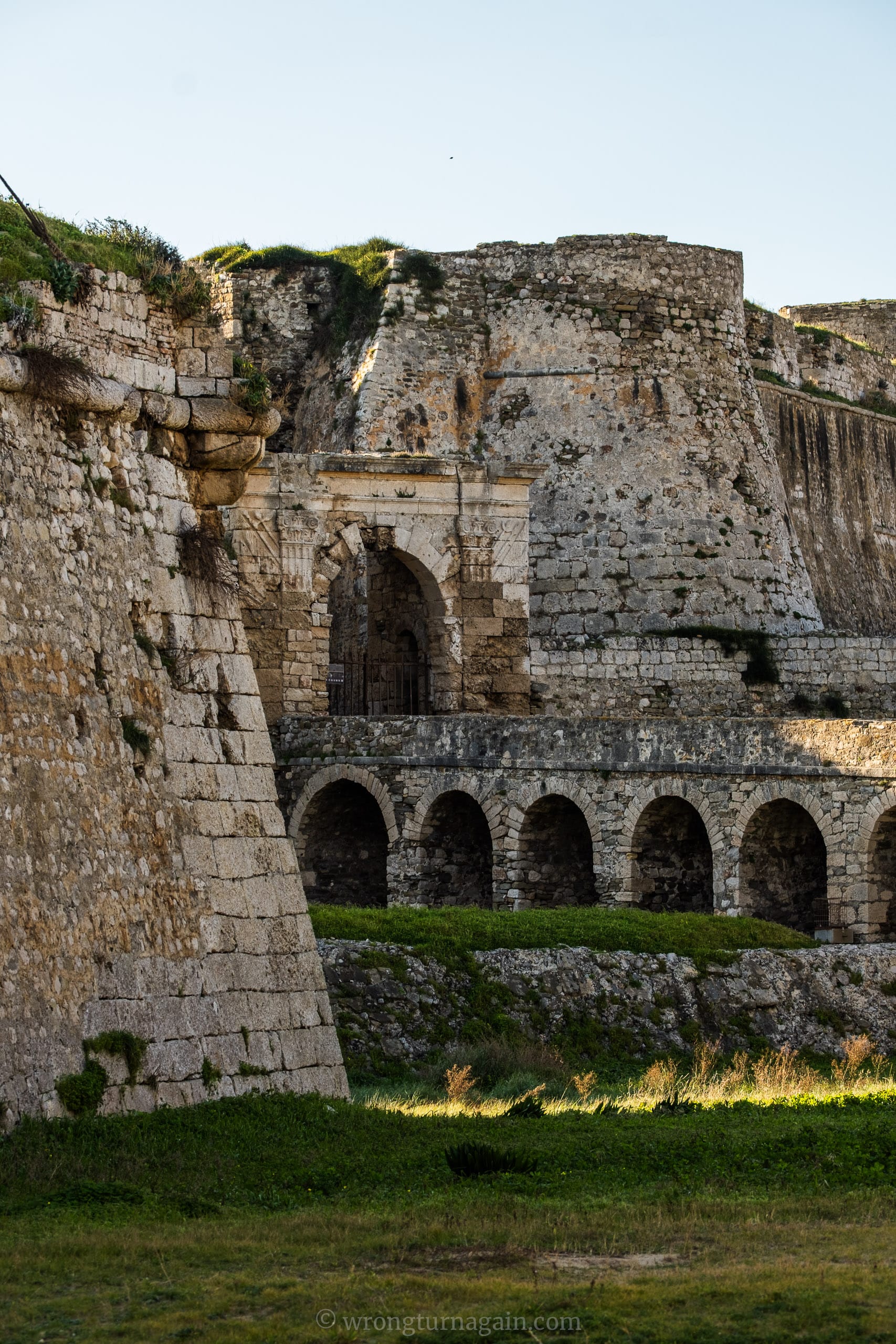
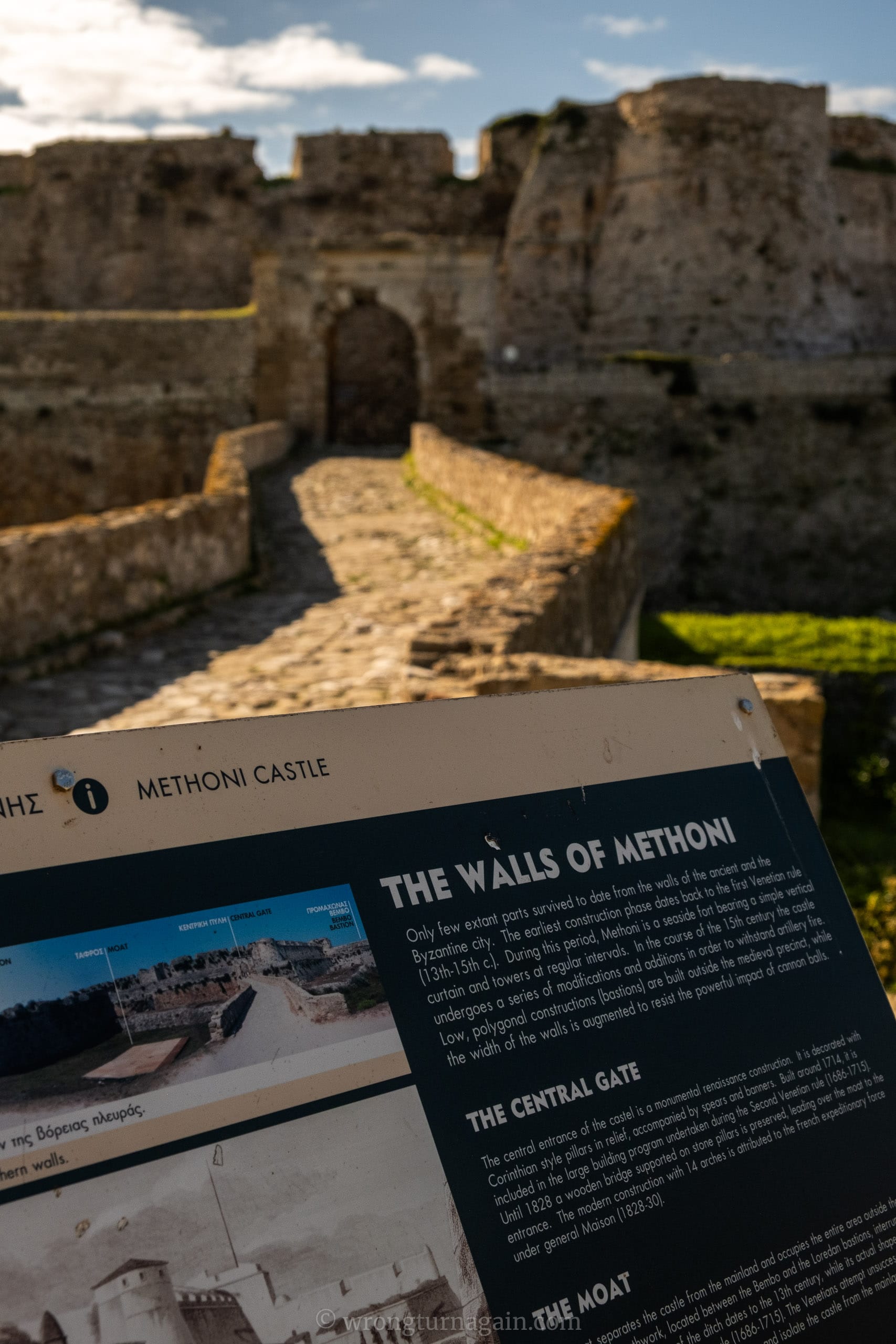
Your journey begins at the north side, the only part of the fortress connected to the land. Here, you will cross a massive stone bridge supported by 14 arches—an iconic image that defines Methoni.
This impressive structure (built by French engineers in 1829 to replace an older wooden drawbridge) spans a wide artificial moat. Historically, this defensive ditch was designed to flood with seawater, effectively turning the castle into an impregnable island during sieges.
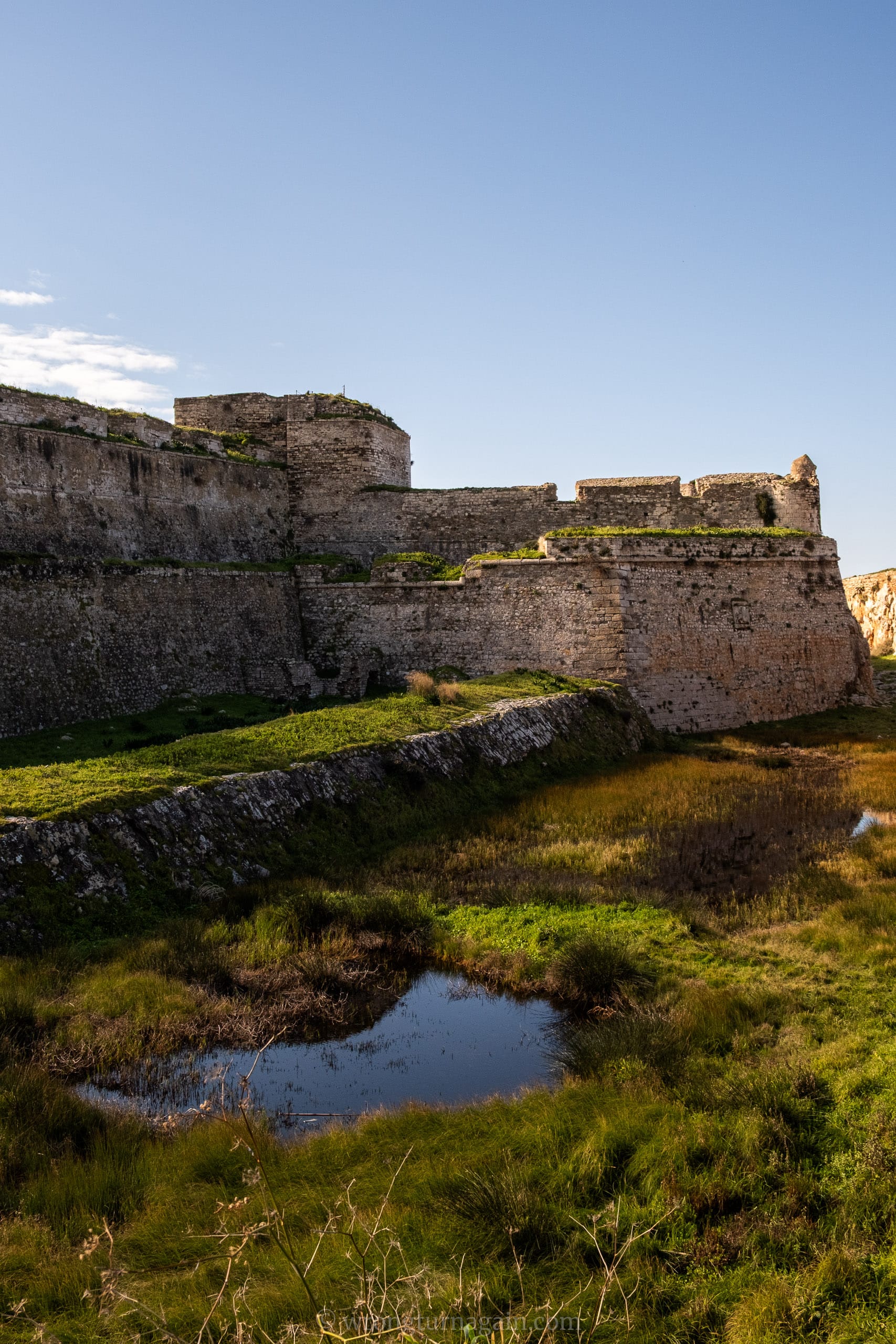
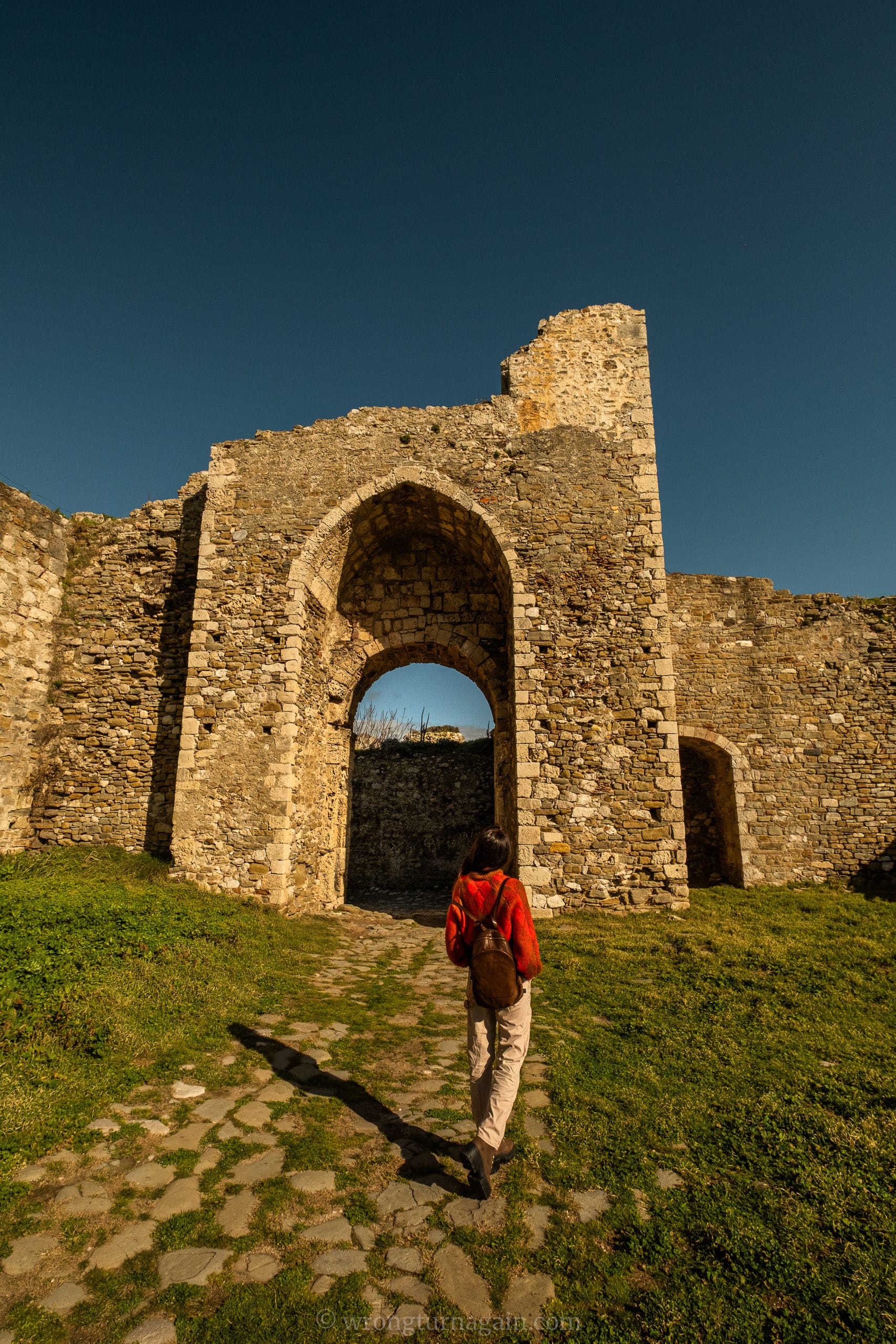
As you reach the end of the bridge, look up before you enter. Embedded in the fortification walls is the Lion of Saint Mark—the symbol of Venice—marking their territory. Passing through the heavy iron gates and the vaulted stone tunnels is the most atmospheric part of the entrance.

Important: The closing time listed is the time the site locks. The guards will ask you to start heading to the exit 10-20 minutes earlier. Don’t arrive at the last minute!

Section B: The Ghost City (The Interior)
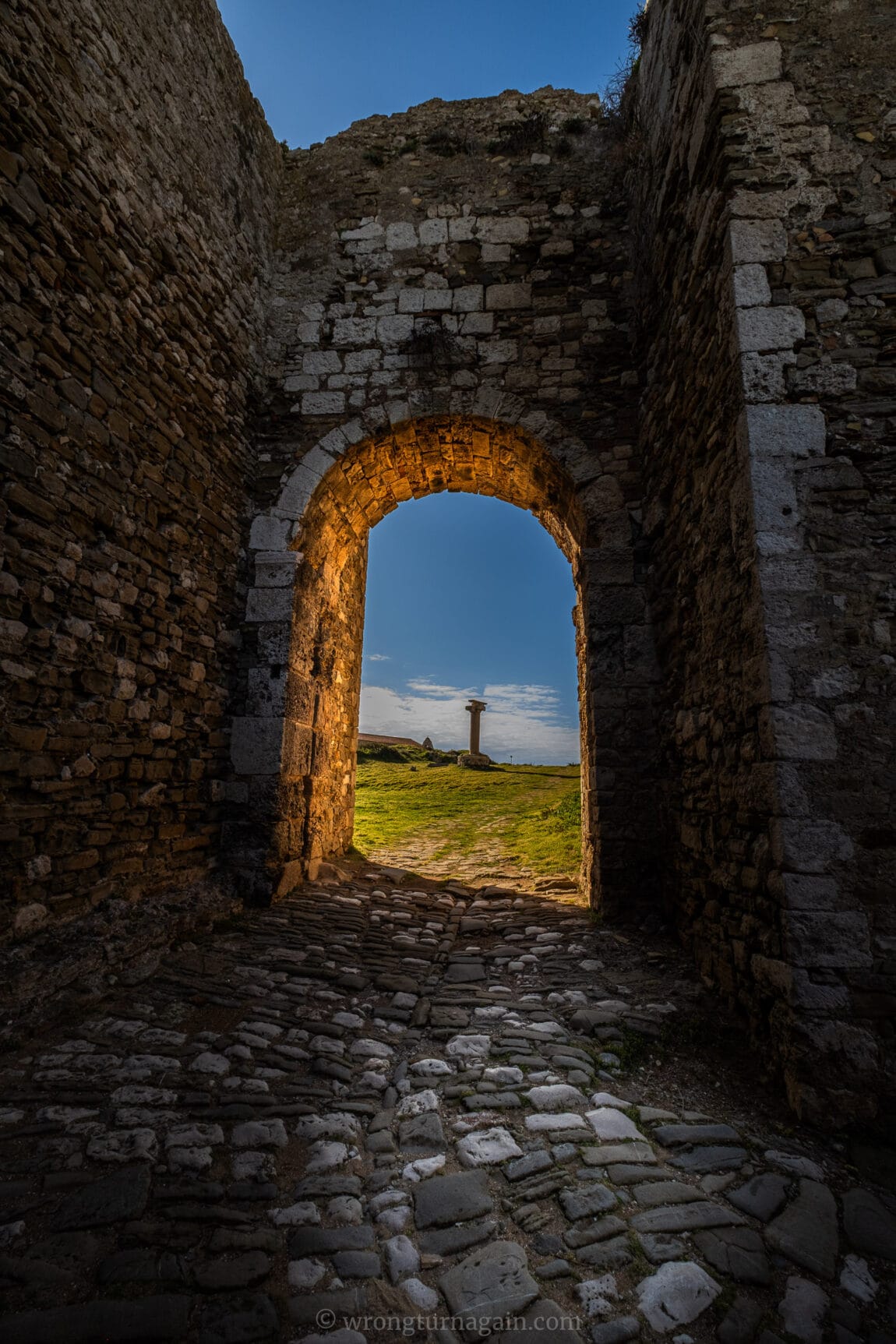
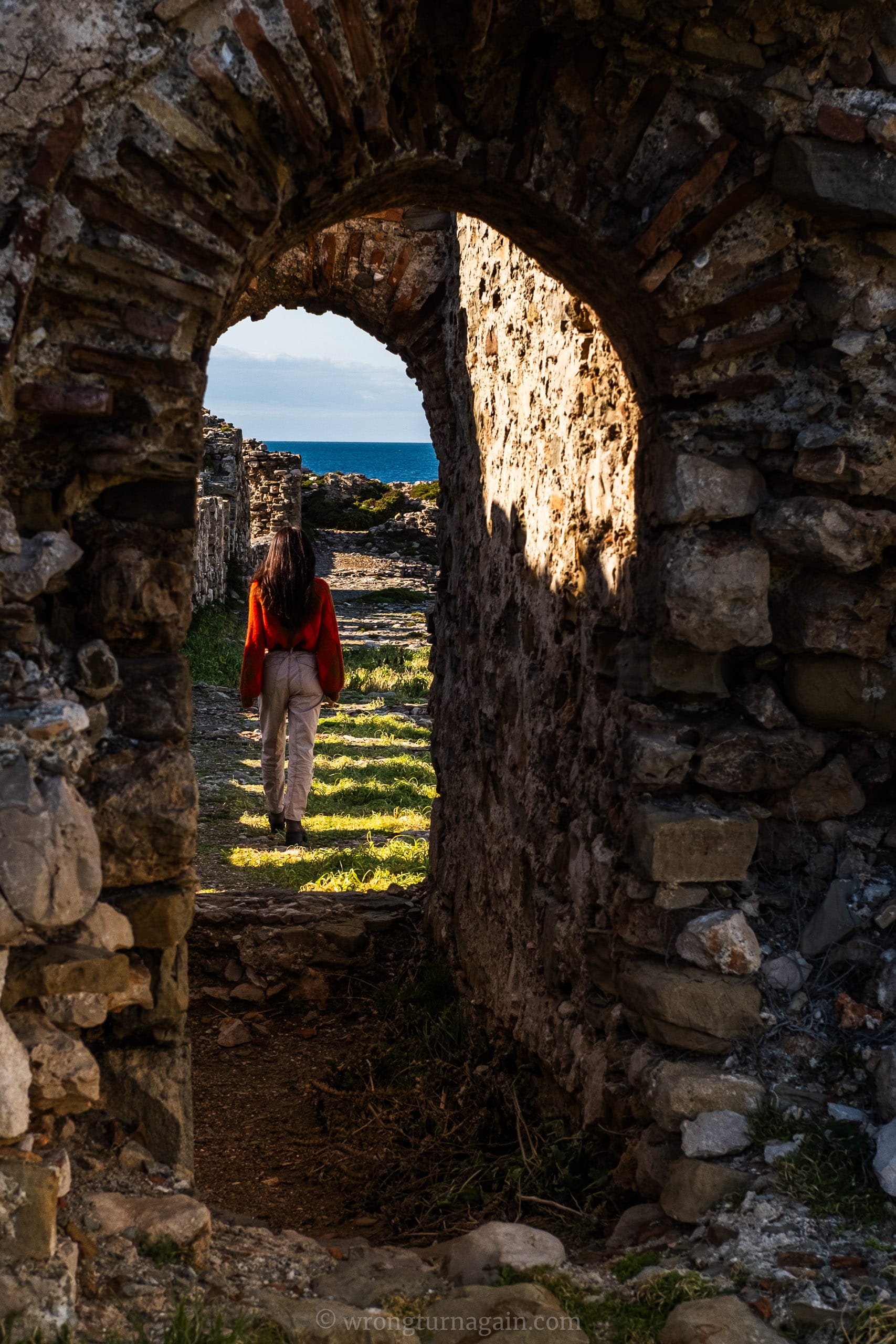
Passing the main gate is just the beginning. You navigate a defensive labyrinth along a cobblestone path that leads through a second gate, and finally a third one, before the fortress truly opens up.
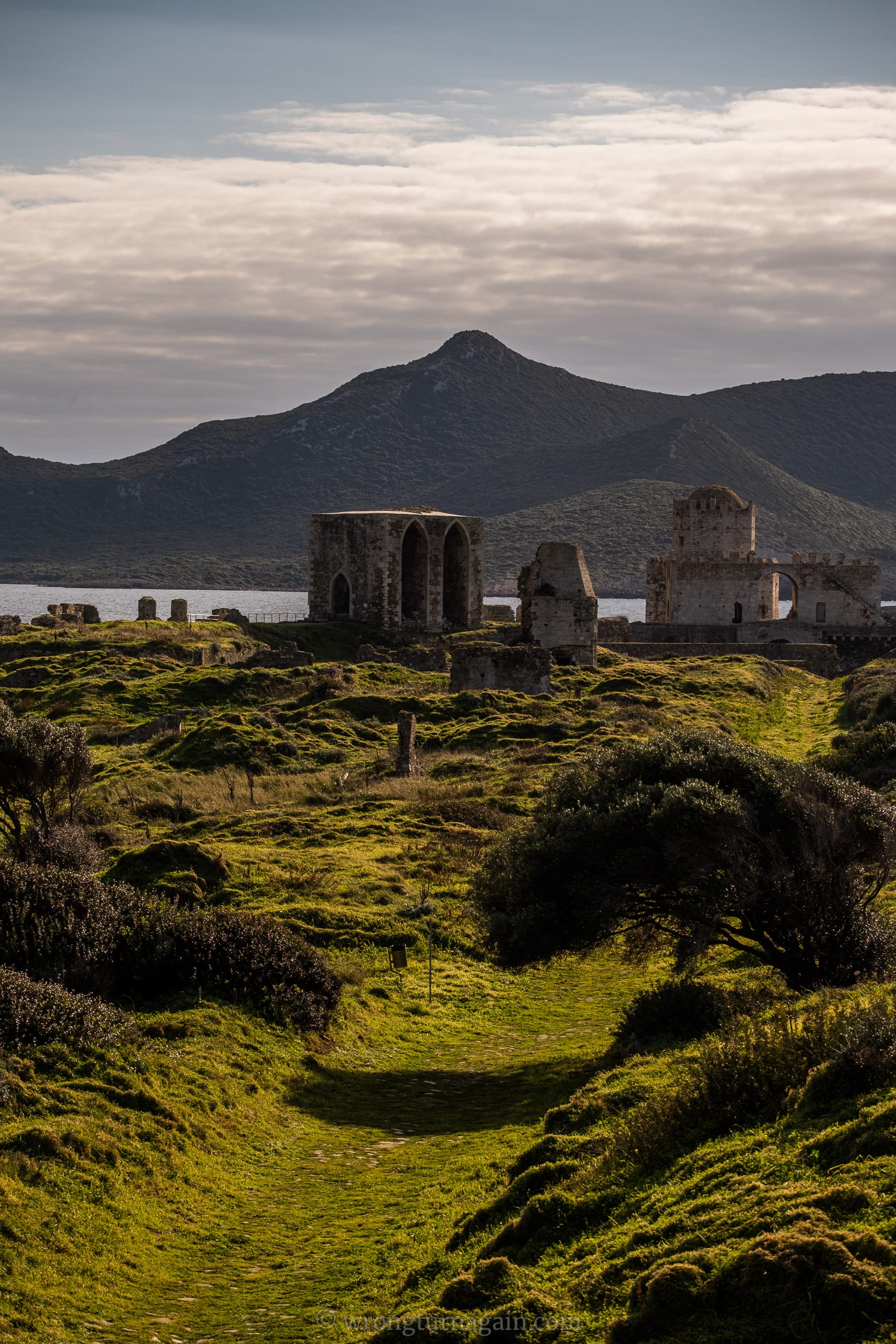
Once you step into the main enclosure, the scale of the place hits you. It is vast, empty, and silent—a stark contrast to the bustling market town that thrived here for centuries. As you walk the main path through the ruins of houses and public buildings, keep an eye out for three key landmarks:
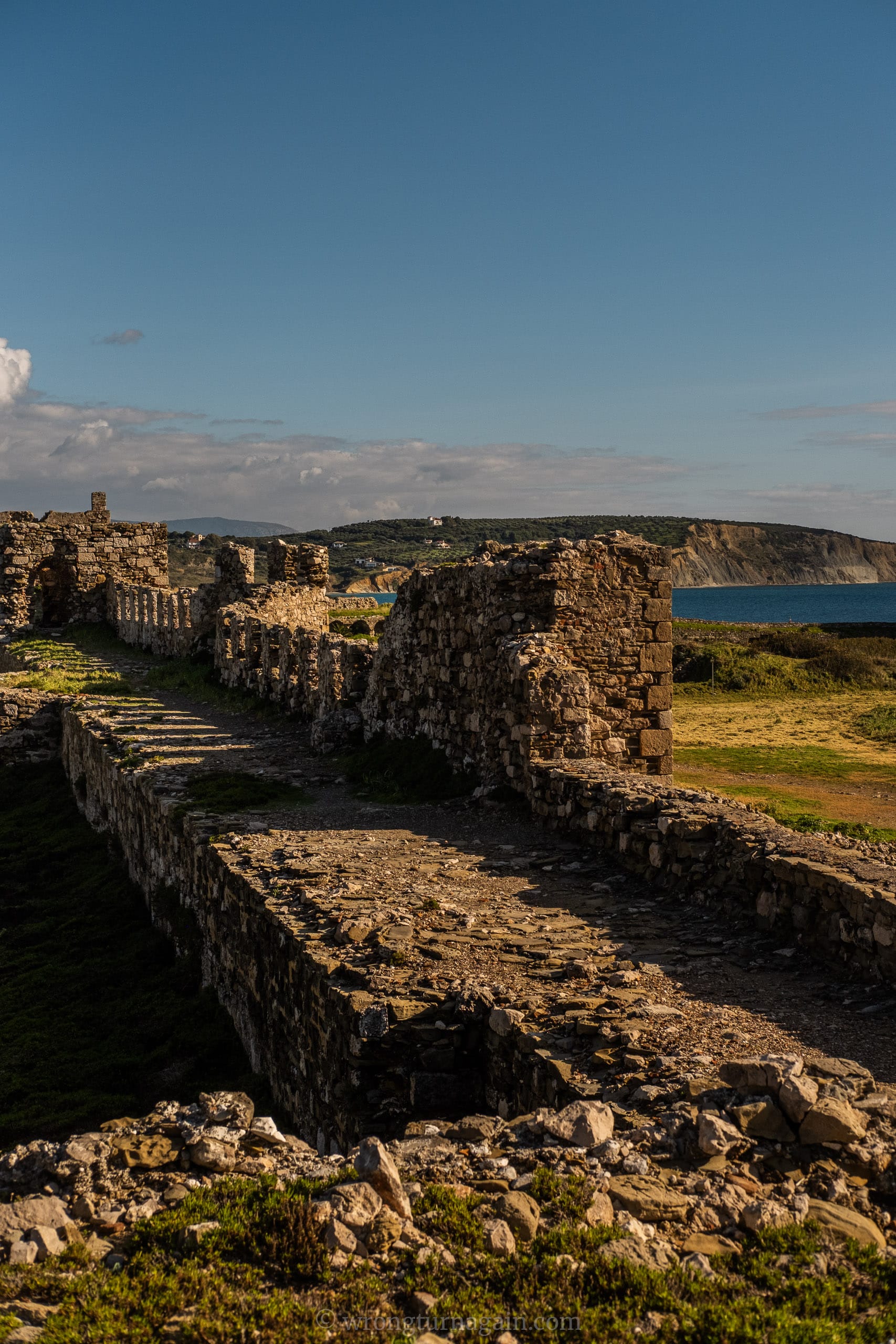
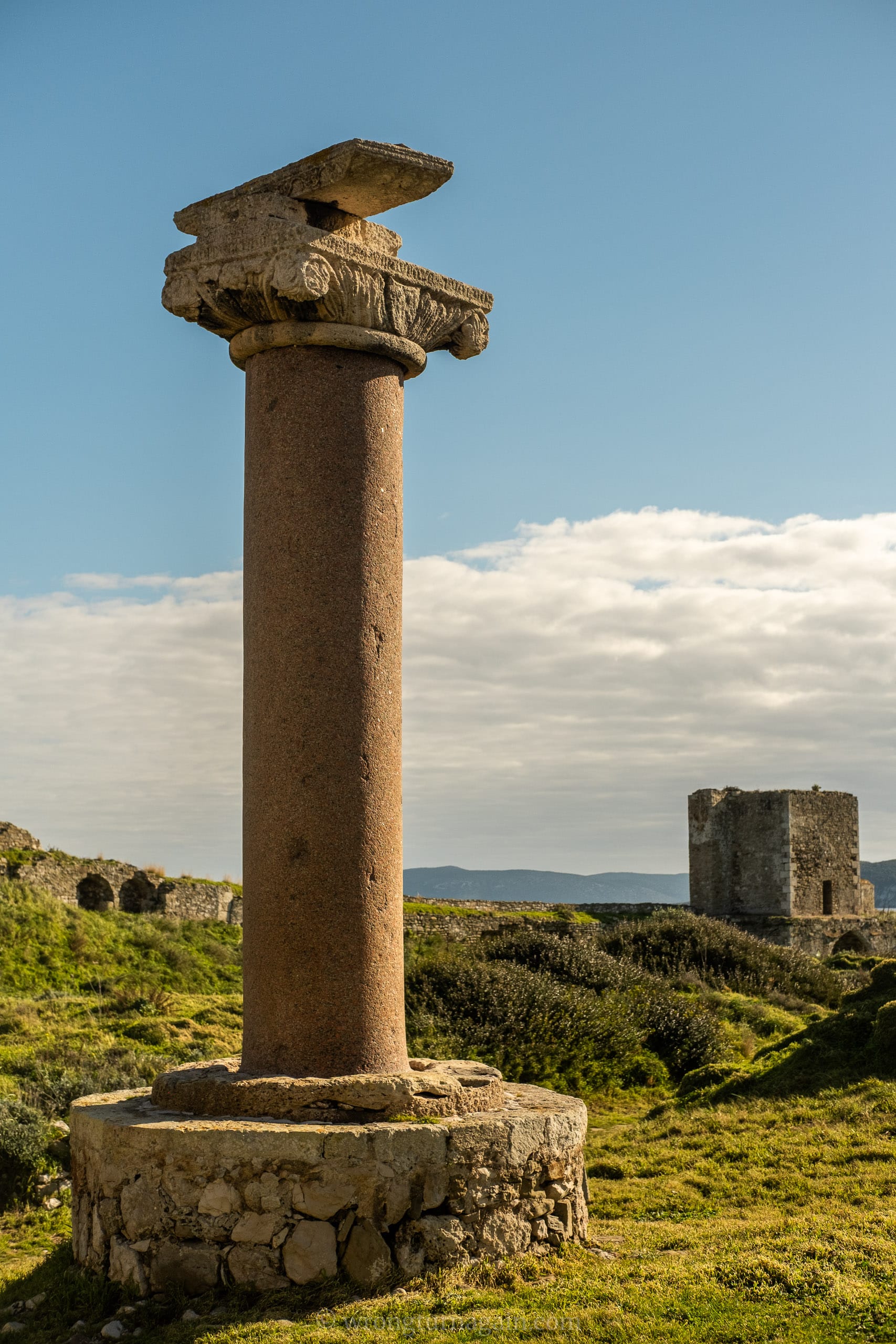
- The Morosini Column: You can’t miss this. It is a solitary monolithic column made of red granite, topped with a Byzantine capital. It stands out because it has no architectural connection to the surrounding ruins. Dedicated to the Venetians (tradition links it to the Morosini family), it was likely originally salvaged from an ancient shipwreck.
- East Meets West: Right next to each other, you will see the Church of the Transfiguration (built in the 19th century after the liberation) and the ruins of Ottoman Baths (Hammams). These side-by-side structures are a powerful reminder of the castle’s history, changing hands between Venetians, Turks, and Greeks.
- The Gunpowder Magazine: A small, windowless building with incredibly thick walls and a vaulted roof, designed to keep the castle’s explosives dry and safe during sieges.
Section C: The Bourtzi (The Finale)
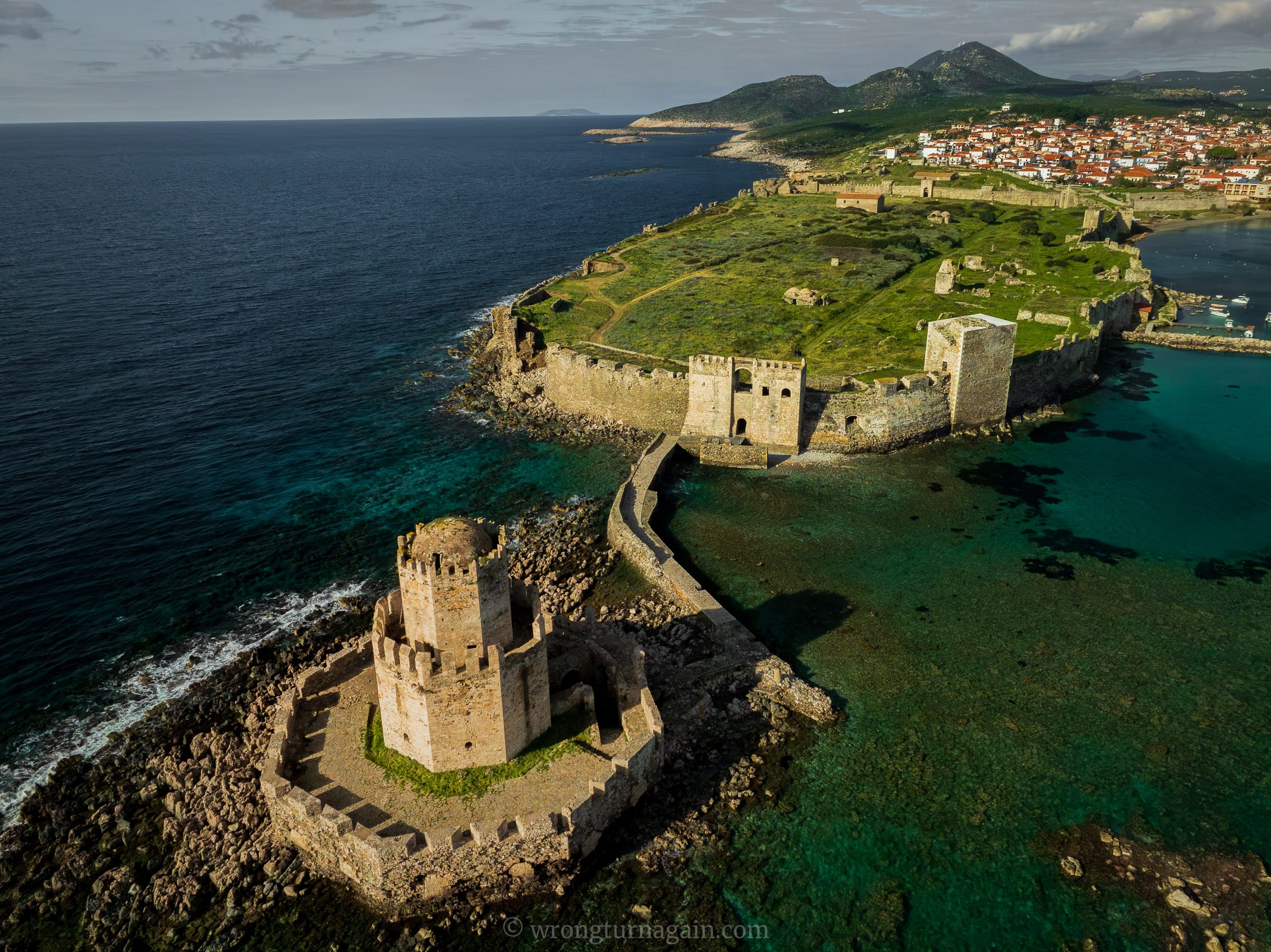
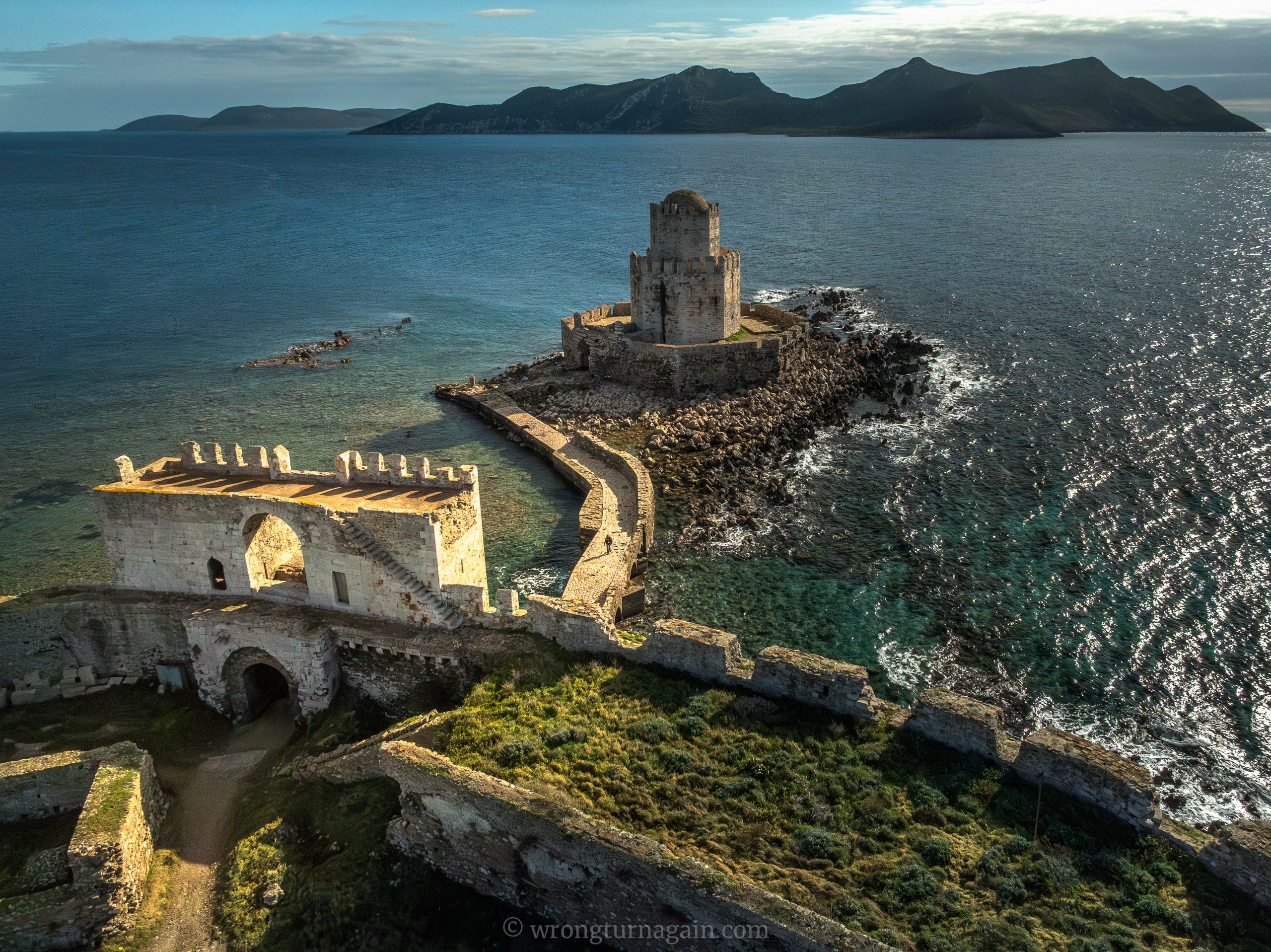
Keep walking south until you reach the restored Sea Gate. This imposing exit is unmistakable: it is flanked by two tall, square towers connected by a defensive platform. Passing underneath its archway is a dramatic reveal—suddenly, you are out of the fortress walls and facing the open sea.
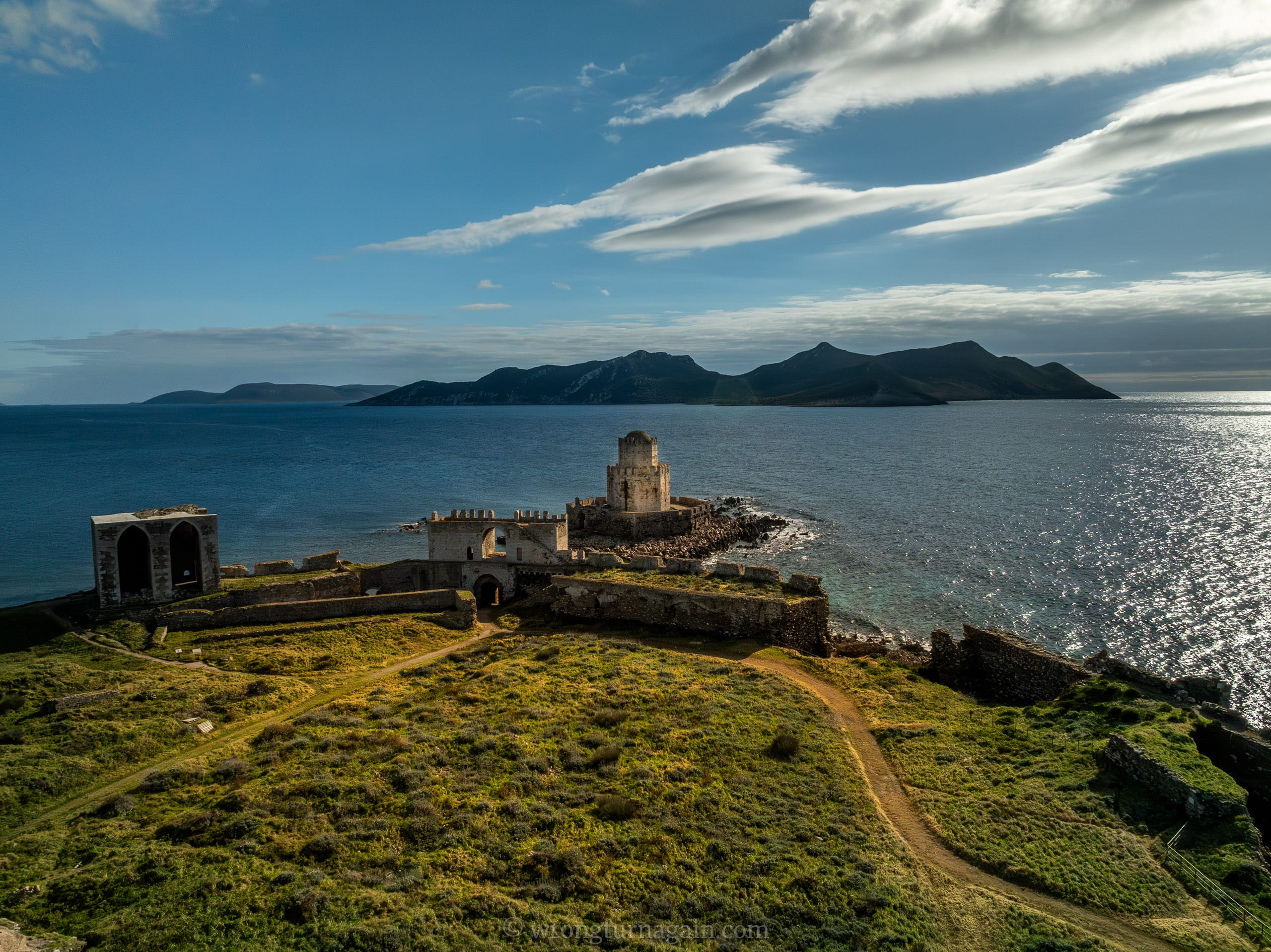
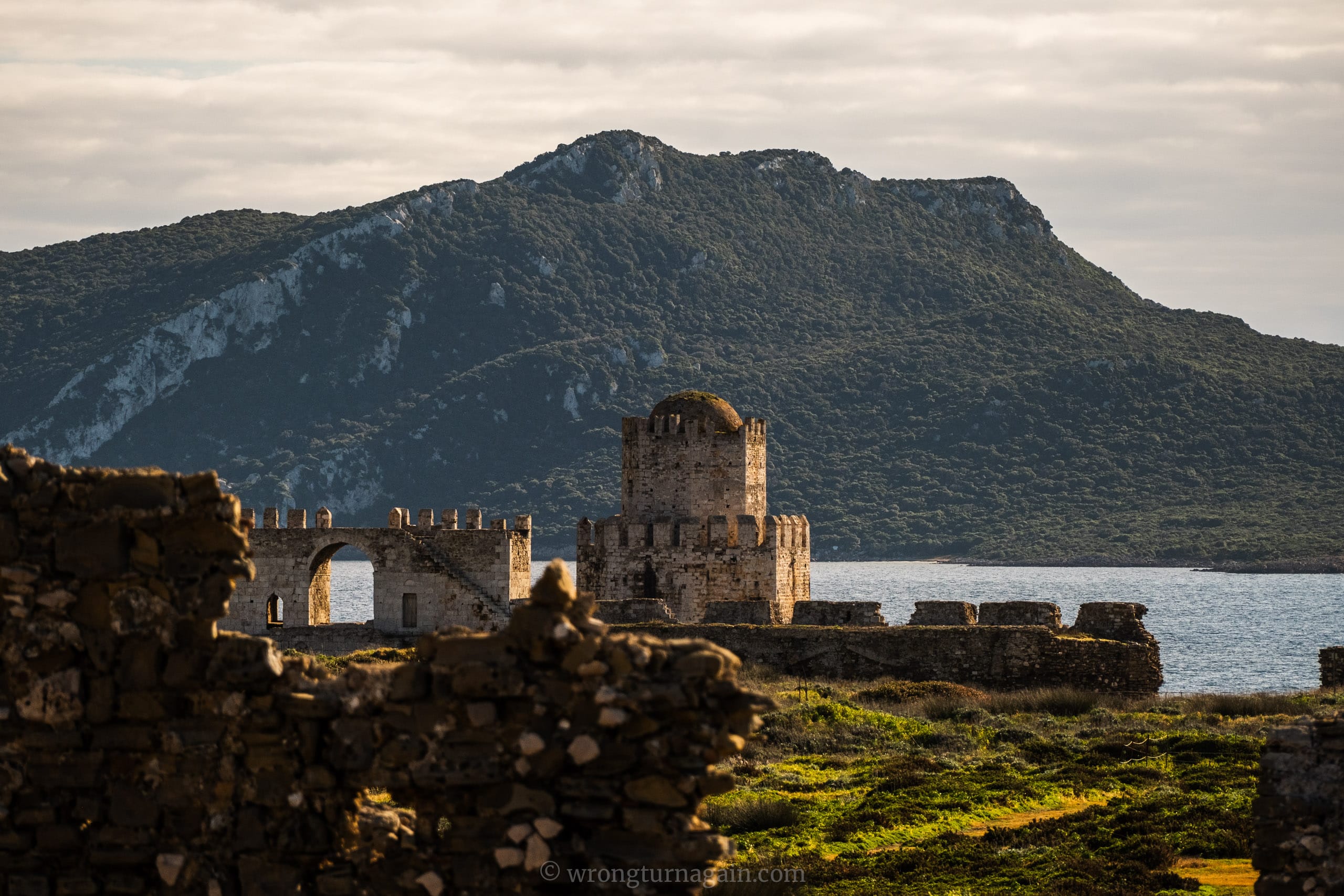
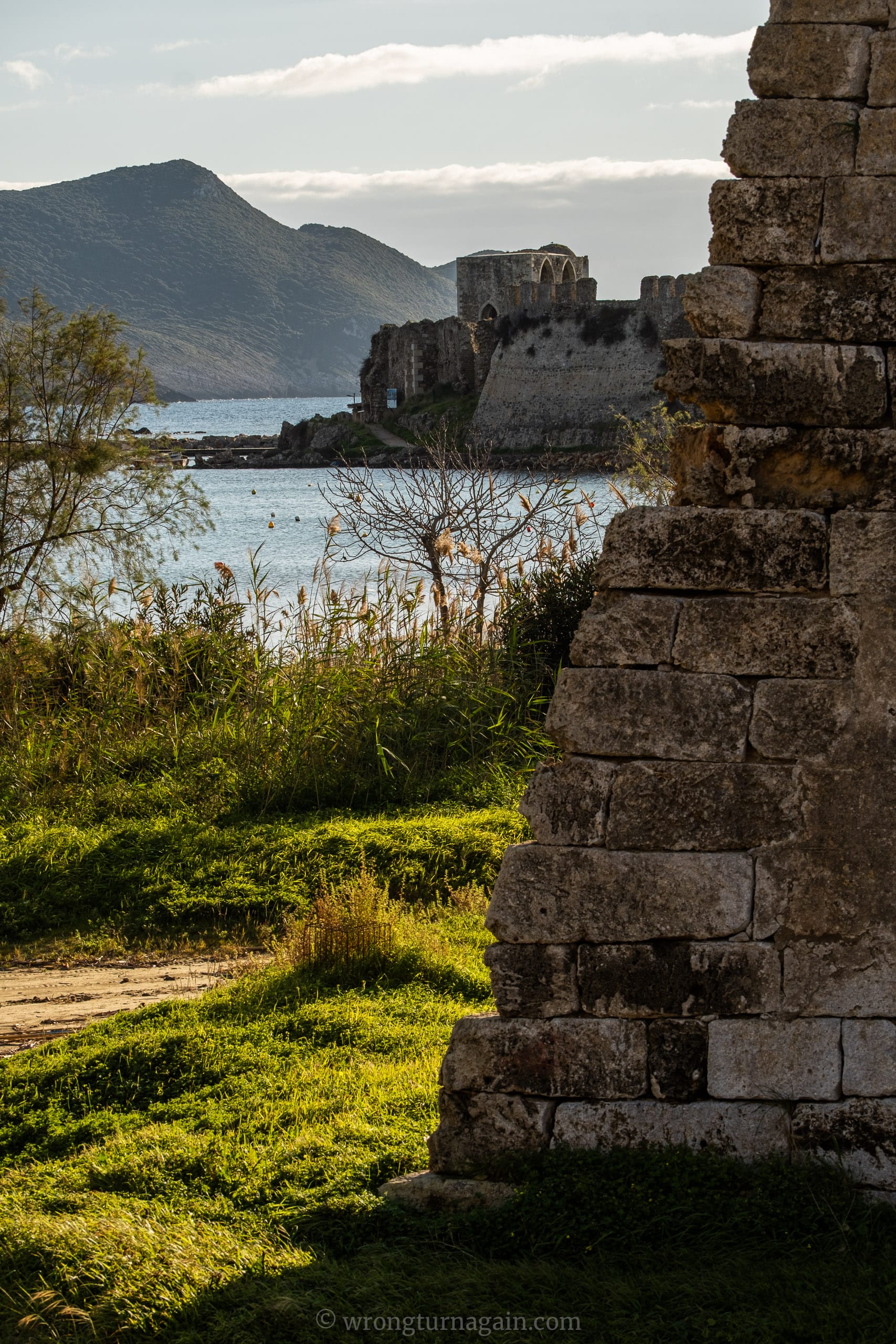
Right in front of you lies the castle’s crown jewel: the Bourtzi. This two-story octagonal tower sits on a tiny rocky islet, tethered to the main castle by a paved stone causeway.
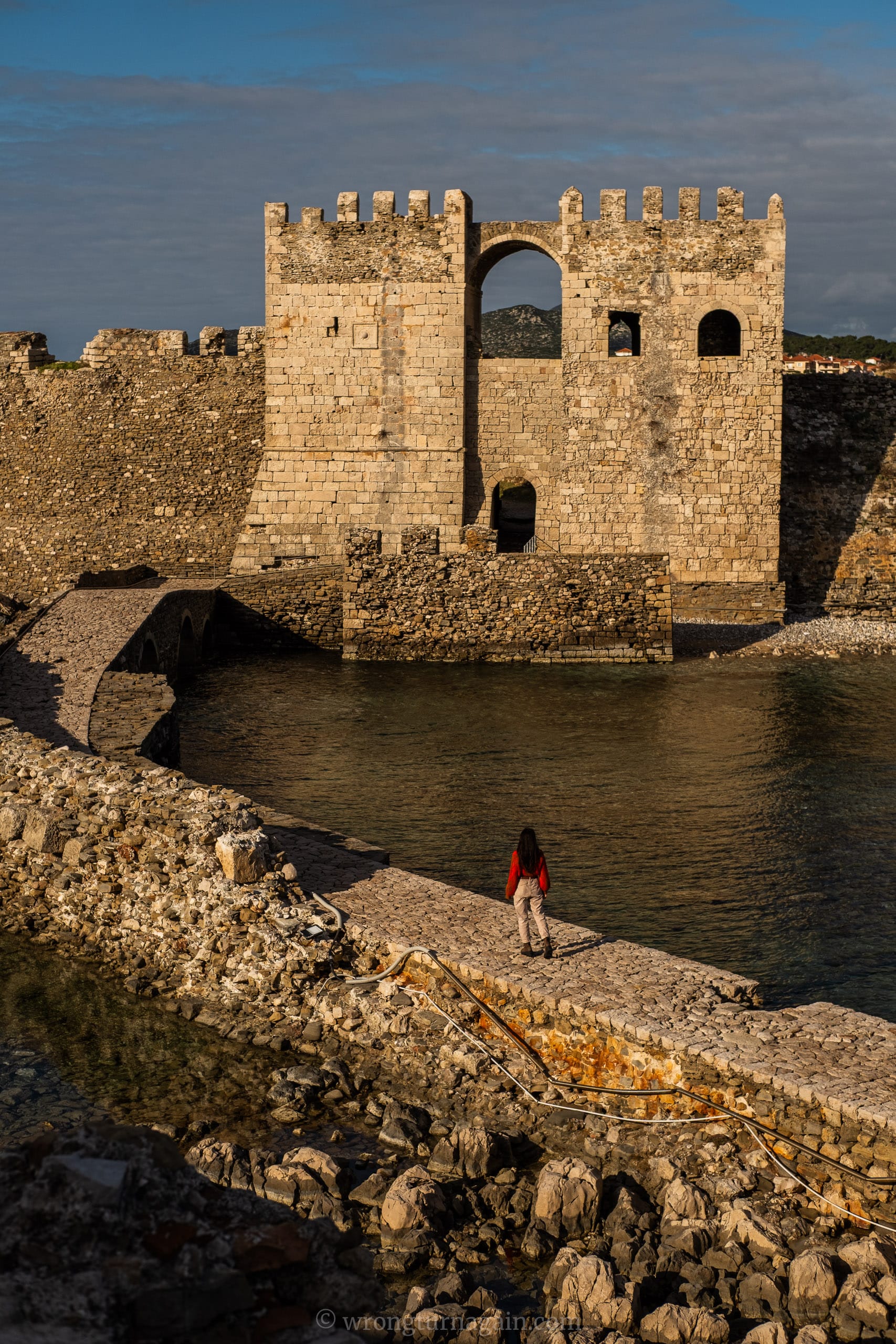
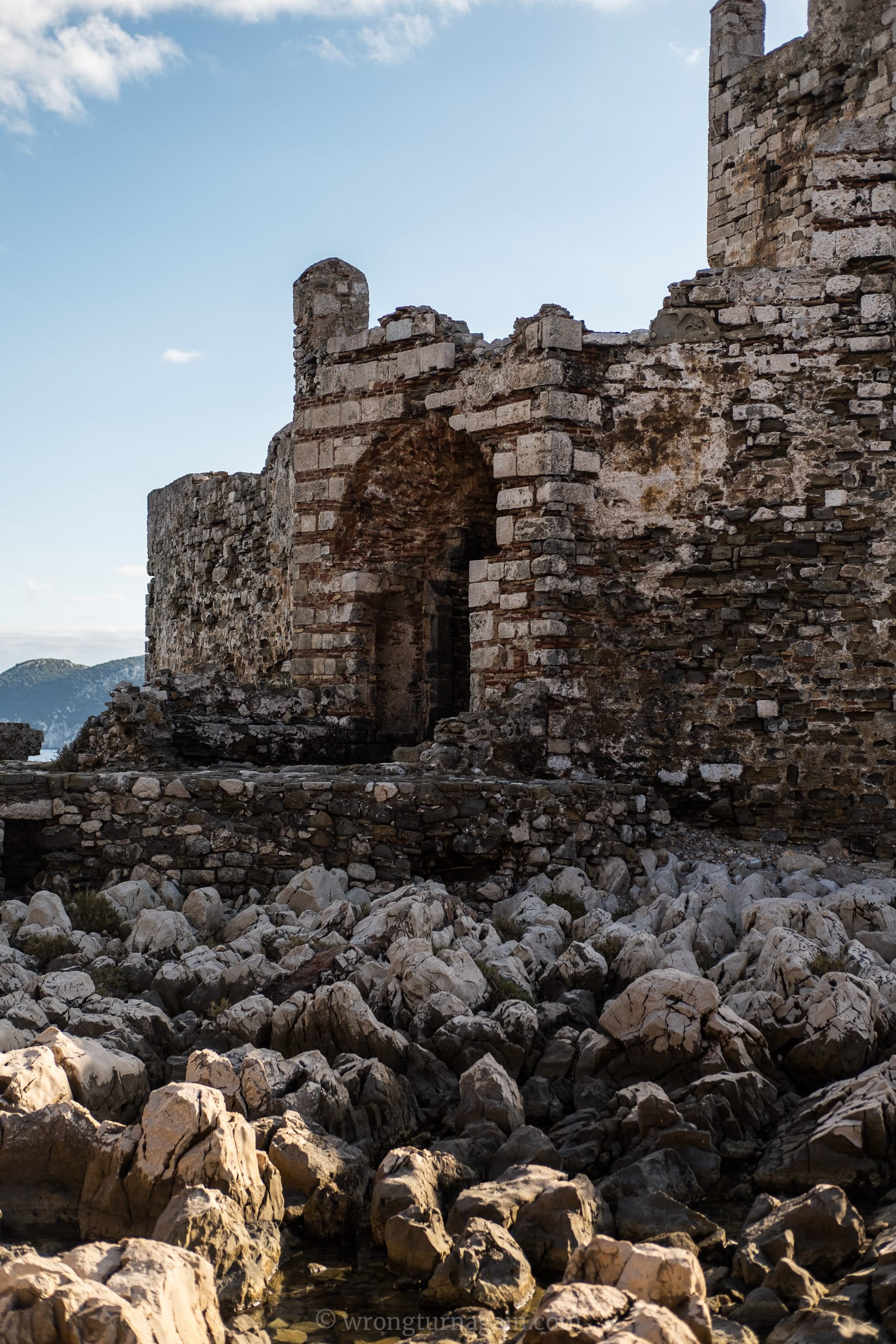
Built by the Ottomans around 1500 (shortly after they captured the city), it has a dark past, serving variously as a prison, a place of execution, and a lighthouse. Today, however, it is one of the most photogenic spots in the Peloponnese. Walking the narrow causeway, often with waves crashing on either side, is the absolute highlight of the experience.
The cobblestones throughout the castle—and especially on the exposed Bourtzi causeway—have been polished smooth by centuries of footsteps and sea spray. They are extremely slippery, even when dry. Leave the flip-flops for the beach; you need sneakers with good grip here.
02. Take a Boat Trip to Sapienza: The Exotic Escape
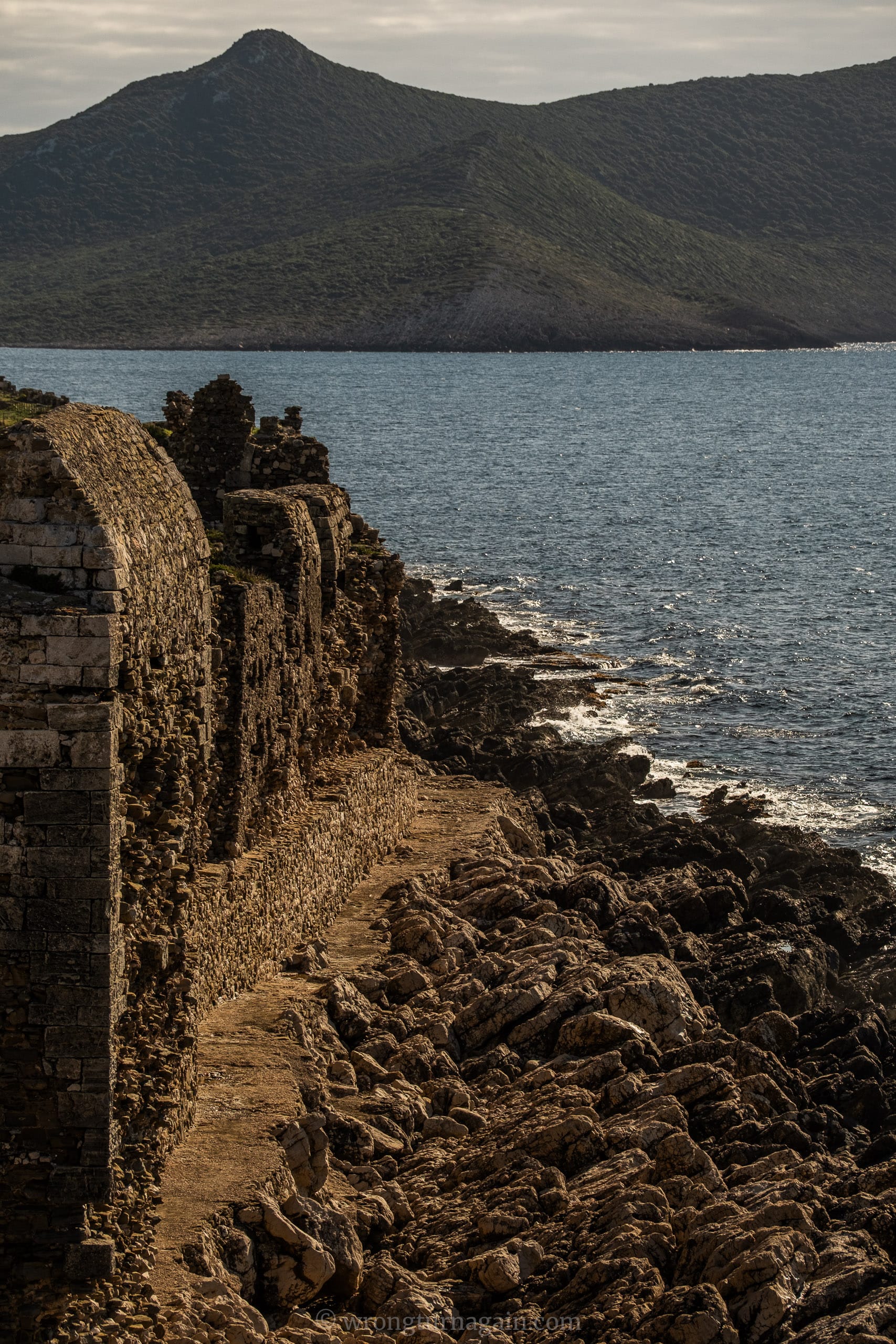
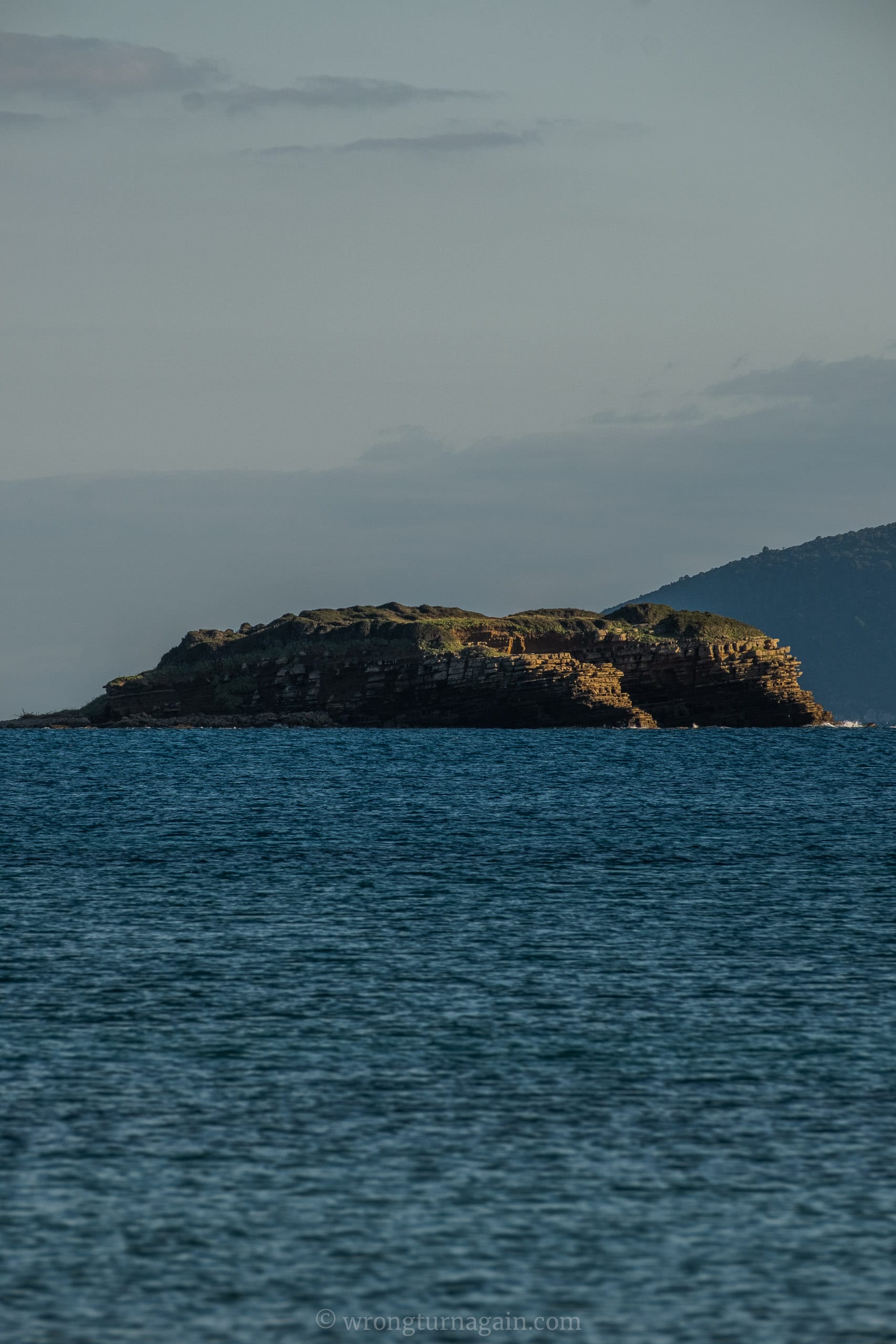
If you stand at the Bourtzi tower and look out to sea, you will see a long, green island dominating the horizon. This is Sapienza (meaning “Wisdom” in Italian), the crown jewel of the “Messinian Oinousses” complex. It is a pristine, uninhabited nature reserve (Natura 2000) that feels less like Greece and more like a slice of the Caribbean dropped into the Messinian Gulf.
Just 6 nautical miles southwest of Sapienza lies the “Well of Oinousses,” the deepest point in the entire Mediterranean Sea (5,269 meters). It is so deep that the “Nestor” underwater telescope was installed here to study cosmic neutrinos, far from the interference of cosmic radiation.
A History Written in Shipwrecks
Sailors have long feared this stretch of water. Treacherous currents and jagged rocks created the “Valley of Shipwrecks”—an underwater graveyard of ancient vessels. Today, the area functions as an underwater archaeological park, where history lies just a few meters below your feet.
- The Shipwreck of Columns: At Cape Spitha (depth ~10m), you can see massive granite columns intended for Herod’s temple in Caesarea (1st century AD), scattered on the seabed.
- The Sarcophagi: Near the northern coast, Roman stone sarcophagi are visible even from the boat on calm days, lying just 8-10 meters below the surface.
Note: While snorkeling is generally allowed, Greek law requires a special permit from archaeological authorities for scuba diving in marine archaeological sites. Always go with an authorized diving center.
The Historical Lighthouse
On the southern tip of the island stands an 8-meter stone lighthouse, built in 1885. Its construction was requested by Queen Victoria of England to protect British merchant ships passing through these dangerous currents on their way to the East.
In its prime, it was one of the most powerful in the Mediterranean, with a light visible from 25 nautical miles. In 1986, the lighthouse was automated and now runs on solar power, but it remains a protected historical monument.
Locals say that before electricity reached the mainland, the lighthouse’s beam was so bright that women in the coastal villages used its 8-minute rotation to time their embroidery work at night, waiting for the intense flash of light to see their needles!
Why Sapienza is worth a Visit
Beyond the shipwrecks and the lighthouse, Sapienza offers a rare blend of exotic scenery and biological miracles. Here is why you shouldn’t miss it:
- Ammos Beach: Most boats dock at Ammos, a white-sand beach with electric-turquoise water. Surrounded by dense bushy vegetation, it feels like a natural swimming pool. If you venture further or arrange a private boat, you can find Kokkina Beach (rugged beauty), the Kathreptes rocks, and the Cave of Manetas, once a legendary pirate hideout.
- The “Invisible” Forest: Sapienza hosts a botanical miracle in the area called Spartolakka. While strawberry trees (arbutus) usually grow as shrubs throughout the Mediterranean, here they reach heights of 10 meters, forming a dense, prehistoric-looking forest. This 240-hectare area is an officially declared Preserved Natural Monument.
- The Cretan Ibex: The island is a safe sanctuary for the rare Cretan Ibex (Kri-Kri). Keep your eyes peeled and your voice low—these shy creatures often come down to the shoreline when they feel the beach is quiet.
- The “Heart” Island: Ask your captain for a full tour of the island to see Diadelfi. This rocky islet, located opposite the lighthouse, has a perfect heart shape when viewed from above. It is one of Greece’s most iconic and photographed natural landmarks.
How to Get to Sapienza
Unless you have your own boat, the only way to reach Sapienza is by the local kaiki (traditional boat) departing from the Methoni Pier. Depending on your time and mood, you have three main options:
- The Express Transfer (2 Hours): Perfect if you just want to swim. The boat takes you to Ammos beach, passes over the shipwrecks for a quick look, and brings you back.
- The Full Explorer (6 Hours): Weather Permitting, this is the ultimate experience. It includes a full circle of the island, allowing you to see the rugged western cliffs where wild pigeons nest in sea caves, the historical lighthouse from the water, and the famous heart-shaped islet of Diadelfi.
- Private Rental: For total freedom, you can rent your own small boat (with or without a skipper) to explore the coastline at your own pace.
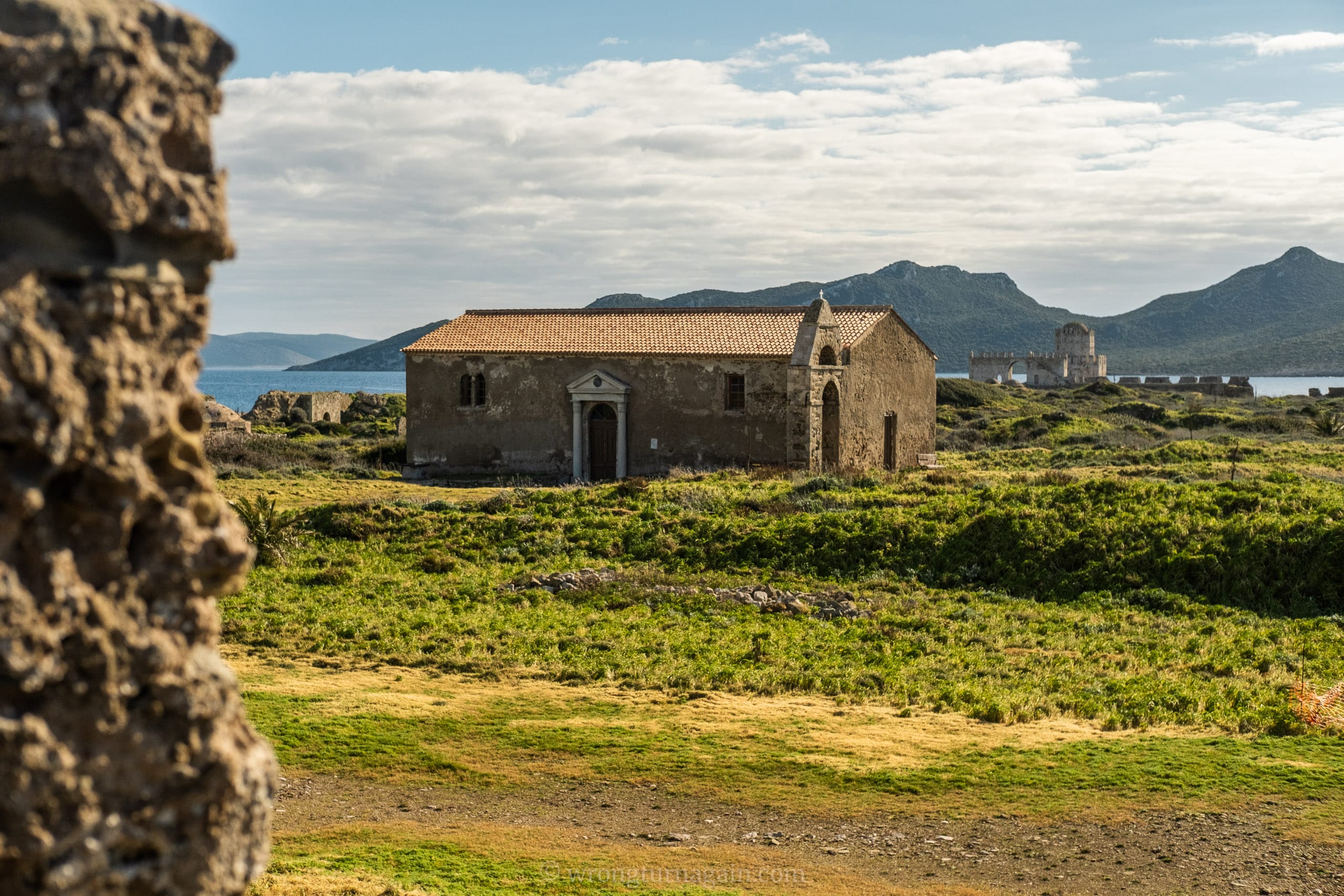
Late Aug onwards: Schedules become irregular and depend heavily on wind conditions. Always call ahead.
03. Hit the Beach: Where to Swim Near Methoni
Let’s be honest: you don’t come to Methoni primarily for the beaches—you come for the castle. However, the area offers three distinct swimming options depending on whether you prioritize scenery, quiet comfort, or crystal-clear waters.
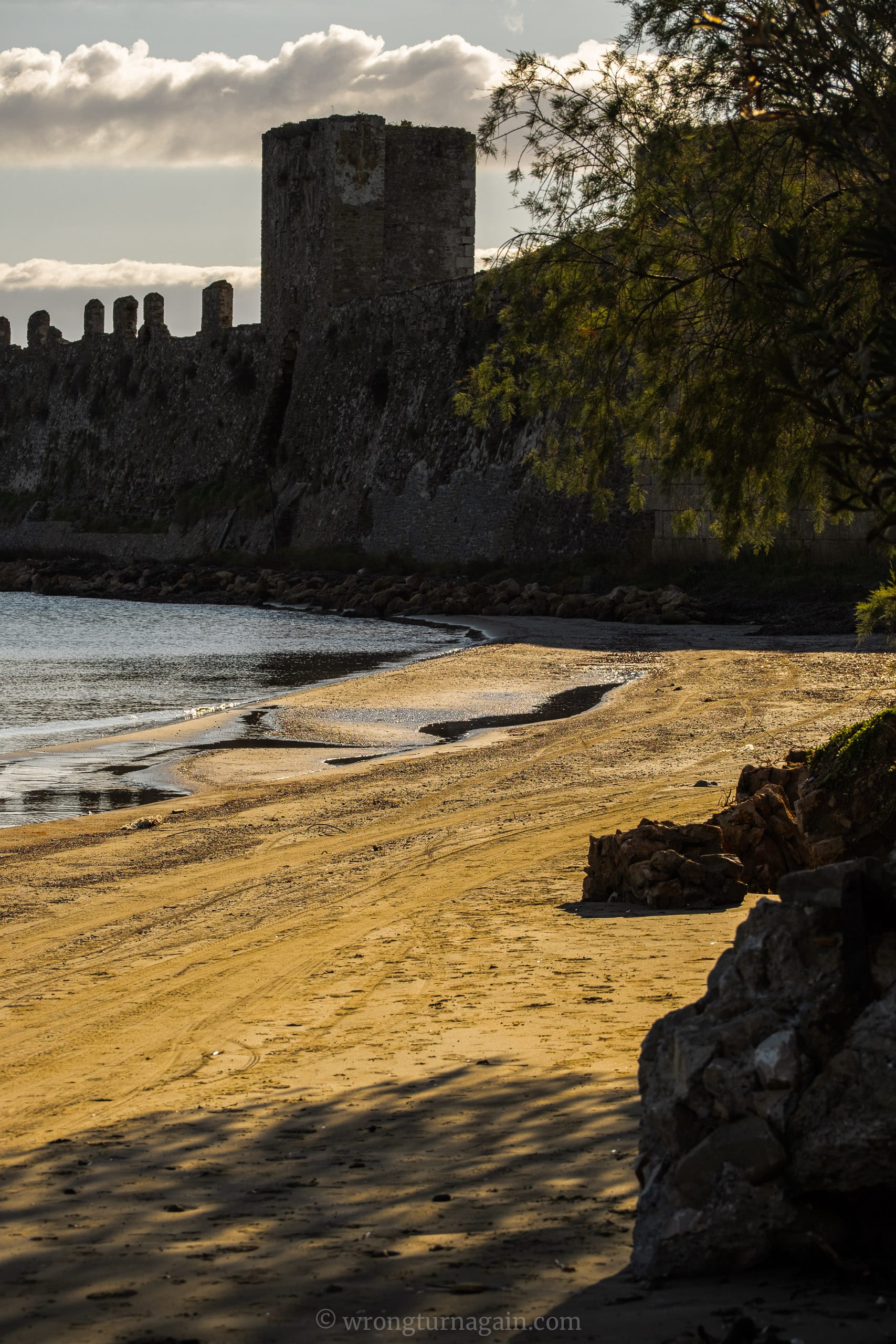
Methoni Beach (The Scenic Choice)
This long, sandy stretch is located right next to the castle entrance. It is the most convenient option if you are staying in the village, as you can walk here from your hotel. The water is shallow, warm, and sandy, making it extremely safe for children and relaxing for adults who want to float while gazing at the fortress walls.
Even if you swim elsewhere, make sure to return here for the “Golden Hour” (around 20:00 in summer). Watching the sun dip into the Ionian Sea, silhouetting the Bourtzi tower, is the most magical image of the trip.
Kritika Beach (The Quiet Sanctuary)
Just 3 km away (on the road to Finikounda), Kritika hits the ultimate “sweet spot.” It offers the best of both worlds: fine sand and much clearer waters than the village beach, yet without the noise and intense crowds of the famous hotspots. Organized with sunbeds but blissfully laid-back, it is the perfect escape to open a book and listen to the sound of the waves.
Lampes Beach (The “Tropical” Upgrade)
For those craving that postcard-perfect, electric turquoise sea, Lampes (or Lambes) is non-negotiable. Located 5 km from Methoni, this is arguably the best beach in the immediate vicinity. The sand turns golden, the water becomes crystal clear, and the vibe shifts.
Here, popular beach bars such as Zanzibar serve cold cocktails and summer beats, making it the ideal spot for a full, energetic day by the sea.
How to Get to Methoni
Located at the southernmost tip of the western Peloponnese, Methoni is one of the most accessible historic sites in the region. The road network is excellent, paved all the way to the castle gate. Whether you are arriving from Kalamata International Airport or driving from nearby towns like Pylos, here is how to get to Methoni Castle effortlessly.
By Car
Take the highway to Kalamata. After the city, the road becomes provincial with some twists and turns, but the asphalt quality is good.
Tolls: Approximately €15.00 one-way for passenger cars (lower for motorcycles, higher for vans). Payments accepted via cash, contactless card, or any Greek e-pass.
Follow the signs west towards Pylos/Messini. It is a scenic two-lane road winding through endless olive groves.
If you are staying in Pylos, the drive from Pylos to Methoni is incredibly easy. It is practically a straight line south along the coast.

There is a spacious public area right in front of the castle entrance and the moat (Google Maps Location). Cost: Free. Availability is usually good, even in summer. If the main lot is full, you can easily park on the side streets of the village just a minute away.
By Bus (KTEL)
The bus route typically connects Athens (via Kalamata) to the wider region. The line runs from Kalamata to Pylos, continues to Methoni, and ends in Finikounda.
The Stop: The bus drops you off in the center of Methoni village. From there, the castle entrance is just a pleasant 5-10 minute walk.
Hand-picked for this route
Where to Eat in Methoni
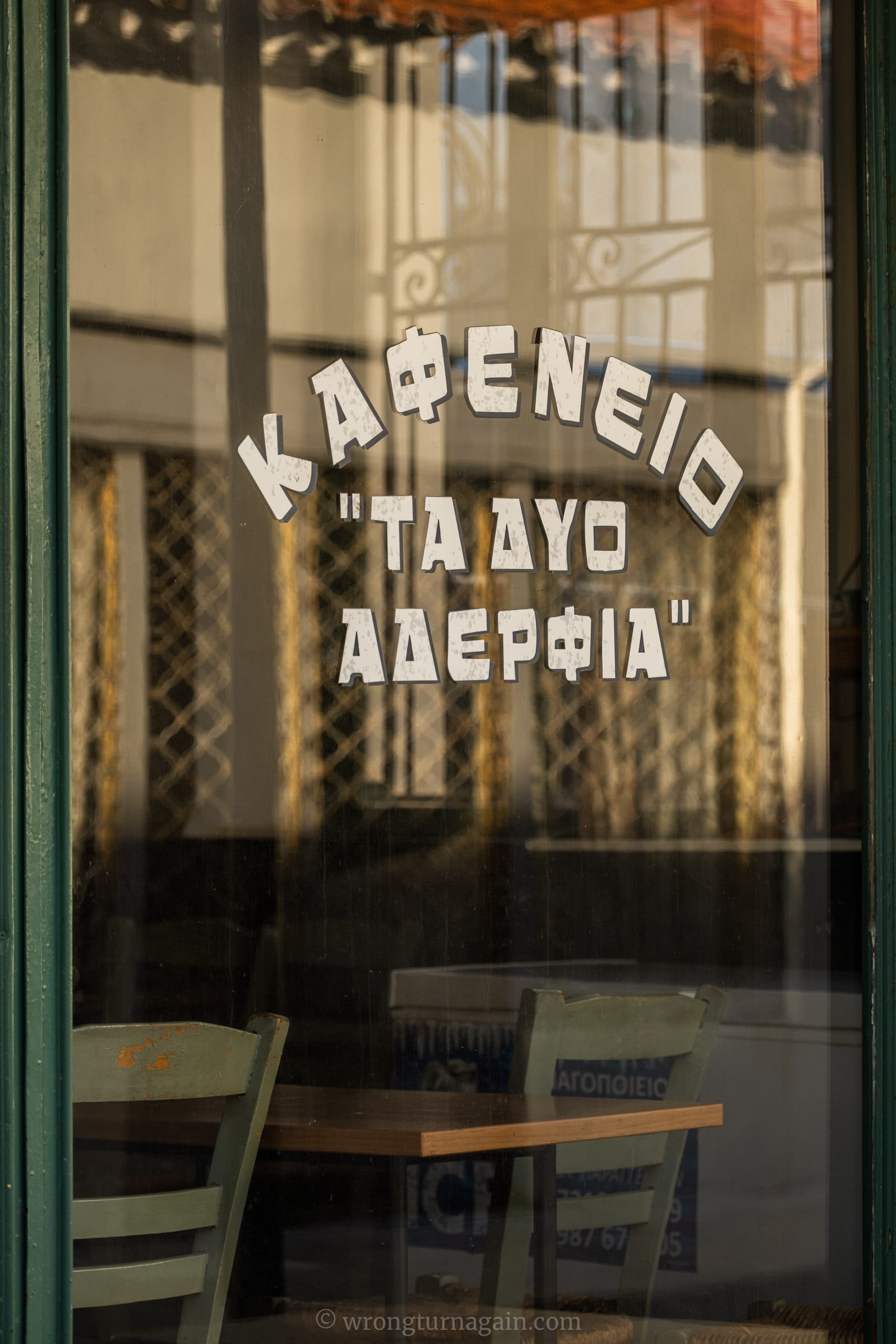
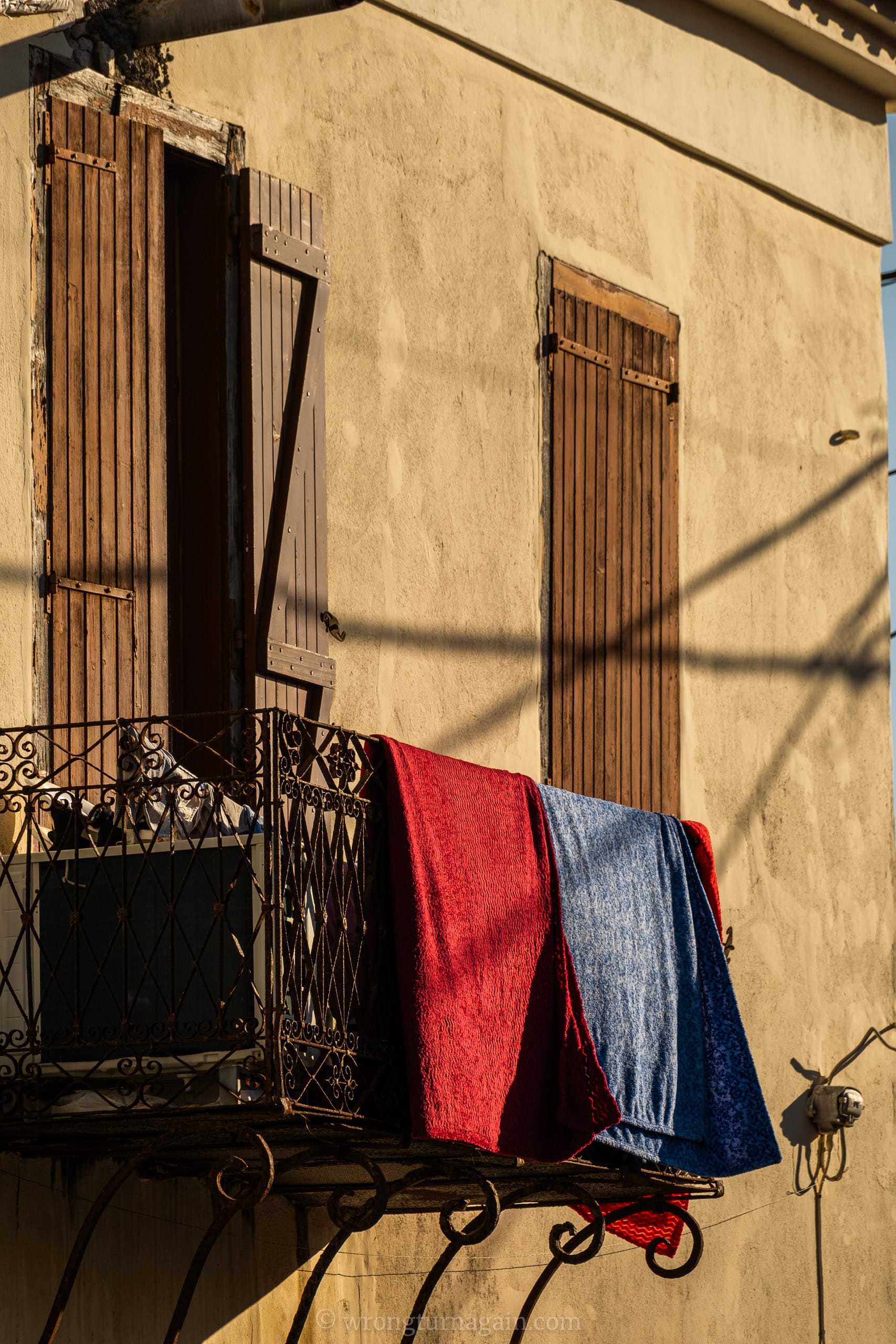
Methoni is a living village where history meets gastronomy. Unlike remote sites, here you can walk straight from the castle gate to a tavern table. The culinary scene is honest and traditional, focusing on fresh seafood near the port and slow-cooked “mageirefta” in the village square.
Lunch & Dinner
Coffee & Spirits
Where to Stay in Methoni
While you can easily visit as a day trip from Pylos or Finikounda, Methoni is definitely worth a night on its own. Seeing the illuminated castle reflect on the water after the crowds have gone is a unique experience.
Accommodation here is split into three zones: the Village Center (walkable to everything), the Outskirts (stone villas in the olive groves), and for nature lovers, the organized Camping Methoni right on the beach.

Our Top Methoni Picks
 ULYSSES HOTEL
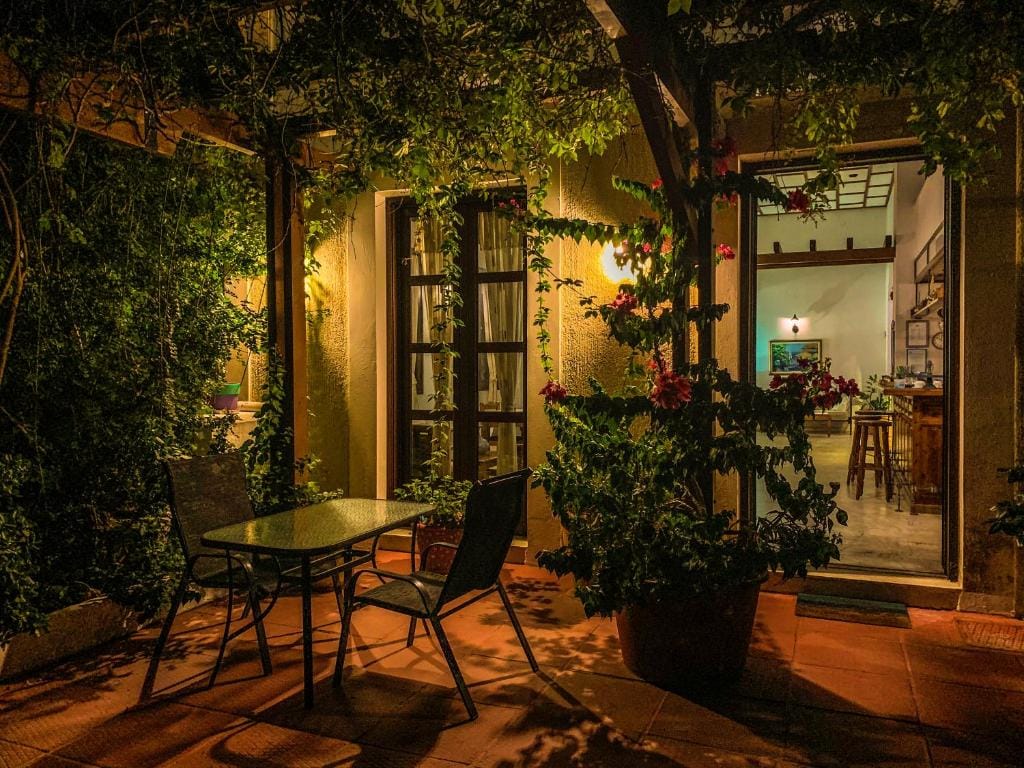
Best for Convenience. Located in the heart of the village. Clean, comfortable, and within walking distance to the castle and tavernas.
 NIRIIDES VILLAS
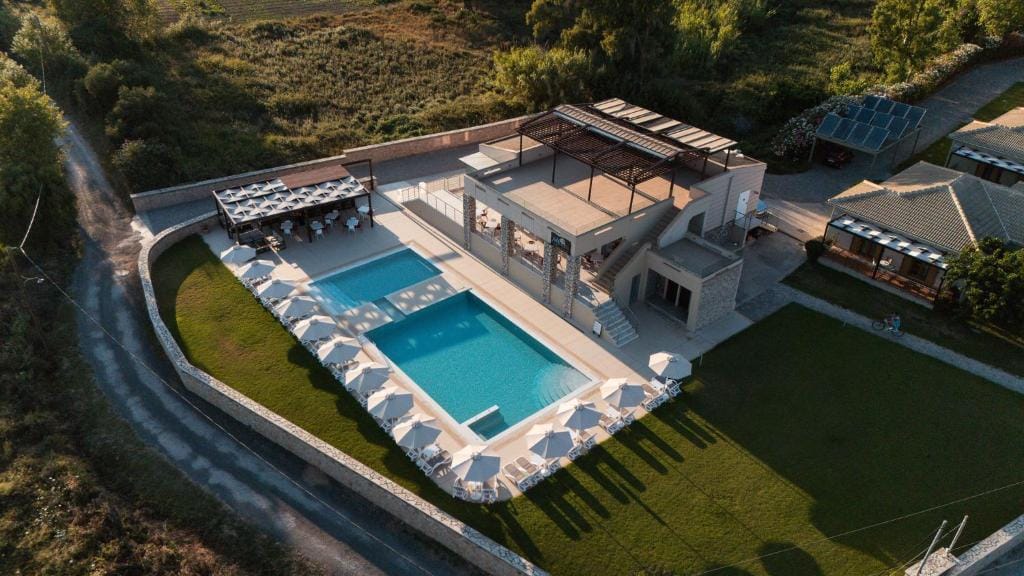
Best for Views. Modern villas perched on a hill above the village. Offers privacy, a pool, and stunning panoramic views of the sea.
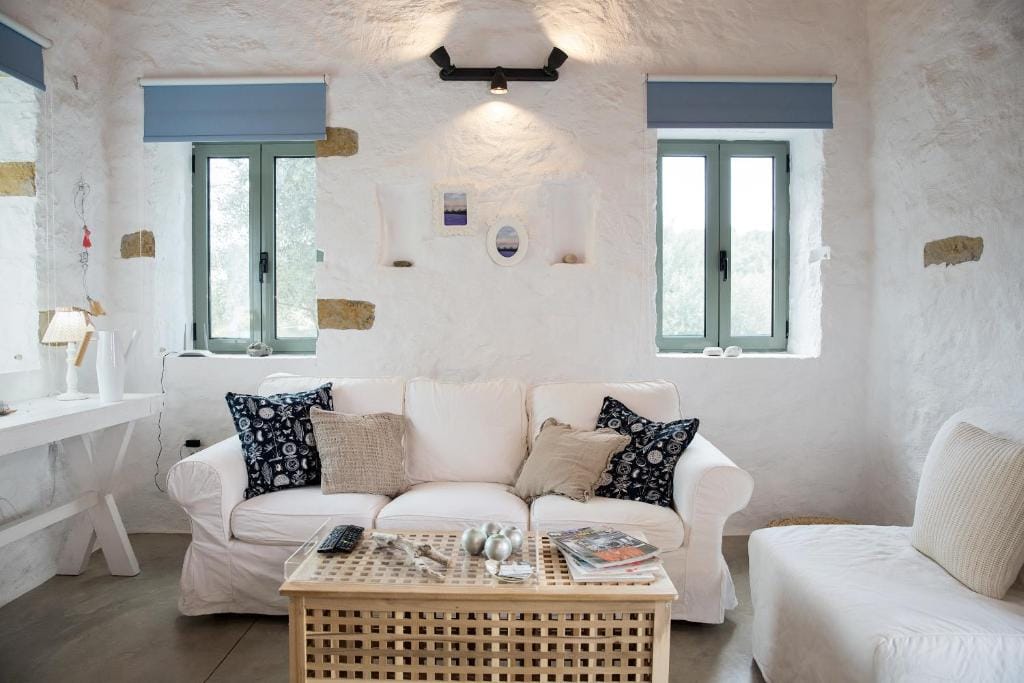 AFENTIKO PIGADI
Best for Nature. Authentic stone villas located in a quiet olive grove just outside the village. Perfect for a peaceful, rustic escape.
Best Time to Visit Methoni
If your main goal is to explore every corner of the vast castle complex without breaking a sweat, the absolute best months are April, May, and October. During this time, the fortress is carpeted in wildflowers, the light is soft for photography, and the temperature is perfect for the long walk to the Bourtzi.
For those looking to combine history with a swim in the turquoise waters of Methoni Beach, June and September are your best bets. However, keep in mind that these months are still quite warm (often exceeding 30°C). If you visit then, treat the castle as an early morning activity and save the afternoon for the sea.
During July and August, the stone walls radiate intense heat, and there is zero shade inside the complex. If you must visit in peak summer, arrive before 9:30 AM or after 6:00 PM to avoid heat exhaustion.
Methoni Budget Breakdown
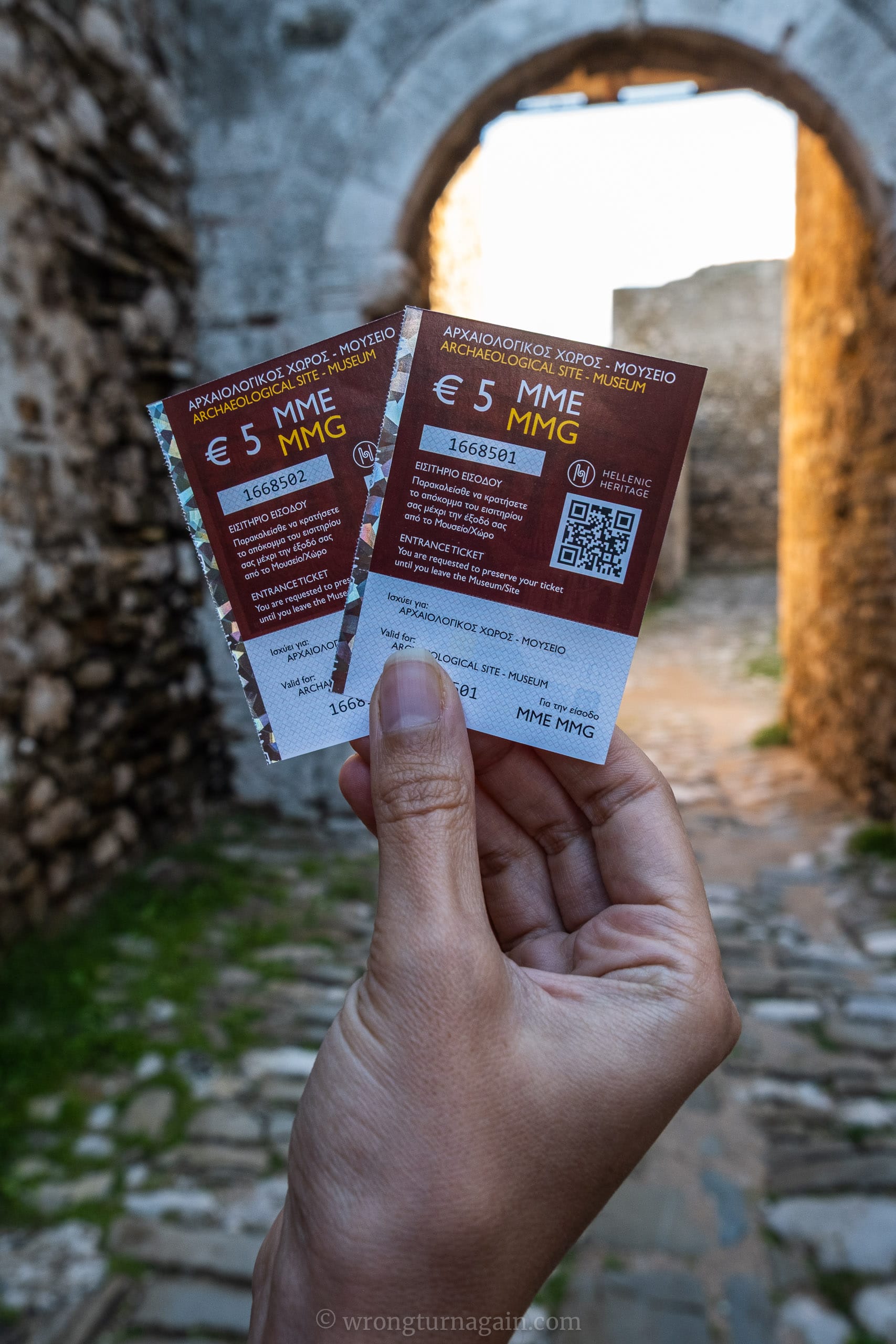
Planning a trip to Methoni won’t break the bank. Unlike the high-end resort areas of nearby Costa Navarino and Gialova, this village remains down-to-earth and budget-friendly. While there is a small ticket for the castle, dining and staying here offer exceptional value. Here is what to expect for a mid-range daily budget in 2026.