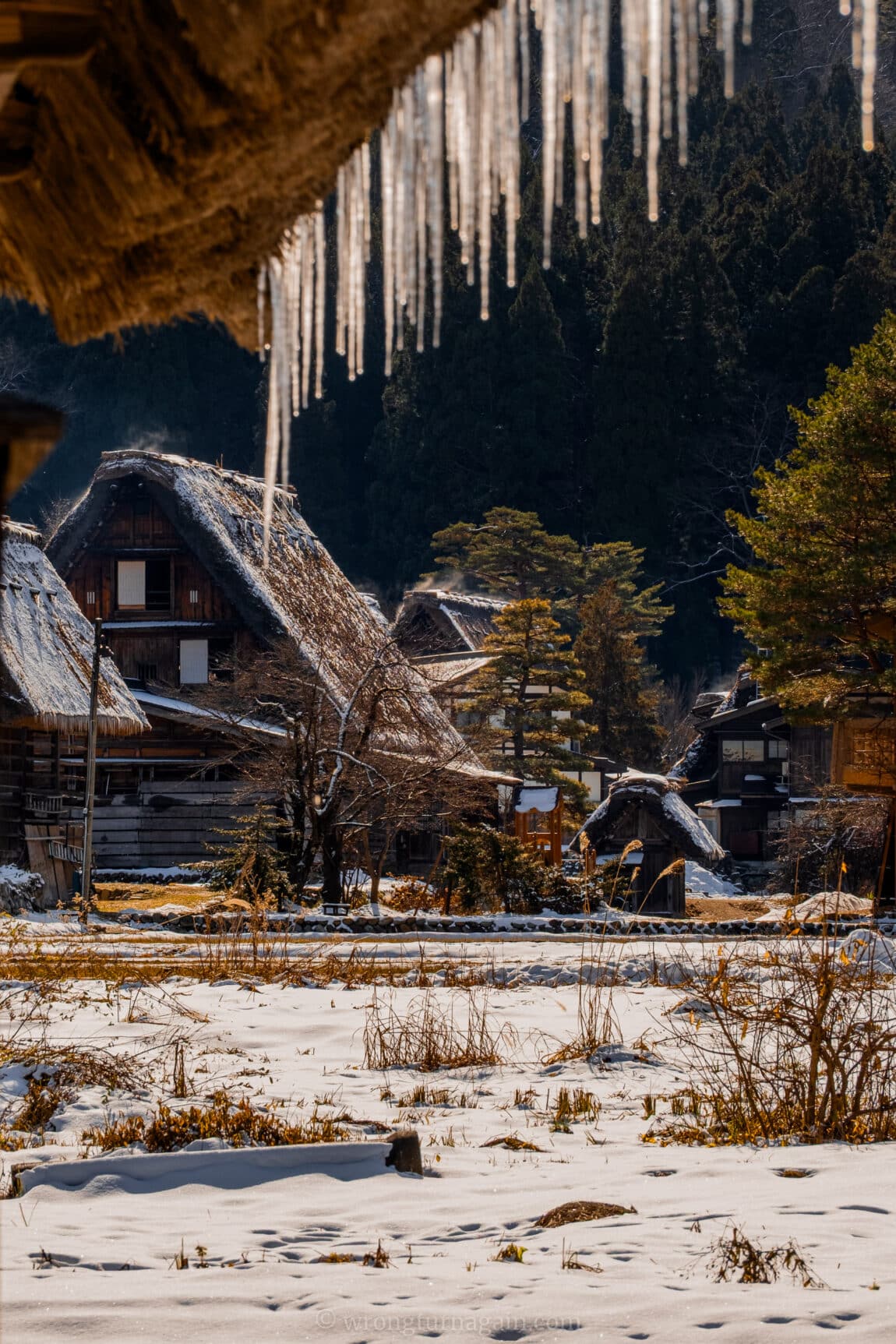
Hidden in the mountains of Central Japan, the historic villages of Shirakawa-go and Gokayama look as if they have been plucked straight from a fairy tale. Here, steep triangular thatched roofs rise above the morning mist, and small settlements sprawl across the narrow valleys of the Shogawa River, where time seems to flow a little slower. From the vibrant hub of Ogimachi to the quiet seclusion of Suganuma and Ainokura, these villages stand as the most authentic surviving examples of traditional Japanese rural life.
Wander among the massive wooden gassho-zukuri farmhouses, climb to the scenic viewpoints, explore local museums and temples, and experience a side of Japan that has remained virtually untouched by the modern world. In this guide, you will find everything you need to organize your visit to these three unique UNESCO World Heritage villages.
Understanding the Region: Shirakawa-go & Gokayama
Deep in the Japanese Alps, straddling the rugged borders of Gifu and Toyama prefectures, lies the secluded valley of the Shogawa River. For centuries, heavy winter snowfall and difficult terrain kept these communities virtually cut off from the outside world. This isolation allowed a unique culture to flourish, centered around the settlements of Shirakawa-go and Gokayama.
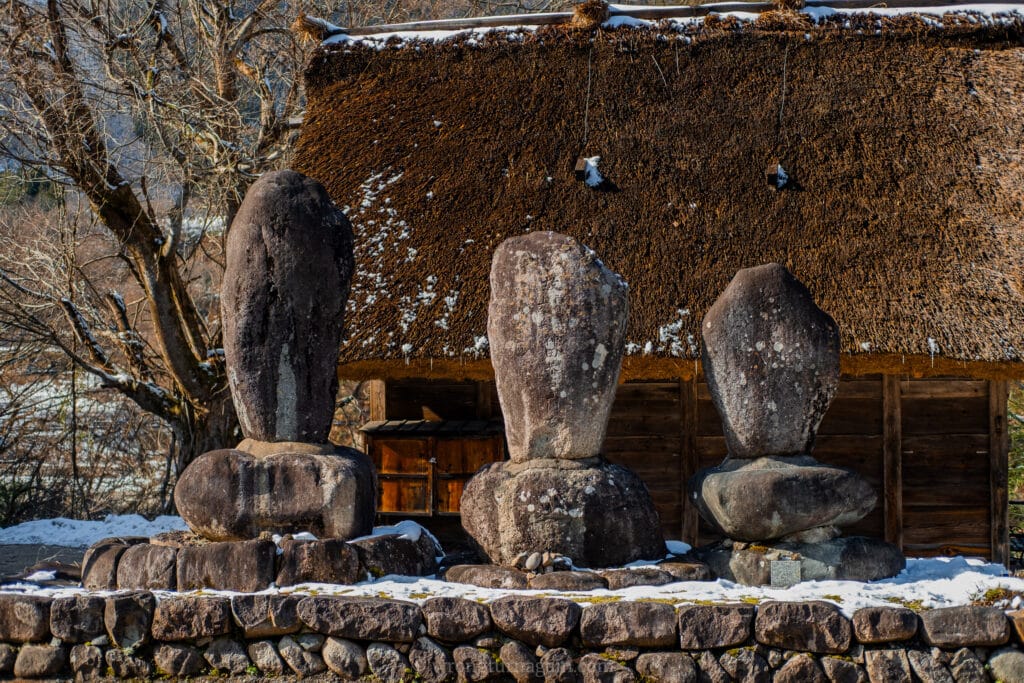
Today, the most authentic examples of this lifestyle are preserved in three specific villages: the larger, bustling Ogimachi (Shirakawa-go), and the quieter, more intimate Ainokura and Suganuma (Gokayama).
In 1995, these three villages were collectively designated as a UNESCO World Heritage Site. They are recognized not merely for their architecture, but as living settlements that have adapted perfectly to their environment—a rare continuity where history is still lived daily by the residents

These fairy-tale cottages were actually hidden factories! During the Edo period, the region was a major producer of saltpeter (a key ingredient for gunpowder). The villagers produced it beneath the floorboards of their homes, while the attics were used for silk production. This secret industry helped the isolated villages survive economically for centuries.
Inside the Gassho-zukuri Farmhouses
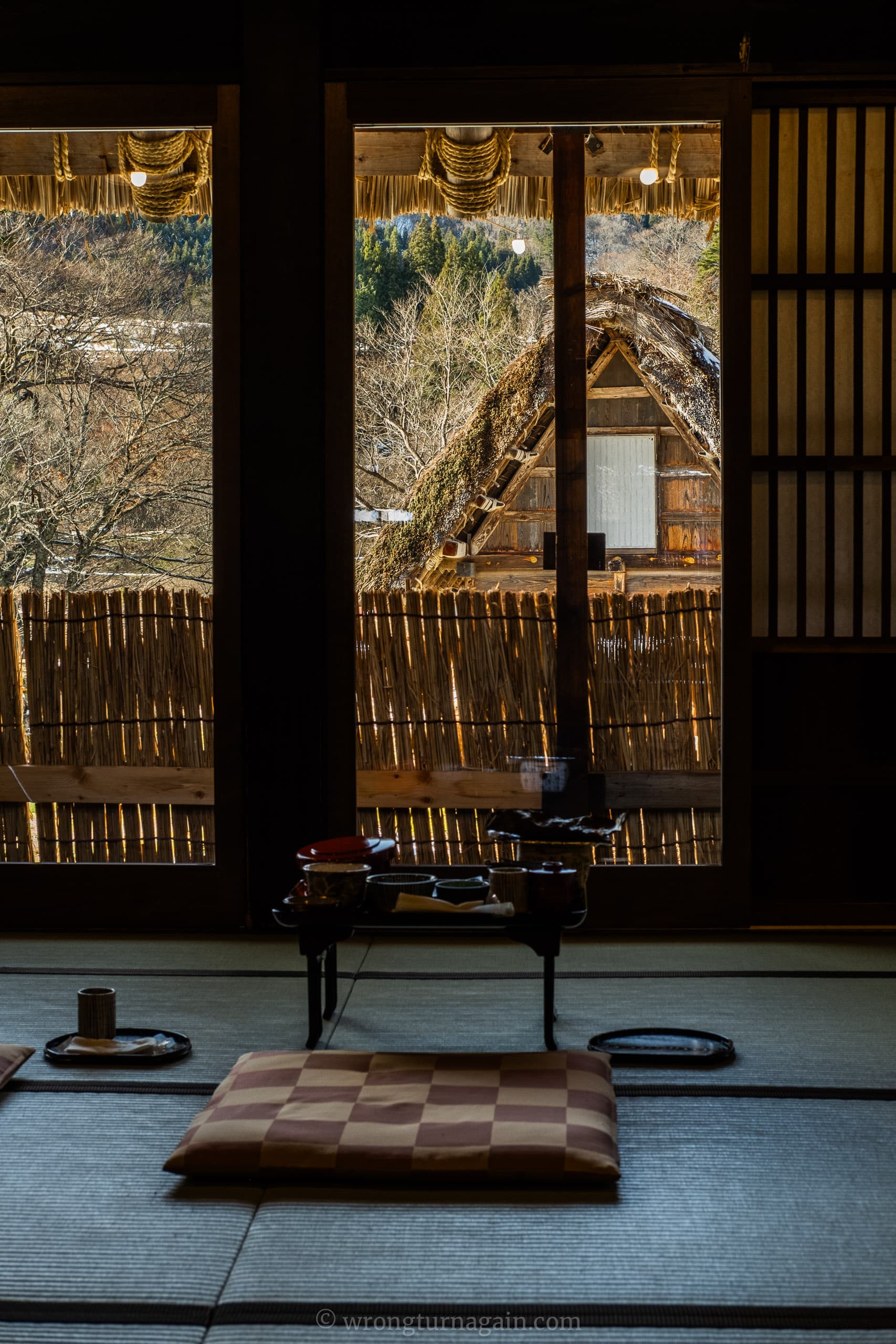
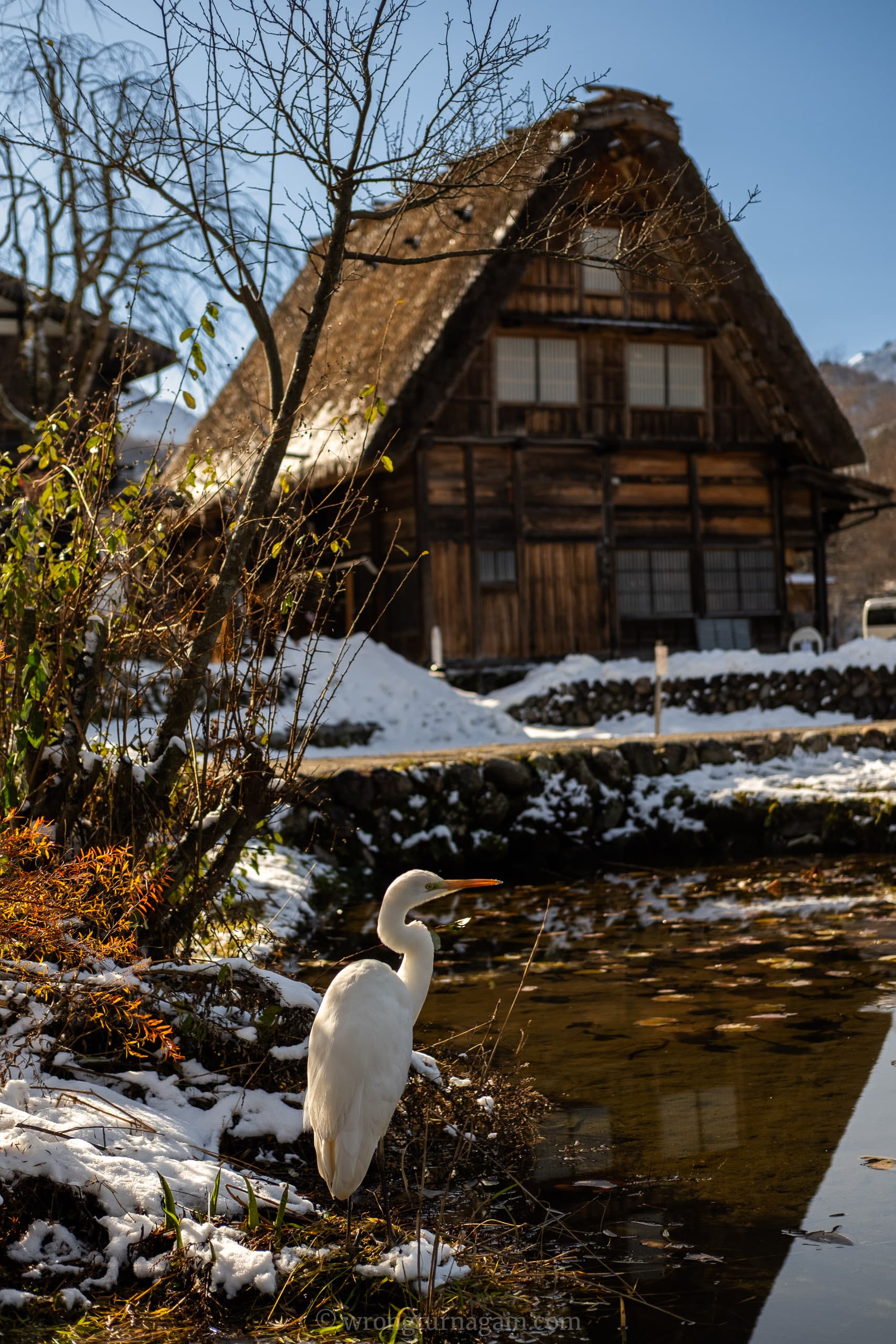
The defining feature of the landscape is the gassho-zukuri farmhouse. Named after their steep, triangular thatched roofs which resemble Buddhist monks’ hands pressed in prayer (gassho), these massive wooden structures are an architectural marvel.
Built entirely without nails, the roofs are pitched at a steep 60-degree angle. This design is purely functional: it prevents the heavy snow of the region—which can reach 2 to 3 meters—from crushing the house.
How the houses work: Step inside a gassho-zukuri, and you’ll see how every inch was designed for efficiency:
- Orientation: You will notice that almost all houses face north-to-south. This aligns the roof with the path of the sun to melt snow faster in winter and keep the thatch dry in summer, while minimizing wind resistance.
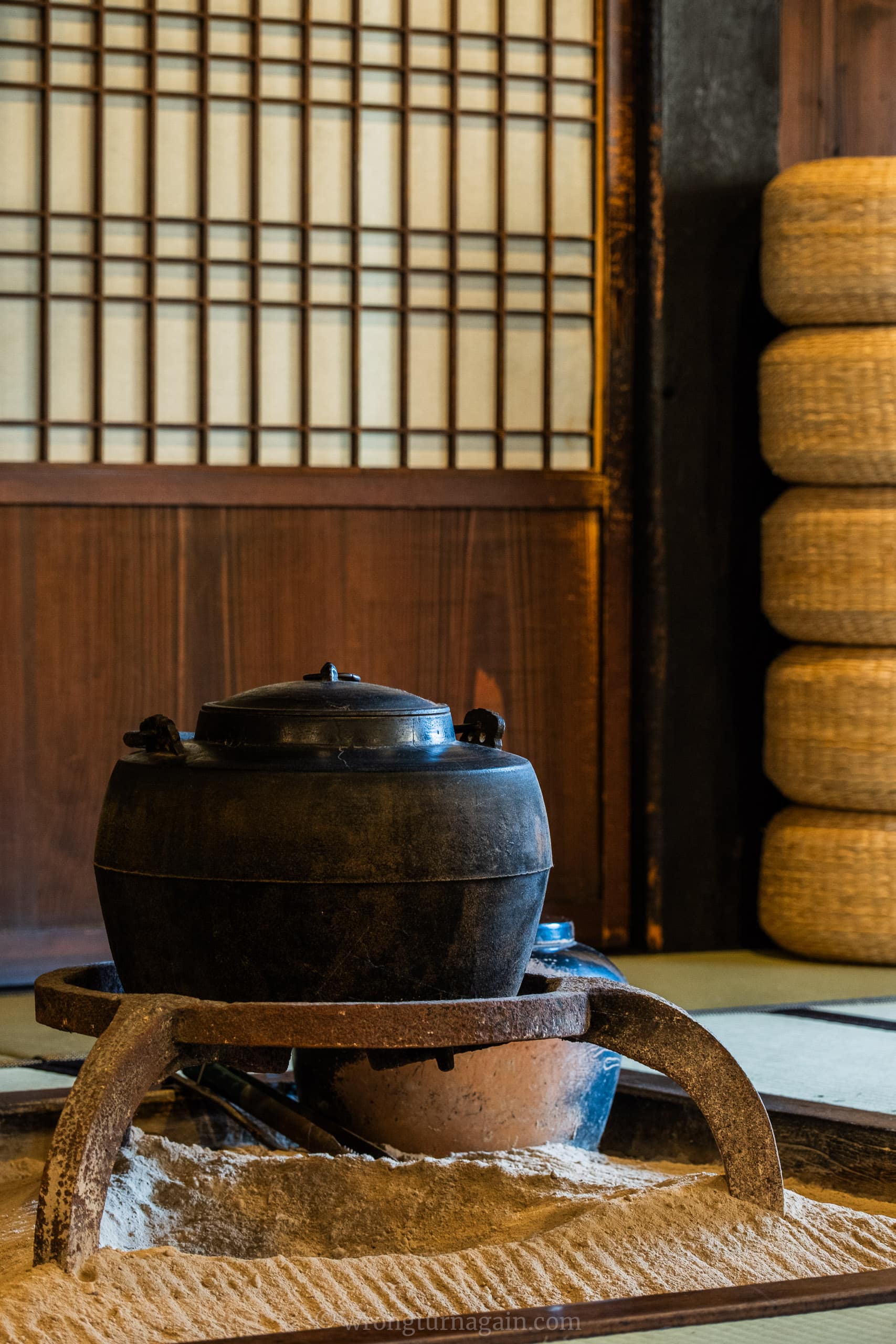
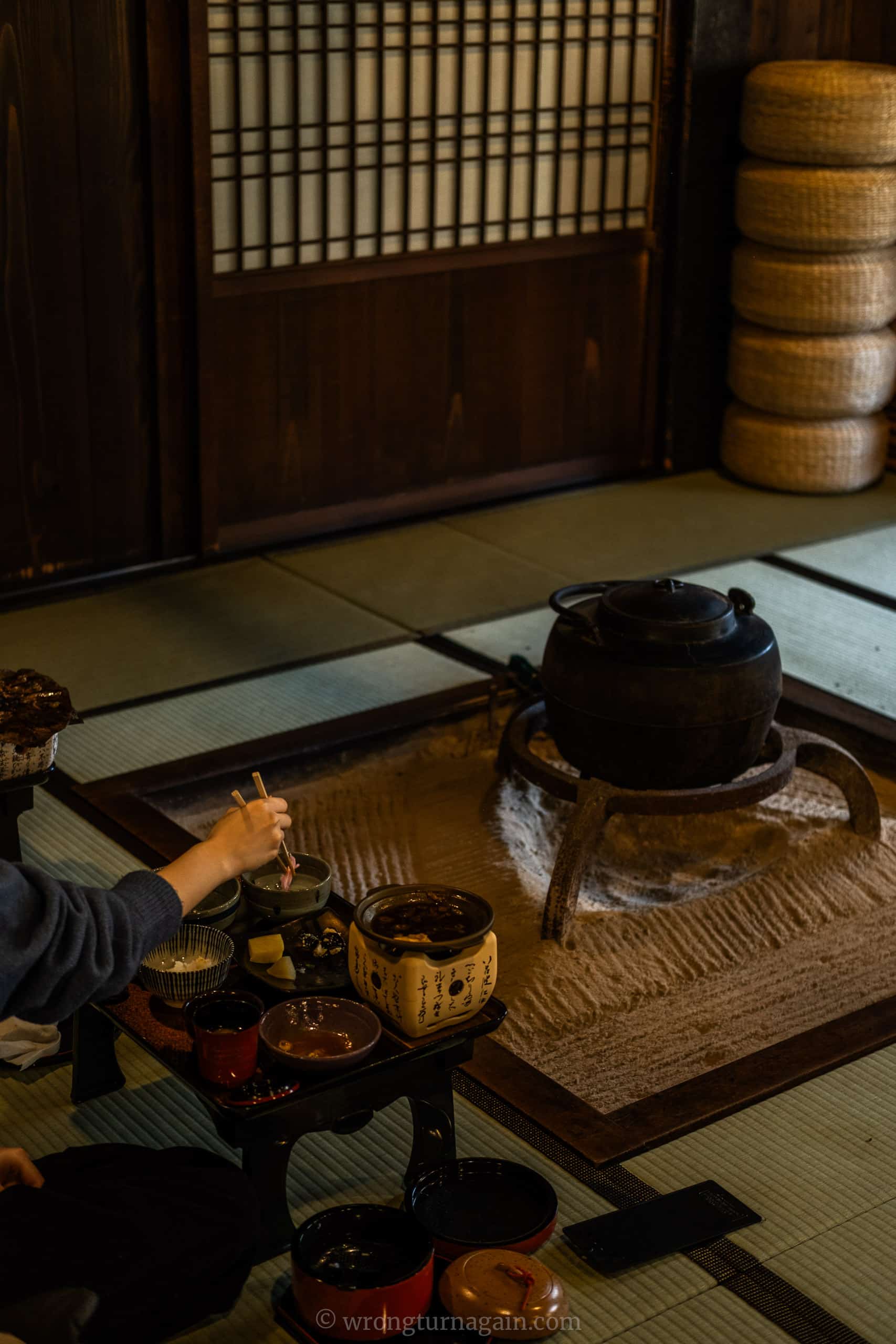
- The Ground Floor: This is the center of daily life, where the family lives and eats around the irori (sunken hearth).
- The Upper Floors: The multi-level attic space was historically the “factory.” The heat and smoke from the iroribelow would rise through the open lattice floors, keeping the space warm and dry. This created the perfect environment for silkworm cultivation (sericulture), the villagers’ primary trade.
Maintaining these giant roofs requires a massive amount of labor. This led to the system of Yui —the spirit of mutual cooperation. Even today, when a roof needs replacing (every 30–40 years), hundreds of villagers gather to re-thatch it together in a single day, keeping both the building and the community bonds strong.
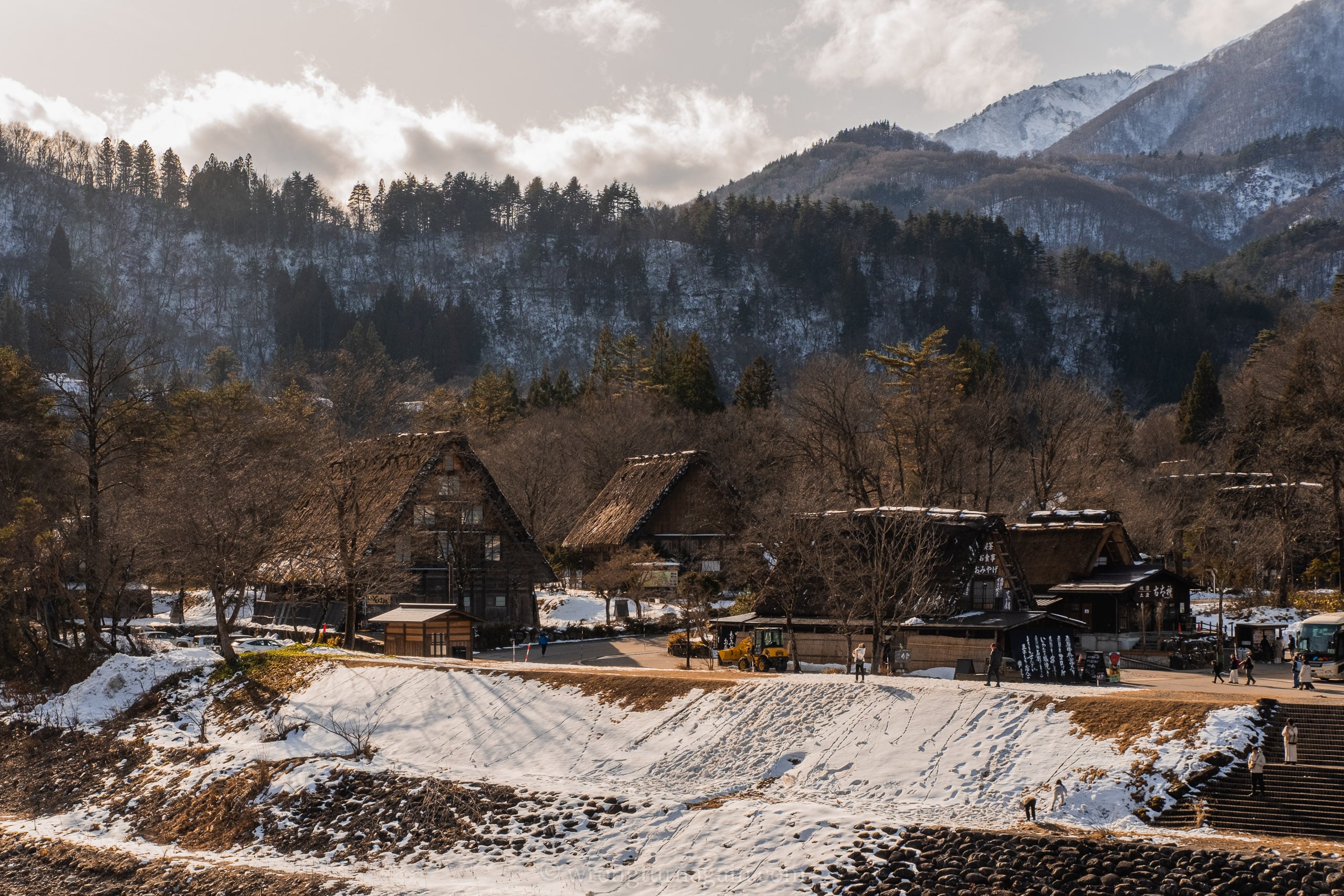
Exploring the Three Villages: Ogimachi, Ainokura, and Suganuma
While all three settlements share the same UNESCO status and iconic architecture, they offer vastly different experiences. Ogimachi (Shirakawa-go) is the spectacular, bustling hub, perfect for first-timers and classic photos. In contrast, Ainokura and Suganuma (in the Gokayama region) feel like time capsules—quiet, intimate, and largely devoid of crowds.
Here is a breakdown of what makes each Shirakawa Japanese village unique to help you plan your route.
1. Ogimachi (Shirakawa-go): The Iconic Village
Ogimachi is the largest and most easily accessible of the three UNESCO villages. Home to over 100 households, it offers the most complete picture of traditional life in the Shogawa Valley.
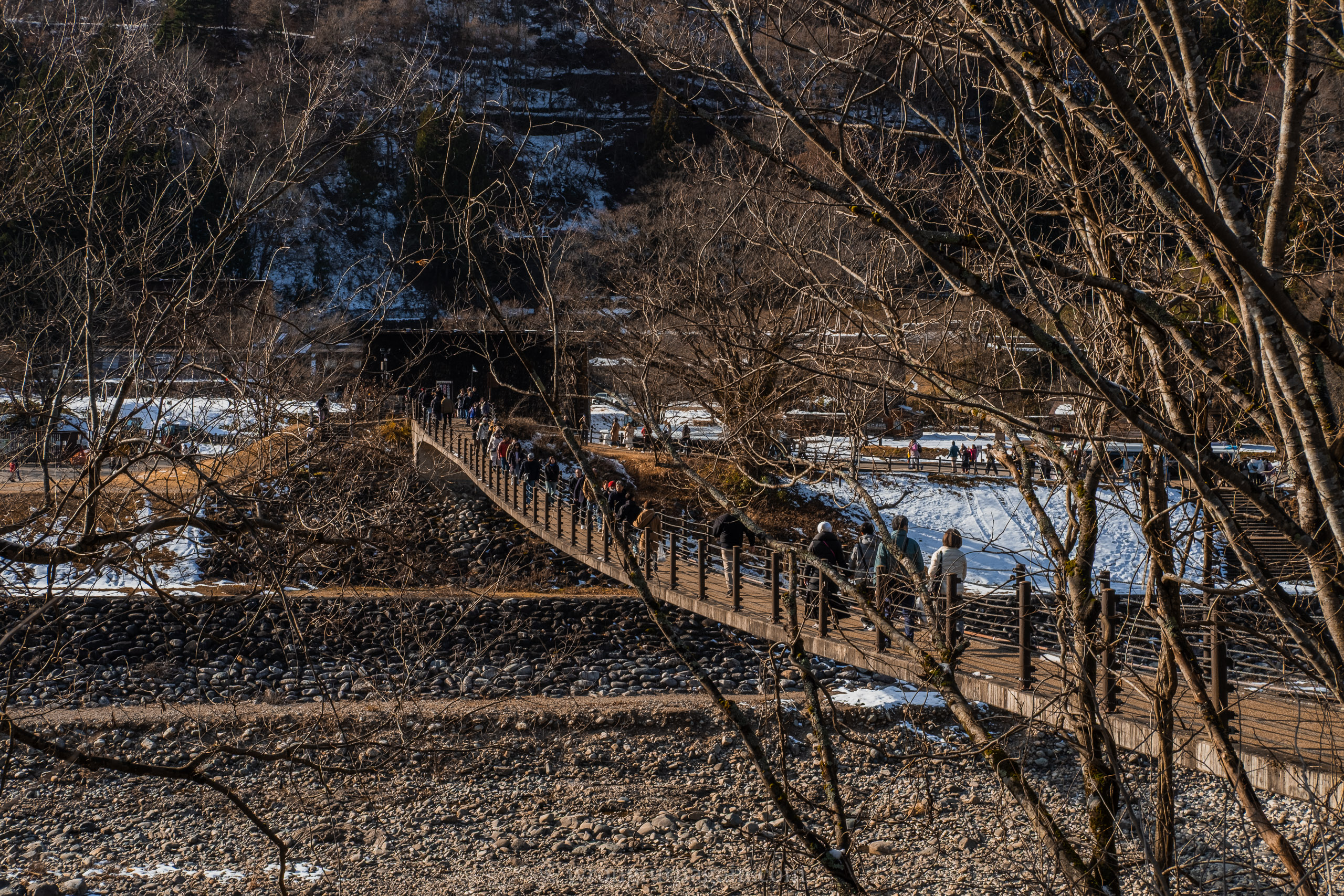
Whether you arrive by bus from Takayama or Kanazawa, or by car, your journey likely begins at the Deai-bashi Suspension Bridge, which serves as the dramatic gateway to the village. Once you cross the river, you are stepping into a living museum where history is preserved in every wooden beam.
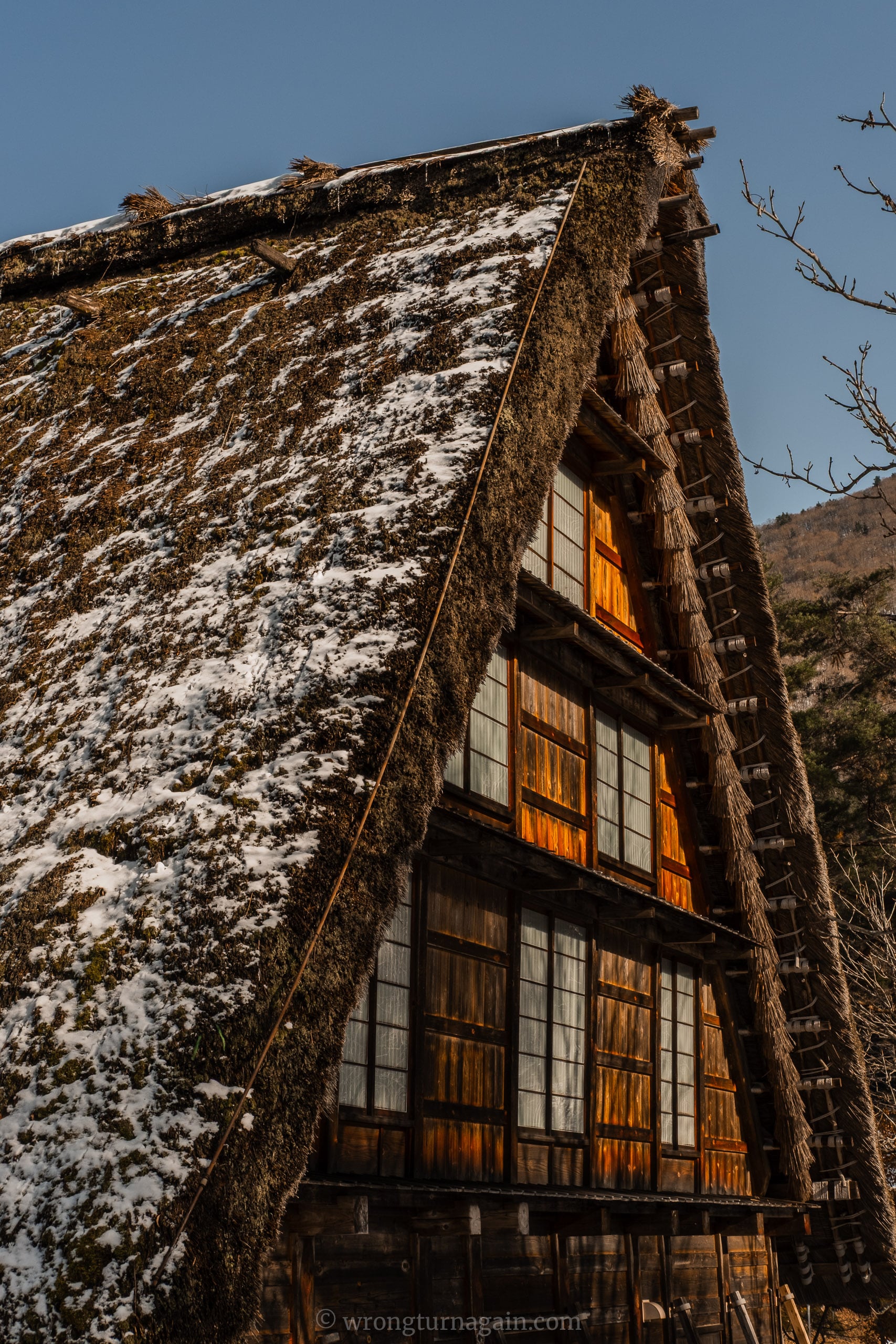
Historic Houses
The Wada House (Wada-ke): This is the largest and most prestigious house in the village. The Wada family served as village leaders (nanushi), which is why the house features a unique dual entrance: a modest entry used by the family for daily life, and a grand set of doors reserved exclusively for government officials visiting on business.
The Wada family was incredibly wealthy, but not just from farming. They were major producers of gunpowder (saltpeter) and silk. Inside, you can still see the lacquerware and family heirlooms that display their high status.
The Kanda House (Kanda-ke): Located just a short walk north, this 4-story house is often praised by visitors for its high-quality carpentry. The Kanda family was involved in brewing and sericulture. Look for the gently curved roof beams (chonagake), which were chosen naturally from the forest to support the massive roof weight. The upper floors offer an excellent close-up view of the structural ropes and bindings.
The Nagase House (Nagase-ke): Standing five stories tall, this is the tallest gassho-zukuri in the village. The Nagase family were doctors for generations, and the ground floor features an interesting display of Edo-period medical tools. The roof is supported by an impressive 11-meter central pillar made from a single tree.


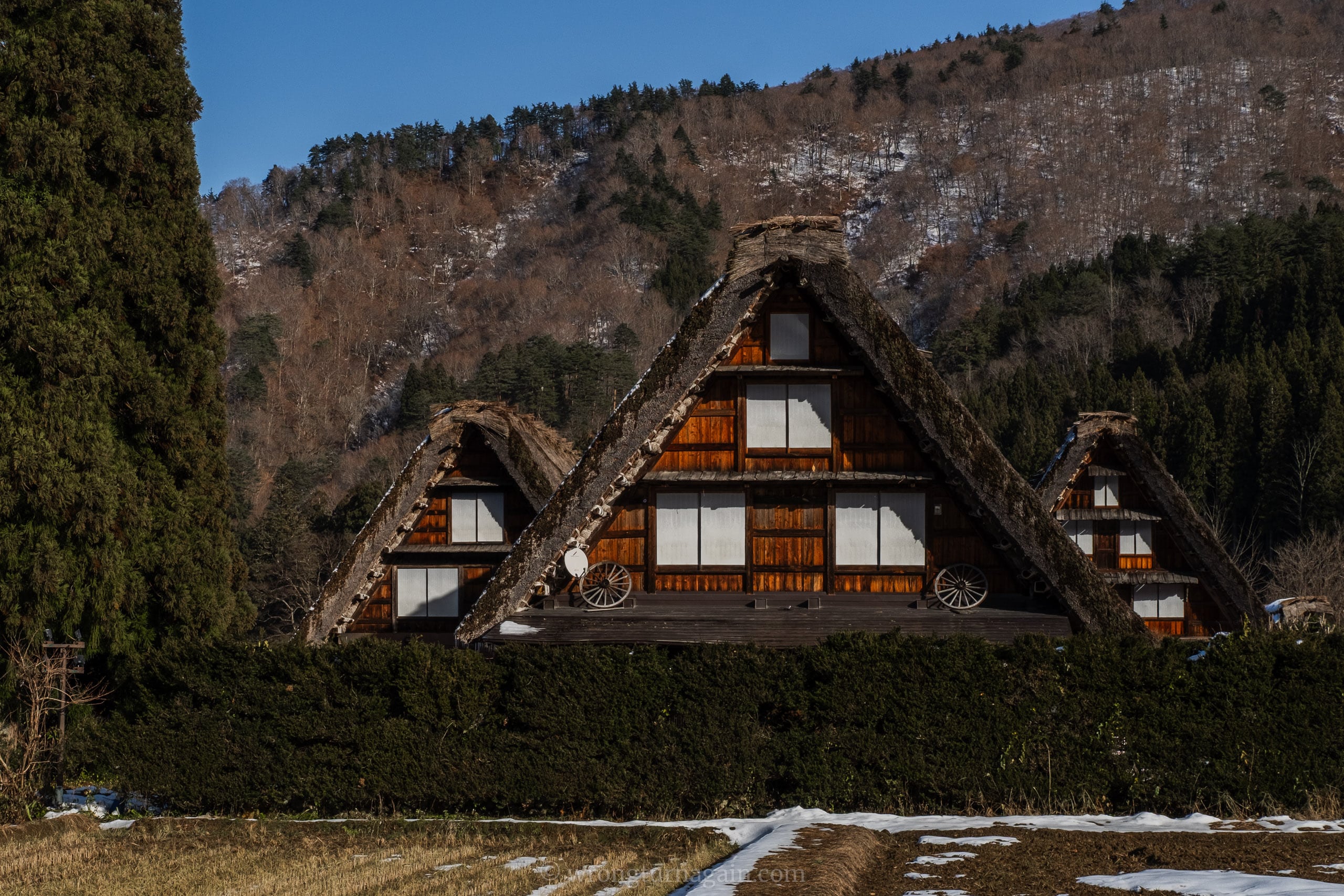
Best Viewpoints
The “Three Houses” Spot: South of the main village, three gassho-zukuri houses stand perfectly aligned amidst the rice fields, framed by the surrounding mountains. It is exceptionally photogenic in late spring (before rice planting) or autumn, when the flooded fields create a stunning mirror reflection of the thatched roofs in the water.
This is a residential area. Please take photos from the paved road and do not enter the rice fields or step on the ridges, as they are private agricultural land.
Shiroyama (Tenshukaku) Observatory: This is the spot where every iconic photo of Shirakawa-go is taken. Located on the site of a medieval castle, it offers a sweeping view of the A-frame houses clustered in the valley. It is especially magical in winter when the snow covers the thatched roofs.

You can walk up the trail behind the Wada House (15–20 minutes) or take the shuttle bus from the village center (¥200). For a slightly different angle, walk just 1 minute to the public Ogi-machi Castle Ruin Observation Area.
Temples & Shrines
Myozen-ji Temple: This is a rare sight: a Buddhist temple complex where the main hall, the bell tower gate (Shoromon), and the priest’s residence (Kuri) all feature thatched roofs. The Kuri is open as a museum, where you can see the soot-blackened attic and the irori fire that is still lit daily.
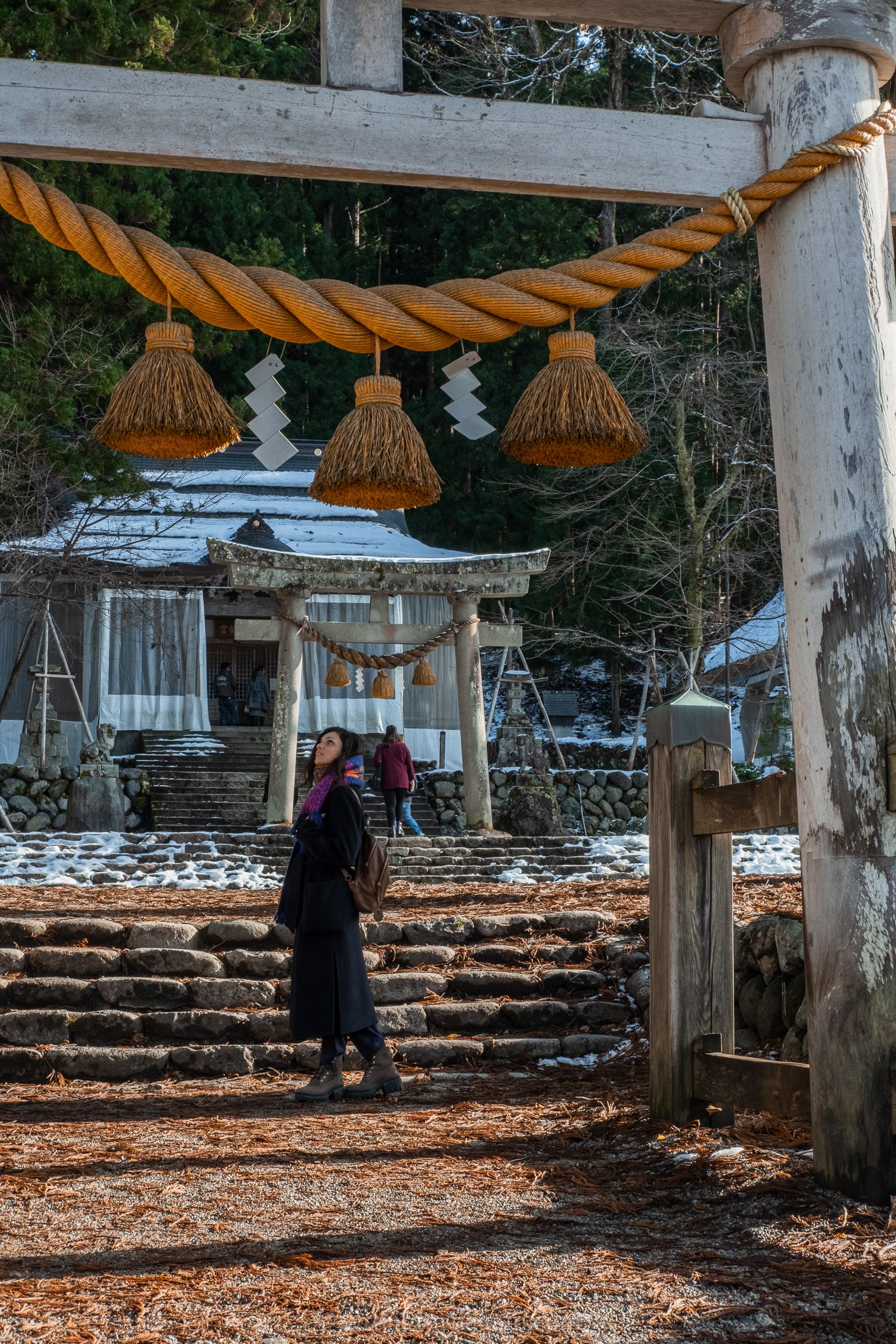
Shirakawa Hachiman Shrine: Tucked away in a grove of ancient cedar trees, this Shinto shrine is dedicated to the deity of warriors. It is the heart of the Doburoku Festival (held every October), where locals offer unrefined sake (doburoku) to the gods for a good harvest.
Museums
Gassho-zukuri Minka-en (Open-Air Museum): Located just across the river from the main village, this is arguably the most informative site in any Shirakawa Japan guide. It functions as a “village within a village,” featuring 25 authentic gassho-zukuri houses that were relocated here from surrounding areas to save them from destruction. The grounds include a watermill, a shrine, and a tea house, offering a comprehensive look at the daily tools and lifestyle of the region.
Tajima House Sericulture Museum: Situated in the northern part of the village, this museum is housed in a traditional gassho-zukuri and is dedicated entirely to sericulture (silk farming). Since silk production was the region’s economic lifeline for centuries, this museum offers crucial context, displaying authentic looms, tools, and the attic space where the silkworms were raised.
2. Suganuma (Gokayama): The Compact Gem
Suganuma is the smallest and most intimate of the three UNESCO villages. Hidden deep in a bend of the Shogawa River, it consists of just nine gassho-zukuri houses. Its compact size allows you to explore the entire area in under an hour, making it the perfect stop for a concentrated dose of history without the walking required in Ogimachi.
If you arrive by bus, the stop is located on a hill overlooking the village. Do not walk down the winding road used by cars! Look for the pedestrian elevator near the bus stop. It takes you directly down to the village level.
The Two Village Museums
To truly understand how these remote communities survived economically, you need to look beyond the architecture. Suganuma hosts two fascinating museums side-by-side that reveal the village’s dual nature: its secret industrial past and its daily traditions.
- Saltpeter Museum (Ensho-no-Yakata): Τhis museum uncovers the village’s biggest secret. During the Edo period, locals produced saltpeter (a component of gunpowder) beneath the floorboards of their homes for the ruling clans. Exhibits explain this complex chemical process that utilized soil, grass, and silkworm waste.
- Gokayama Folklore Museum: Located right next door, this museum focuses on the visible daily life. It displays over 200 items related to the region’s other pillars of survival: sericulture (silk farming), washi paper making, and agriculture.
Viewpoints & Hidden Spots
Once you have explored the history, head straight to the Suganuma Observation Plaza, located just a slight walk up the slope near the village entrance. It provides that postcard-perfect angle of the village isolated in nature—a view that becomes even more magical at dusk when the warm lights from inside the houses begin to glow.
Before you leave, look for the pedestrian tunnel that cuts through the mountain. It connects the residential village to Gokayama Gassho no Sato. This area contains relocated farmhouses used as an educational facility. While you generally cannot enter the buildings, the grounds are often empty of tourists, offering a quiet, park-like atmosphere for a peaceful walk along the river.
3. Ainokura (Gokayama): The Remote Retreat
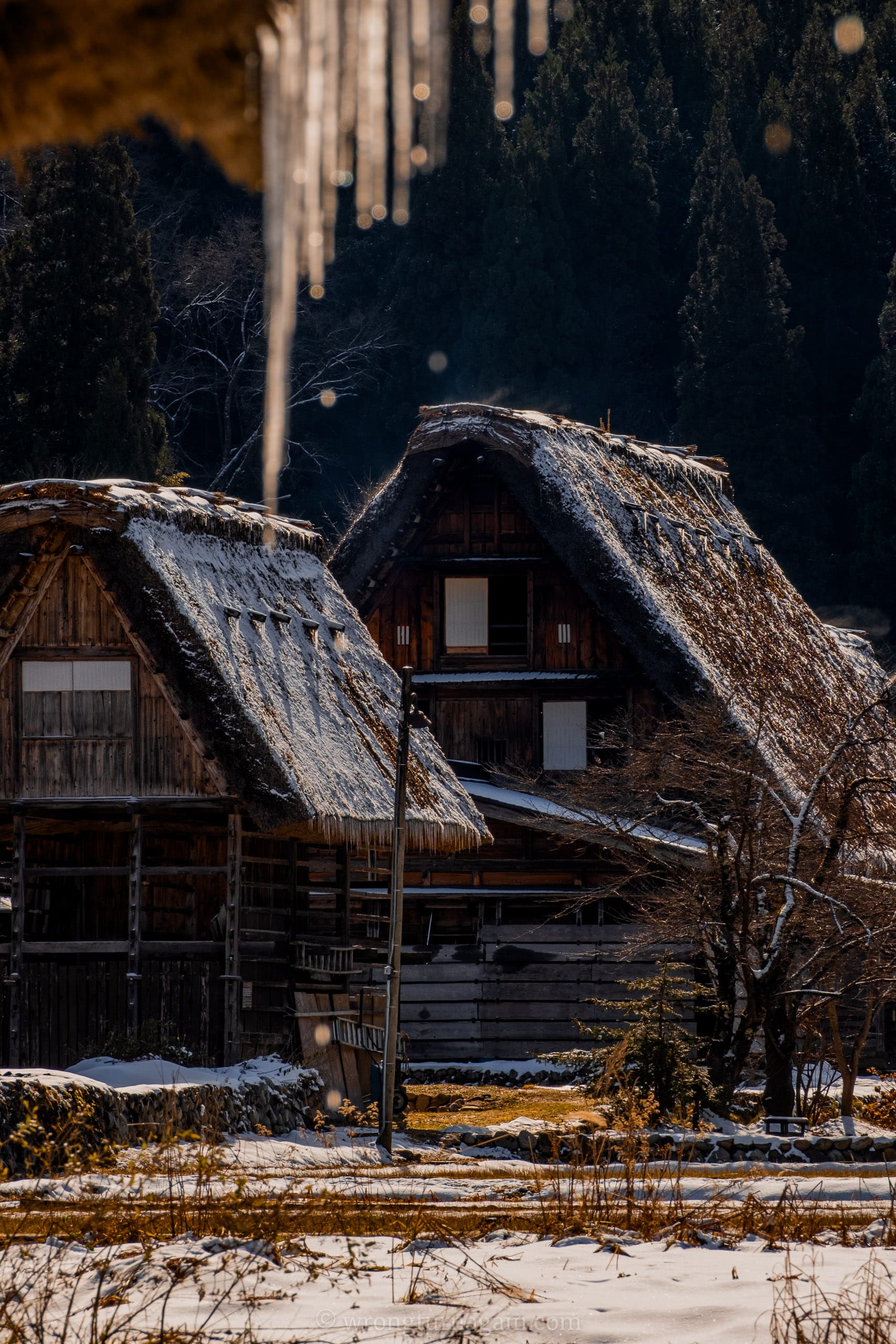
inokura is the most remote of the three UNESCO villages, sitting at an altitude of 400 meters where morning mist often clings to the mountain slopes. Here, about 20 gassho-zukuri farmhouses are scattered across terraced fields, preserving a quiet authenticity. While many remain private residences for local families, several have been converted into minshuku (traditional guesthouses), offering visitors a rare chance to sleep under a historic thatched roof.

Look for the Yusuke House. It is a fine example of local architecture where you can often see the irori (sunken hearth) lit during colder months, offering a warm welcome to visitors.
The Ainokura Viewpoint
For the best perspective of the village layout against the mountain backdrop, head to the Ainokura Observatory. The view is particularly atmospheric early in the morning when low clouds drift over the thatched roofs, or in winter when deep snow blankets the valley.
The trail begins just behind the main parking lot and is an easy 5–10 minute uphill walk passing through local vegetable gardens.
Folk Museums
Two small museums located in authentic gassho-zukuri houses offer a glimpse into the harsh realities of life in this valley. The Ainokura Folklore Museum displays everyday farming tools and cookware, while the Traditional Industry Museum covers the region’s economic survival (saltpeter, silk, and paper).
Note: If you have already visited the museums in Suganuma, the exhibits here cover similar historical ground.
Japanese Washi Paper Experience
Gokayama is famous for its durable handmade paper, and you can experience this craft firsthand at the Gokayama Washi Taikenkan. Located near the village center, this workshop allows you to observe the process—from boiling mulberry bark to drying—and even try your hand at making your own postcard decorated with local flowers as a unique souvenir.
How to Get to Shirakawa-go (The Main Hub)
The villages of Ogimachi, Suganuma, and Ainokura are located deep in the Shogawa Valley, nestled between the cities of Takayama and Kanazawa. Since there is no train service to the region, access is exclusively by car or highway bus.
By Car
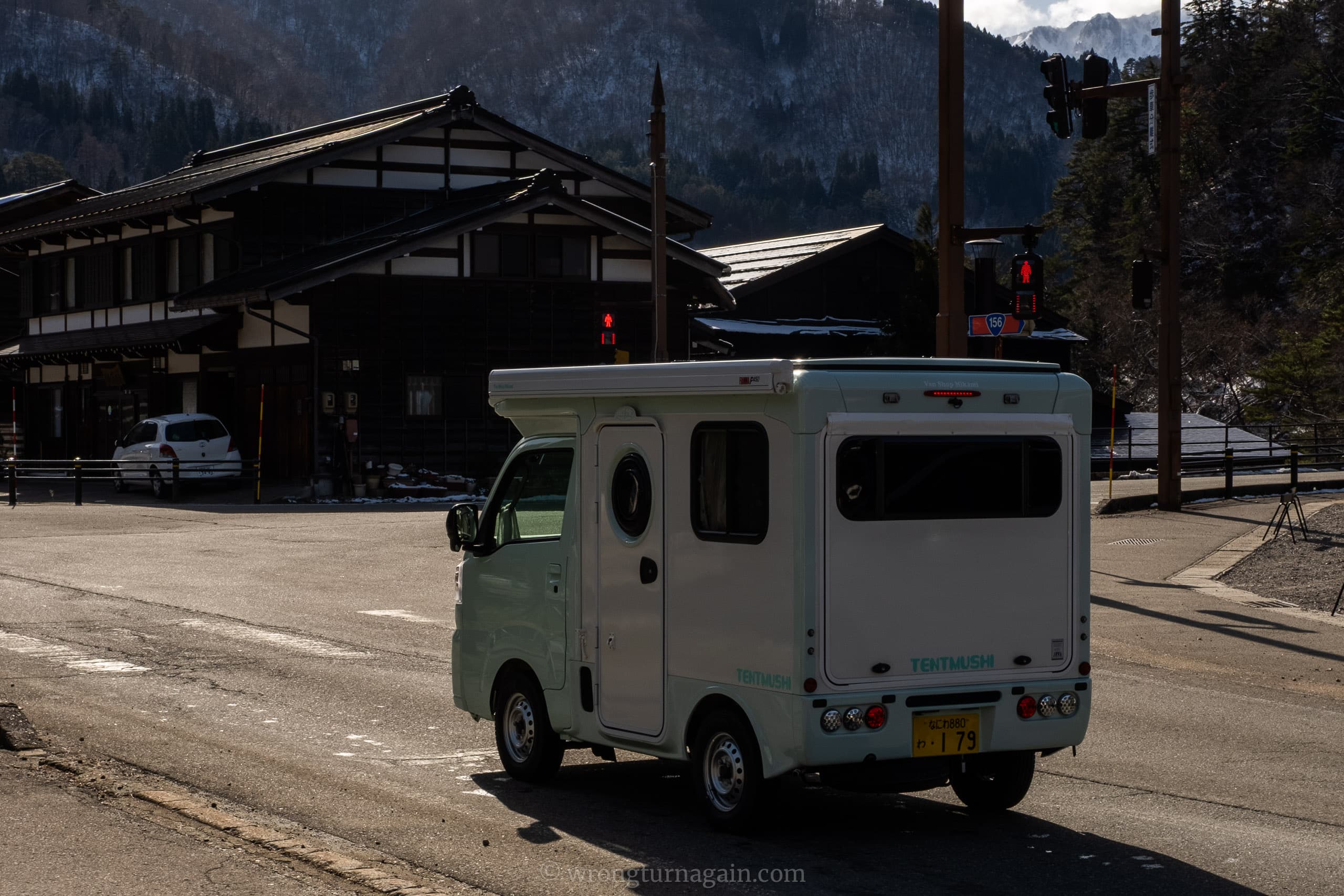
Driving allows you the most freedom to explore the three villages at your own pace. The main village, Ogimachi, is the easiest to reach, while the quieter Gokayama villages are just a short drive north: Suganuma is 22km away, and Ainokura is another 10km.
Winter Warning: From December to March, heavy snow is guaranteed. Winter tires are mandatory by law. When renting a car in the Chubu region during winter, ensure they are included.
The easiest and most common approach. Take the Tokai-Hokuriku Expressway north. It is a smooth, modern highway with many tunnels.
Drive south on the Hokuriku Expressway and switch to the Tokai-Hokuriku Expressway (E41). It is a scenic drive through the mountains. Be careful of strong crosswinds on the bridges.
By Public Transport
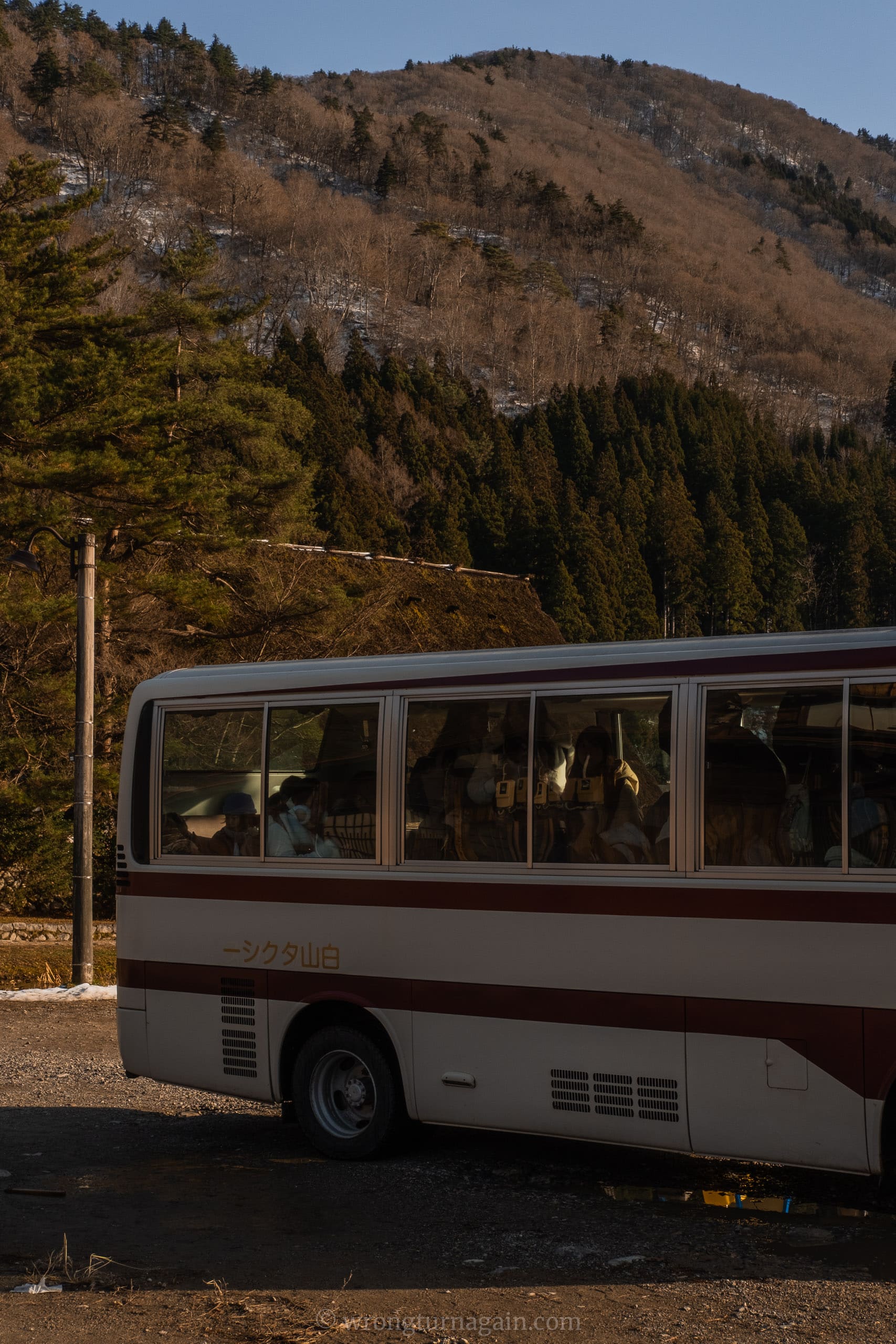
The closest train hubs are Takayama (Hida Limited Express) and Kanazawa or Toyama (Hokuriku Shinkansen). From these cities, you must take a highway bus to reach the Shirakawa-go Bus Terminal (located in Ogimachi).
The shortest and most frequent connection. Buses depart from the Takayama Nohi Bus Center (located right next to the JR Takayama Station).
Note: While some buses are “Non-Reserved,” the majority require booking. Look for the “R” symbol on the schedule.
Connecting the coast to the mountains. Departures are from Kanazawa Station (check your ticket for East or West Gate terminal).
Warning: This route is extremely popular. Reservations are mandatory for almost all departures.
Hand-picked for this route
Getting Around the Villages
While Ogimachi serves as the perfect starting point, the quieter villages of Suganuma and Ainokura lie deeper in the valley, well beyond walking distance (approx. 15km). To reach them, you must switch transit systems.
You cannot use the express highway buses (Nohi Bus) for these short inter-village hops, as they only connect major cities. Instead, your only option is the local Kaetsuno Bus, widely known as the World Heritage Bus. This line connects all three sites and, unlike the express routes, is a convenient hop-on hop-off service—meaning no reservation is needed. Simply check the schedule, line up, and pay on board.
Suggested Shirakawa & Gokayama Itinerary
Whether you are using the bus or driving your own car, here is the most logical route to see all three villages in one go, starting from the most popular and ending at the most remote.
If you are driving, navigation is straightforward via the Tokai-Hokuriku Expressway. Here are the designated parking lots for each village (approx. 500-1000 JPY fee):
Shirakawa-go: Seseragi Park Parking
Suganuma: Gokayama Suganuma Parking Lot
Ainokura: Ainokura Parking Lot
Where to Eat in Shirakawa-go
Unlike the quieter villages of Ainokura and Suganuma, which have very limited dining options, Ogimachi is the only place with a real variety of food. The main street is lined with small cafes and family-run restaurants housed inside old wooden buildings—perfect for a warm break between walks, offering atmospheric views of the gassho-zukuri rooftops.
Lunch & Dinner
Coffee & Sweets
Where to Stay in Shirakawa-go
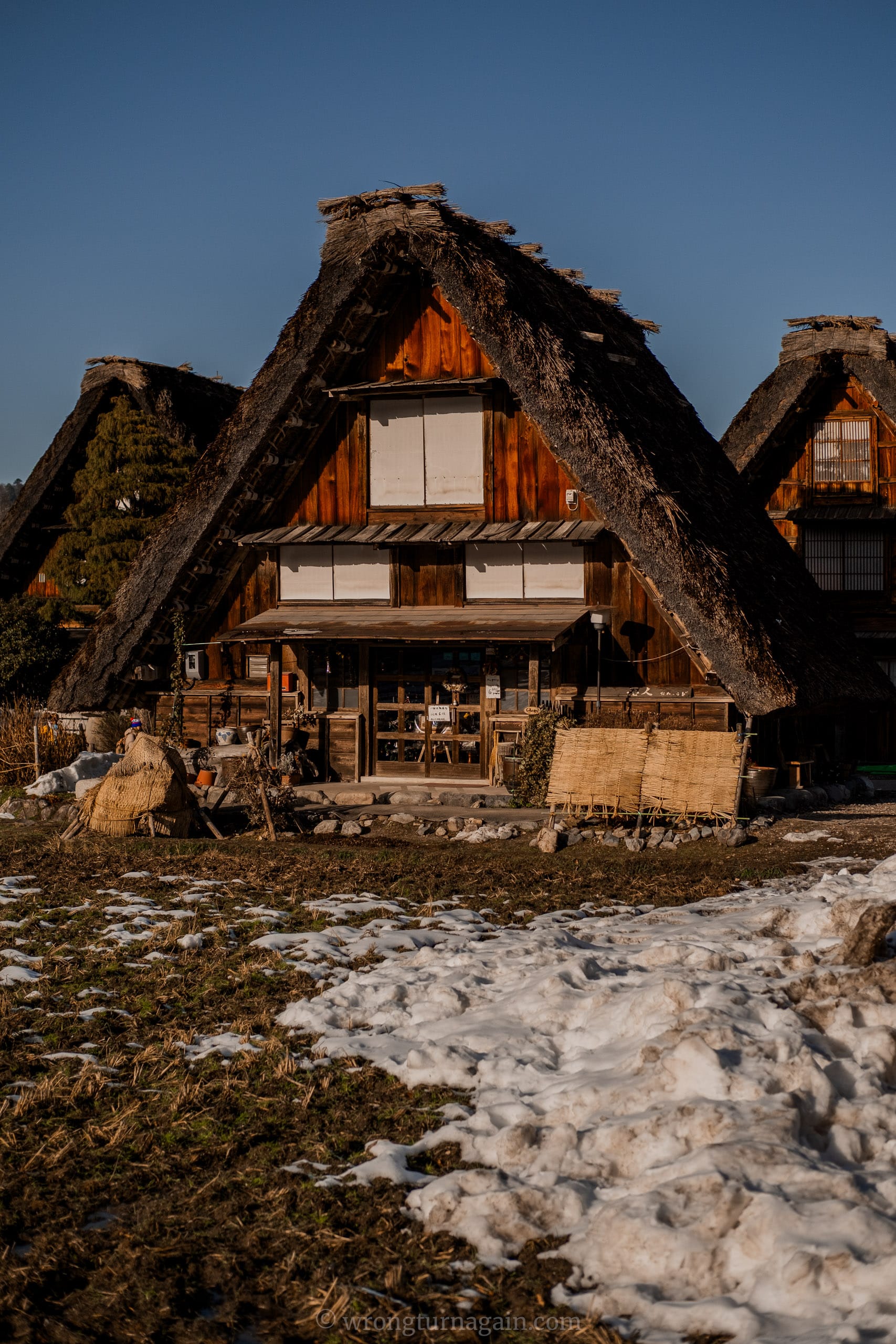
If you want to truly experience the atmosphere of these historic villages, the most authentic way is staying in a Gassho-zukuri Minshuku (thatched-roof farmhouse). These family-run inns offer tatami rooms, communal baths, and homemade dinners featuring local mountain vegetables and river fish cooked over an irori (open hearth).
Note that booking a farmhouse is notoriously difficult as rooms sell out months in advance. For the best chance, check the official Shirakawa-go Tourist Association website, which offers an online reservation system for select properties.
Since Suganuma does not offer accommodation, your decision comes down to staying in one of the other two villages or basing yourself in the nearest city, Takayama. Here are the three best options depending on your travel style:
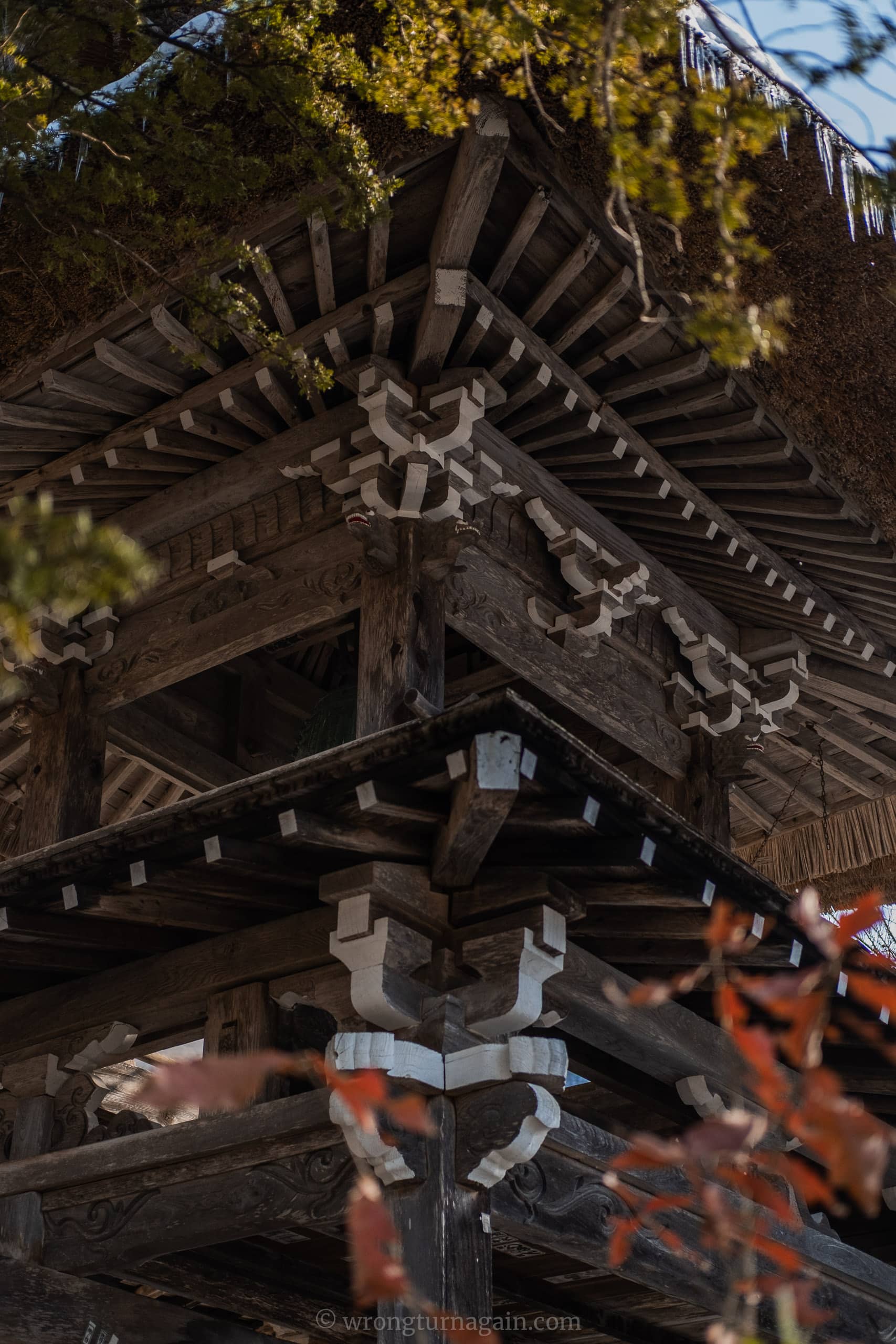
- The Classic Choice Ogimachi (Shirakawa-go): The only village with a significant number of minshuku to choose from. It offers the most comfortable stay within the World Heritage site and is the best option if you want to be in the center of the action.
- Atmosphere & Solitude Ainokura (Gokayama): Much quieter and more isolated than Ogimachi. With only a few highly authentic minshuku inside well-preserved gassho houses, it is the ideal choice for those seeking true silence and a step back in time.
- Practical City Base Takayama City: Just a 50-minute bus ride away. It features a beautiful old town, plenty of proper ryokans and hotels, and is often the most practical solution if village farmhouses are fully booked or too rustic for your taste.

Our Top Shirakawa-go & Takayama Picks
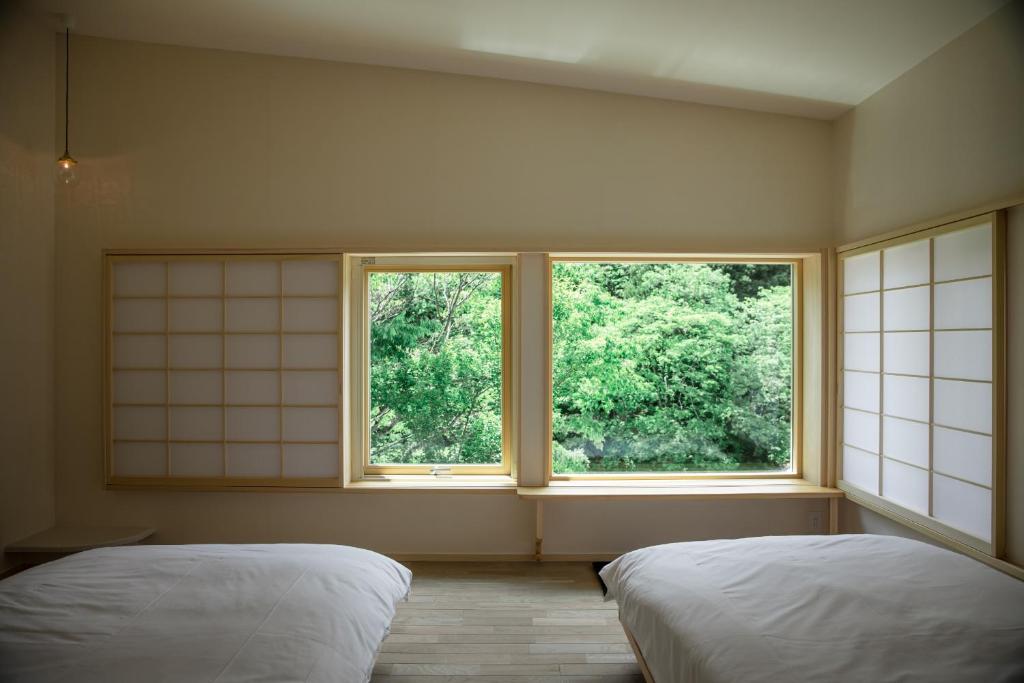 SHIROYAMAKAN
A historic ryokan dating back to the Meiji era. Known for its exceptional food and riverside location.
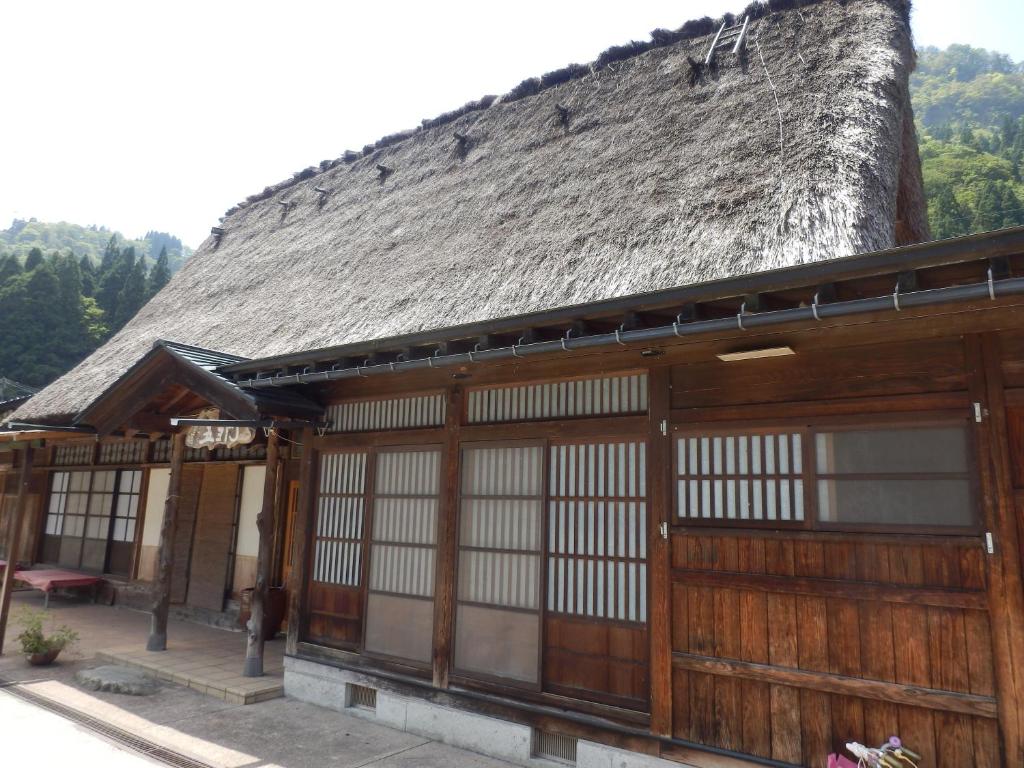 MINSHUKU GOYOMON
The authentic experience. Stay inside a traditional thatched-roof farmhouse in the quieter village of Ainokura.
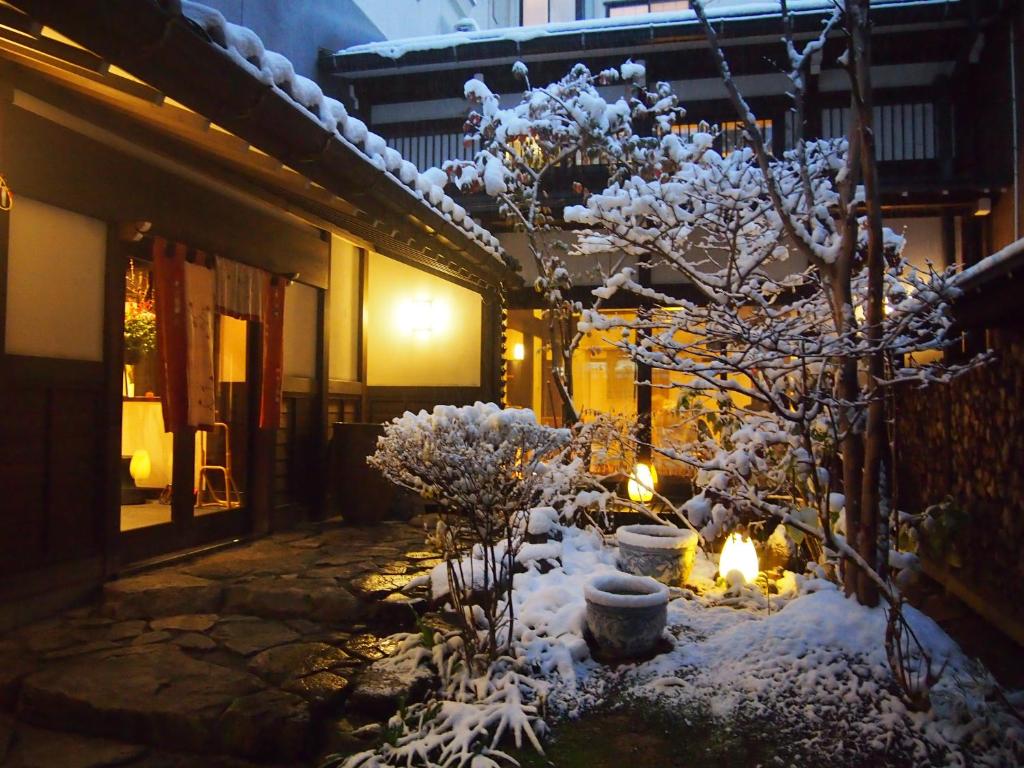 OYADO KOTO NO YUME
A stylish, colorful ryokan in the heart of Takayama. Perfect if you prefer a city base nearby.
How much time to spend
If you are planning a standard day trip to Ogimachi (Shirakawa-go), allocate 3–4 hours as it is the largest village. For the Full Route (including Suganuma and Ainokura), you will need a full day (6–7 hours), counting the travel time between the sites (approx. 1 hour per Gokayama village).
Our Advice: If possible, stay overnight. The daytime crowds can be overwhelming. Staying in a local minshuku allows you to explore the streets early in the morning or late at night, when the tour buses are gone and the atmosphere is truly magical.
Best Time to Visit Shirakawa-go
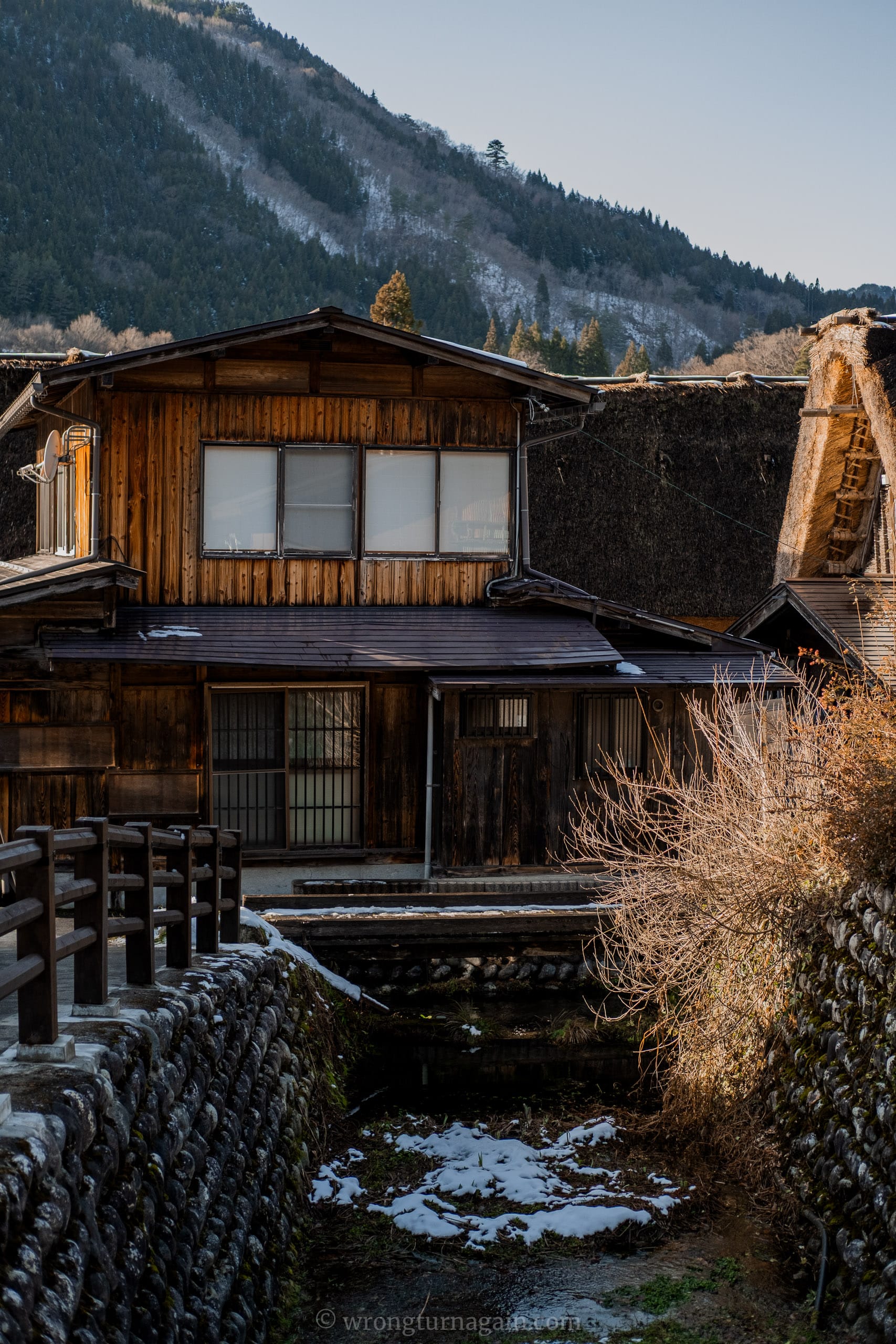
The best time to visit Shirakawa-go and neighboring Gokayama depends on the scenery you prefer. For the iconic winter snow and illumination events, go in January or February. To see the stunning autumn foliage (koyo) against the thatched roofs, visit from late October to mid-November. For hiking and lush green rice fields, May is ideal.
Key Events & Festivals
Align your trip with the local festival calendar to witness centuries-old traditions. Here are the top annual events in Shirakawa-go and Gokayama that are worth planning around.
- Doburoku Festival Oct 14 – 15 The region’s most important harvest festival held at Shirakawa Hachiman Shrine. It features lion dances, history reenactments, and the offering of Doburoku (unrefined rustic sake) to the gods—and to visitors!
- Winter Light-Up Jan – Feb (Select Sundays) The famous event where the farmhouses are illuminated against the snow. Warning: Access is now strictly controlled via a reservation lottery system. Without a ticket, you cannot stay in the village after 17:00.
- Gokayama Yuki Akari Early Feb A quieter alternative to the Shirakawa-go light-up. The villages of Suganuma and Ainokura are illuminated by hundreds of candles placed in the snow, creating a magical and intimate atmosphere.

Shirakawa-go Budget Breakdown
Many travelers ask: Is Shirakawa-go expensive? The short answer is no. Accessing the villages is free. Your total Shirakawa-go trip cost depends mainly on transportation and accommodation. A day trip is very affordable, while staying overnight in a farmhouse is a premium experience that includes two hearty meals.