Hidden amongst eight peaks shaped like a sacred lotus, Koyasan (Mount Koya) is more than just a destination—it is a transformative experience. Its story began 1,200 years ago with the founding of a secluded monastic village dedicated to silence, meditation, and spiritual awakening.
Today, amidst ancient pagodas and forest trails, the mountain remains the spiritual heart of Japan. From the mystical Okunoin cemetery to experiencing a traditional Mount Koya temple stay (shukubo) with Shojin Ryori cuisine, time moves slowly here. Every moment is marked by the sound of chanting, the glow of lanterns, and the scent of incense.
Discover everything you need to know in our complete Koyasan travel guide.
Inside this Guide
Best Things to do in Koyasan
Perched 900 meters high in the mountains of Wakayama Prefecture, Mount Koya is the headquarters of Shingon Buddhism in Japan. It was founded in the early 9th century by the monk Kobo Daishi (Kukai), who returned from China bringing the teachings of Esoteric Buddhism.
Kukai chose this isolated valley specifically because the surrounding eight peaks resembled the petals of a lotus—the symbol of enlightenment—reflecting a Buddhist mandala in the natural landscape. He envisioned it as the ideal sanctuary for a serene monastic center.
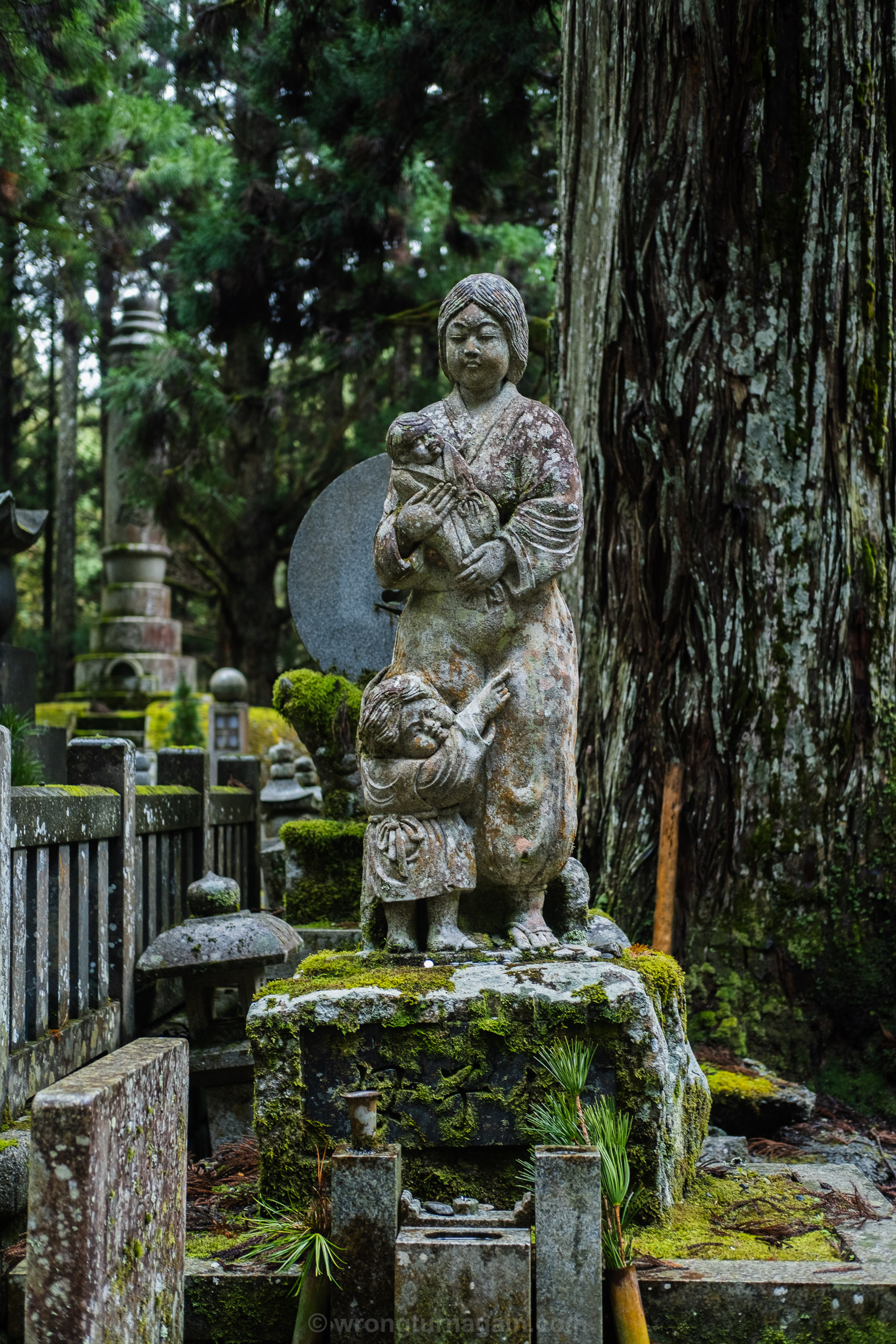
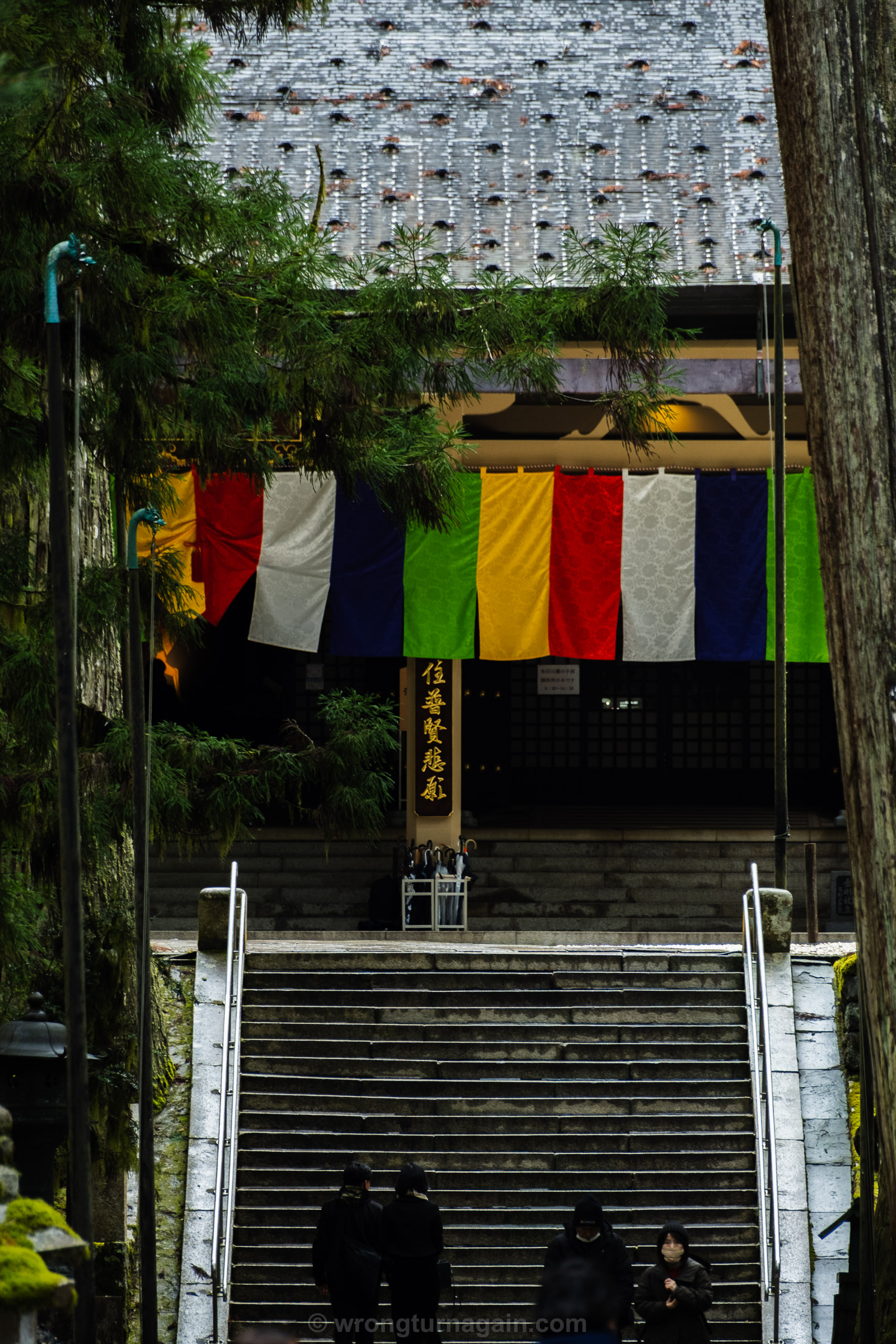
More than a millennium later, Koyasan remains an active religious village with over 117 temples. Many of these serve as shukubo, allowing visitors to experience the monks’ daily life. While it is possible to visit on a day trip, the mountain truly reveals itself to those who stay overnight.
From iconic gates to the deep forests of Okunoin, here are the most significant sites to explore.
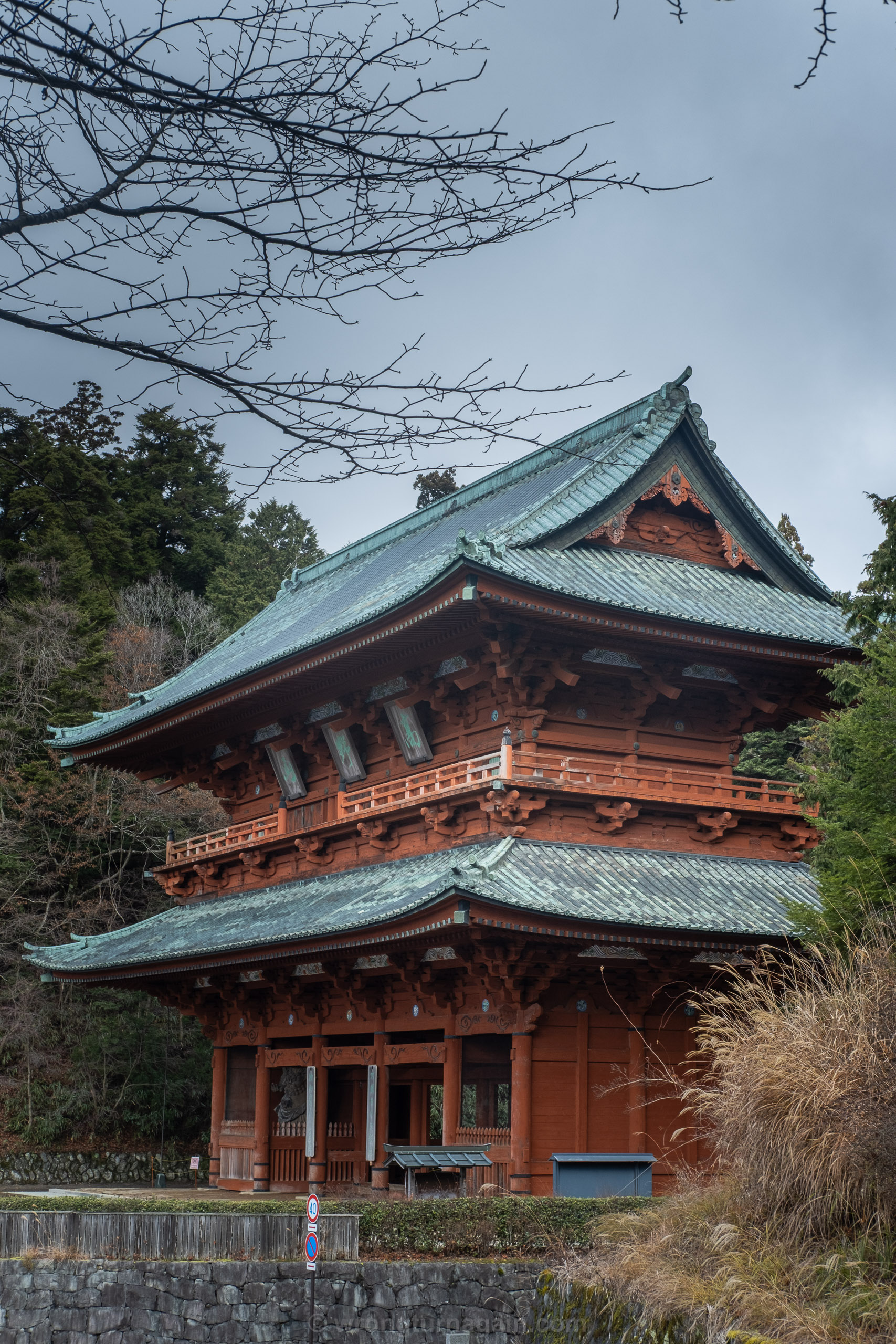
1. Daimon Gate (The Great Gate)
The Daimon Gate serves as the grand main entrance to the plateau of Mount Koya, acting as the spiritual border between the secular world and the sacred mountain. Standing approximately 25 meters tall, the current structure dates back to 1705, rebuilt after the original was destroyed by fire.
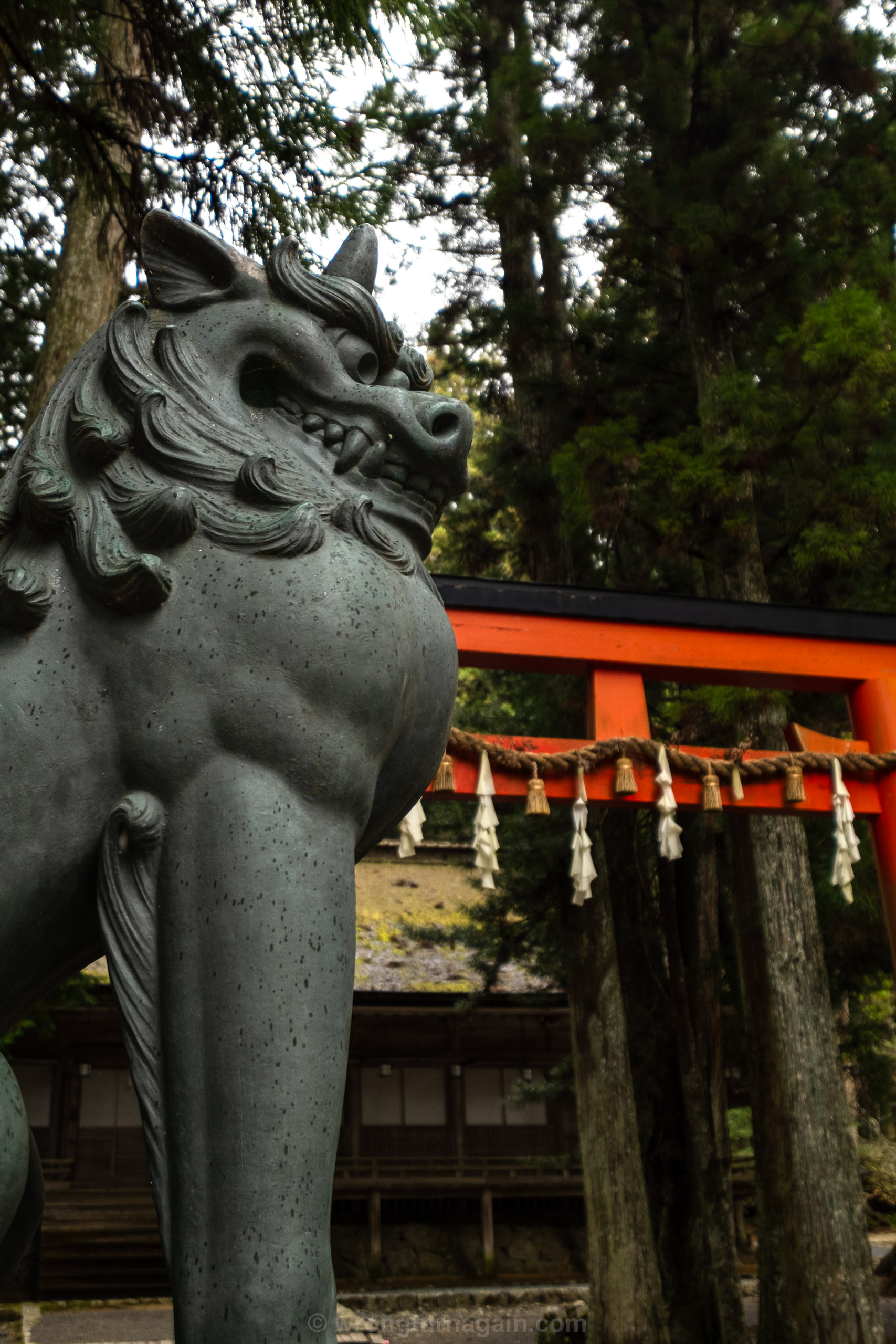
Two massive Nio (Vajra Guardians) statues stand in the gate’s alcoves. According to tradition, these fierce deities ward off evil spirits and protect the entrance to Koyasan. The Daimon Gate also offers one of the most breathtaking views on the mountain, especially at sunset, when the sun dips behind the peaks of Wakayama Prefecture and the Kii Channel.

The Daimon Gate is also the starting point of the Nyonin-michi Trail, a historic pilgrimage route that traces the old perimeter of Koyasan.
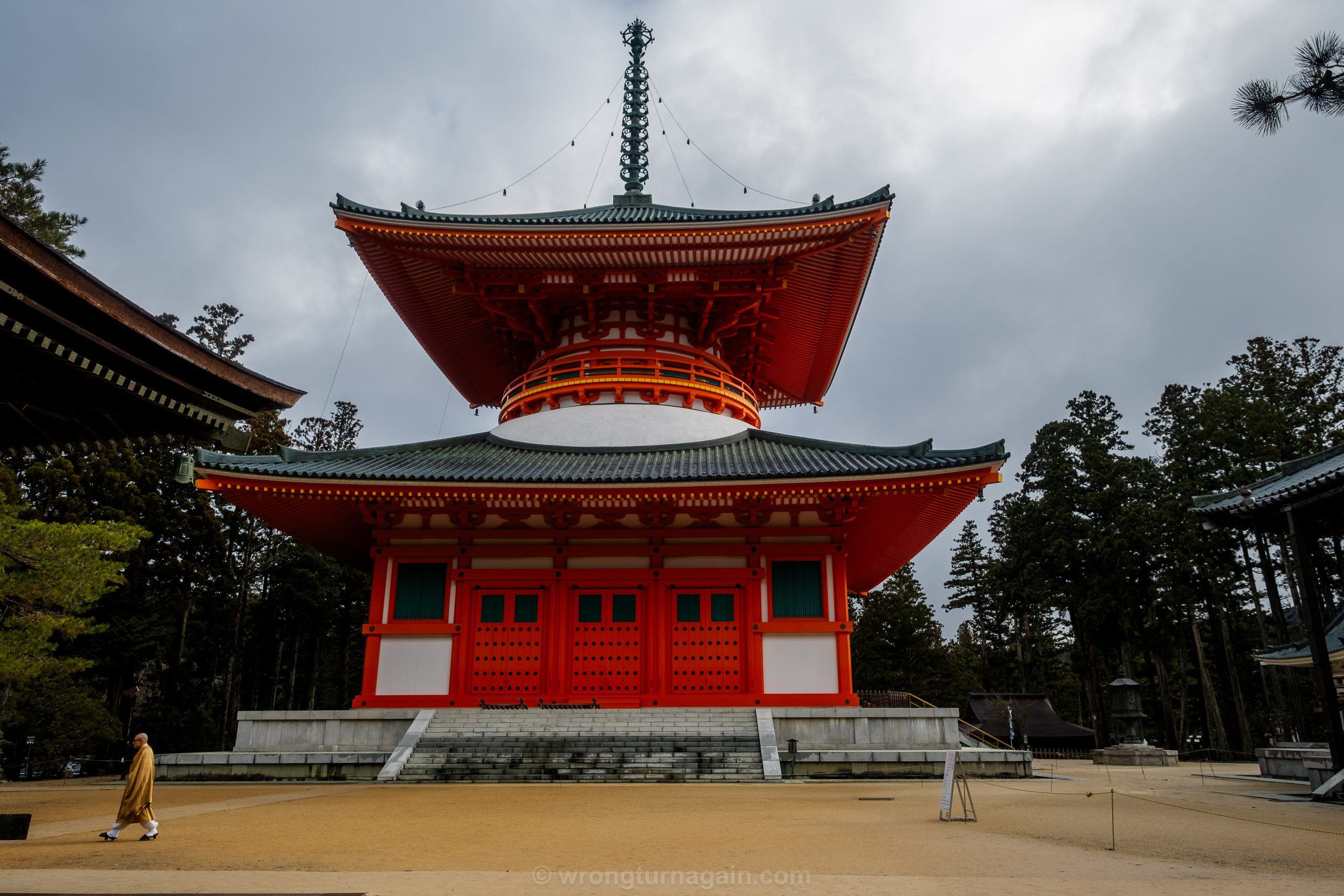
2. Danjō Garan Complex
The Danjo Garan is the ceremonial and spiritual center of Koyasan. Along with Okunoin, it is one of the two most sacred sites on the mountain. It was established by Kobo Daishi (Kukai) in the 9th century upon his return from China, bringing with him the teachings of Esoteric Shingon Buddhism.
Kukai designed the complex based on the Mandala of the Two Realms, placing each building to represent specific deities and elements of the Buddhist universe. Although many structures have been rebuilt over the centuries due to fires, the Garan remains an active site for daily rituals and fire ceremonies (goma) performed by the monks.
The word garan (伽藍) means “monastic complex,” and danjo (壇上) means “on the elevated platform.”
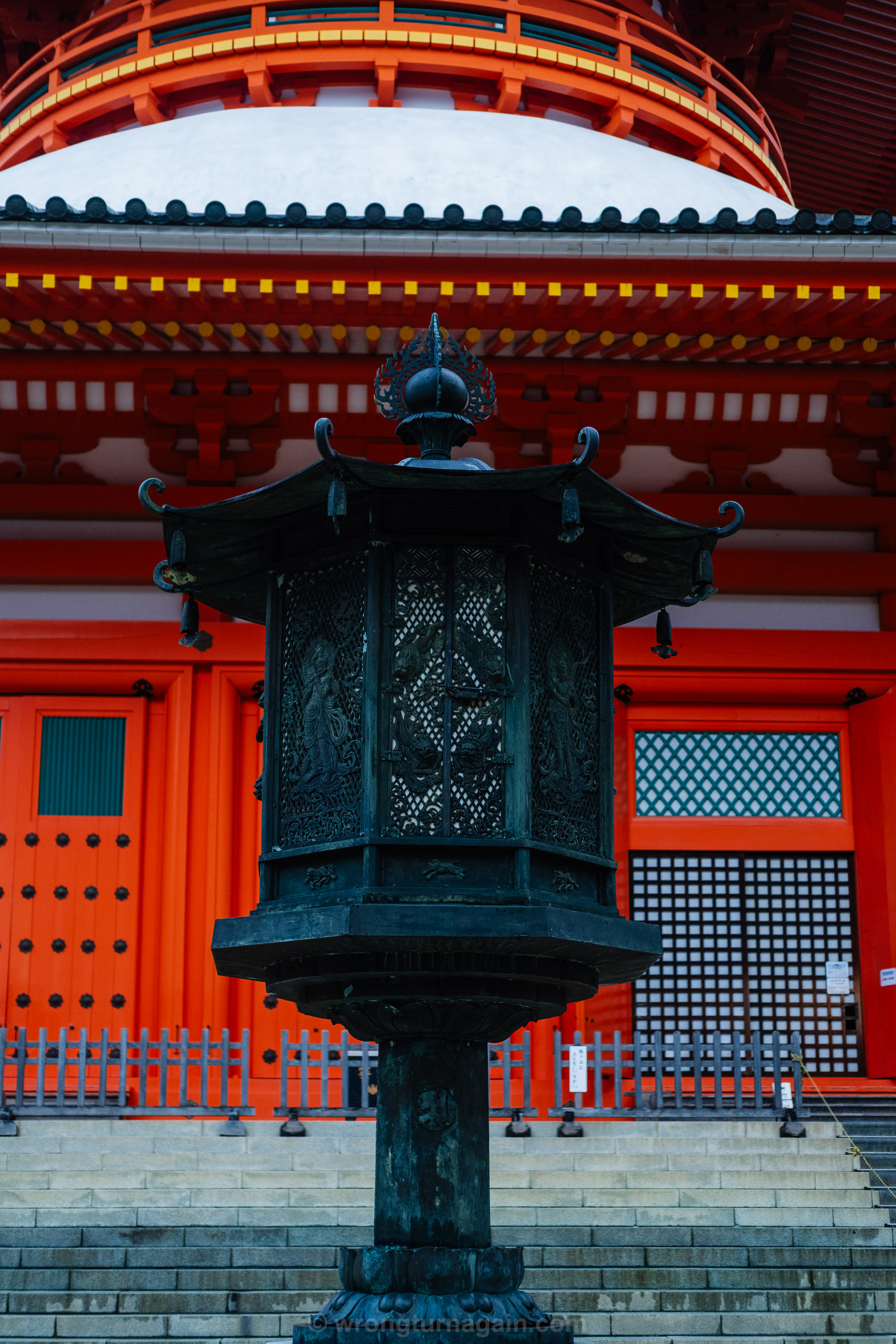
Konpon Daitō (The Great Pagoda)
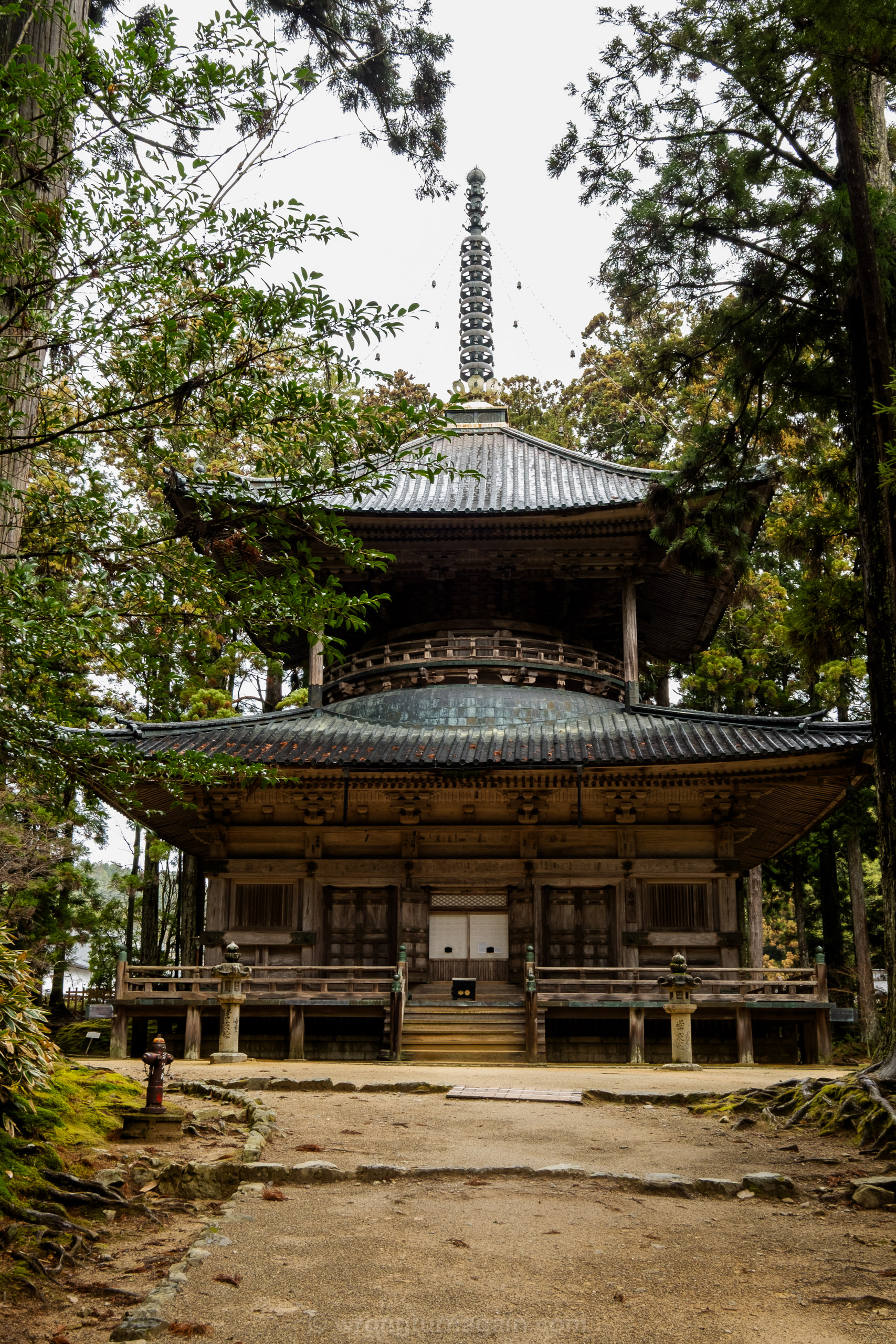
Dominating the center of the complex is the Konpon Daito, a magnificent two-tiered pagoda standing 48.5 meters high. With its striking vermilion color, it is the most recognizable symbol of Koyasan. Construction began around 816 AD by Kukai and was completed by his disciples.
This pagoda represents the heart of the mandala. Inside, a statue of Dainichi Nyorai (Vairocana)—the Cosmic Buddha representing the Absolute Light—sits at the center, surrounded by the Four Buddhas of the directions and sixteen Bodhisattvas painted on the pillars.


Other Highlights of the Garan Complex
- Kon-dō Hall: The main wooden hall where major ceremonies are held, including the annual Mando Kuyo-e (Candle Festival) in August.
- Mie-dō Hall: This sacred hall enshrines the official portrait of Kobo Daishi. It is considered the holiest site within the Garan, and its doors open to the public only a few days a year.
- Sai-tō (West Pagoda): A smaller version of the Great Pagoda, symbolizing the spread of Buddha’s teachings to the West.
- Tō-tō (East Pagoda): The eastern counterpart to the Saito, dedicated to transmitting wisdom to the East.
- Miyashiro Shrine: A rare Shinto shrine located within the Garan Buddhist complex. It is dedicated to the local deities who, according to legend, protected Kobo Daishi when he founded Koyasan.
- Bell Tower (Shōrō): The great bell here rings at dawn every day, signaling the start of rituals across the entire mountain plateau.
3. Koyasan Reihōkan Museum
The Koyasan Reihōkan Museum is the treasure house of Mount Koya, preserving the most valuable religious art from the mountain’s temples. Established in 1921, it protects historic artifacts of Shingon Buddhism, some dating back over 1,200 years.
The museum houses over 28,000 objects, including statues, mandala paintings, ancient scrolls, and ritual implements. Many of these are designated as National Treasures or Important Cultural Properties of Japan.
If you are interested in art and history, visit the Reihokan before heading to Okunoin. The exhibits provide crucial context for understanding the symbols, statues, and rituals you will encounter on the rest of the mountain.
4. Jukai Ceremony at Koyasan Daishi Kyōkai
If you want to move beyond just sightseeing and actually experience the life of a Shingon monk, this is the place to be. While Daishi Kyokai serves as the administrative headquarters of Koyasan, its main purpose for travelers is participation.
Here, you can engage in Shakyo (sutra copying), tracing ancient characters with a brush and ink to calm your mind, or try Ajikan meditation, focusing on the sacred Sanskrit sound “A.”
But the absolute highlight is the Jukai Ceremony—the ritual of “receiving the Buddhist precepts.” This is widely considered one of the most profound spiritual experiences in Koyasan. The ceremony has been performed for over a thousand years and takes place in the Jukai-do hall. The room is kept in near-darkness, symbolizing the wandering mind before it finds enlightenment.
The Jukai Ceremony Experience
Upon arrival, you leave your shoes at the door and take a seat on the tatami mats. In the dim light, a high-ranking monk will guide you through purification chants (sanmai) and the taking of the Three Jewels: the Buddha, the Dharma (teachings), and the Sangha (community).
You will then recite the Ten Precepts (ethical principles like non-violence and honesty) and receive the tomyo—a symbolic offering of light representing inner awakening. The ritual concludes with a certificate (Jukai-shōmeisho) given to you by the monk. Note that this is not a religious conversion; it is a personal pledge to live with more awareness and compassion.
The ceremony is open to everyone, regardless of faith. No Japanese language skills are needed, as the monks guide you through every step.
5. Kongobu-ji Temple & The Banryutei Rock Garden
One of the most serene and atmospheric temples in Japan, Kongōbu-ji serves as the headquarters of Koyasan Shingon Buddhism. Originally established in the late 16th century by the warlord Toyotomi Hideyoshi, its name means “Temple of the Diamond Peak,” symbolizing indestructible wisdom.
Your visit begins at the genkan entrance. Inside, you will explore the Ohiroma (Main Hall), featuring sliding doors (fusuma) painted by the famous Kano School artists of the Edo period. As you wander the corridors past willow-lined courtyards, you will reach the Kuri, the historical kitchen where massive wood-burning stoves once prepared meals for thousands of monks.
The highlight, however, is the Banryūtei at the rear of the complex. It is the largest rock garden in Japan (2,340 sqm). Here, 140 granite rocks from Shikoku emerge from a sea of white sand, depicting a pair of dragons protecting the sanctuary. It is a masterpiece of dry landscape design.
You can finish your visit in the spacious tea hall, where you are served complimentary green tea and a wagashi sweet.
6. Kongō Sanmaiin
Hidden among towering cedars in the eastern part of Koyasan, Kongo Sanmai-in is one of the most photogenic and tranquil spots on the mountain. Founded in the early 13th century, it has deep ties to the Kamakura Shogunate, exuding an aura of ancient power.
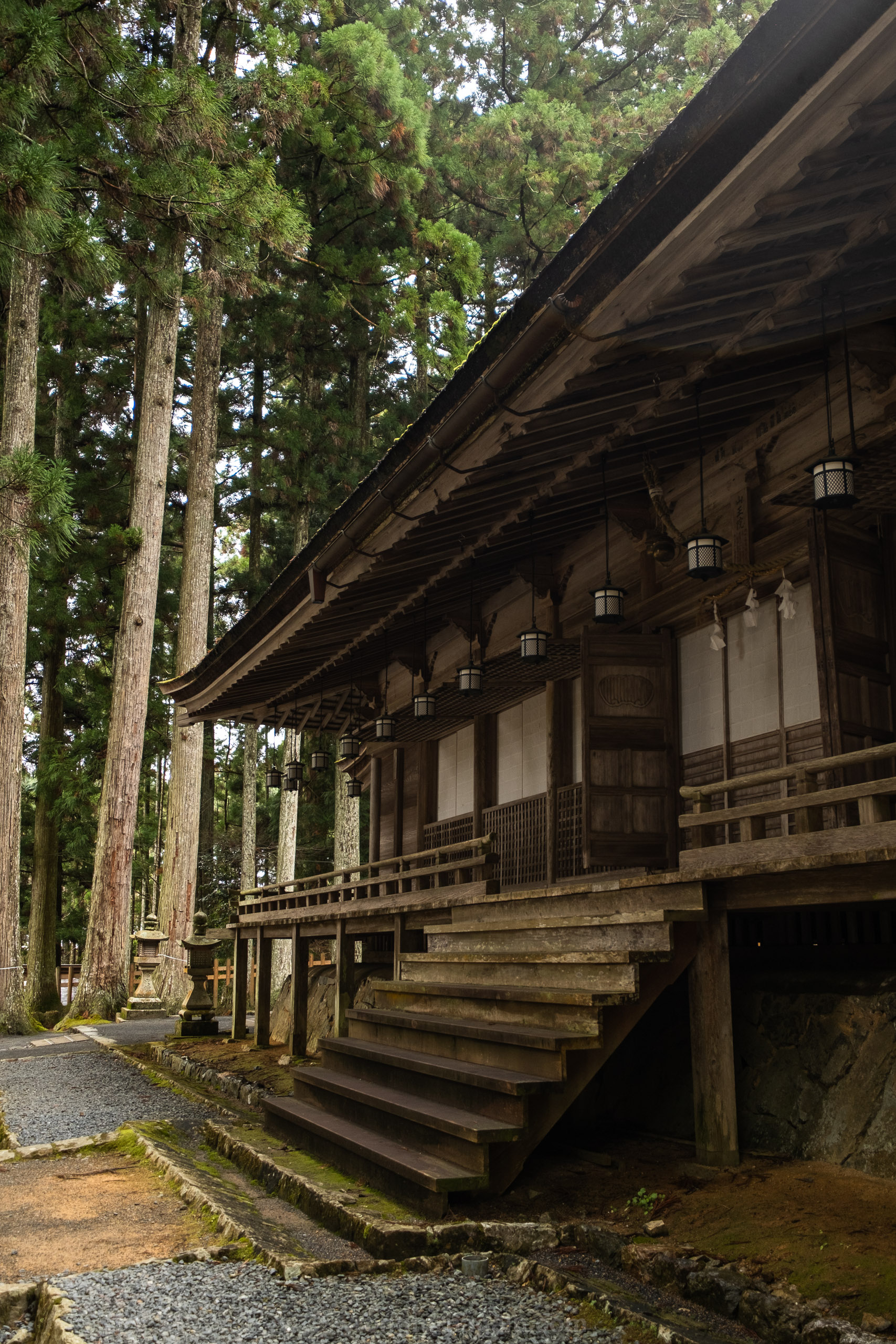
Though smaller than other temples, it feels incredibly authentic. As you walk through the grounds, you will be surrounded by wooden structures from the 1200s, moss-covered stone paths, and a garden that changes beautifully with the seasons.
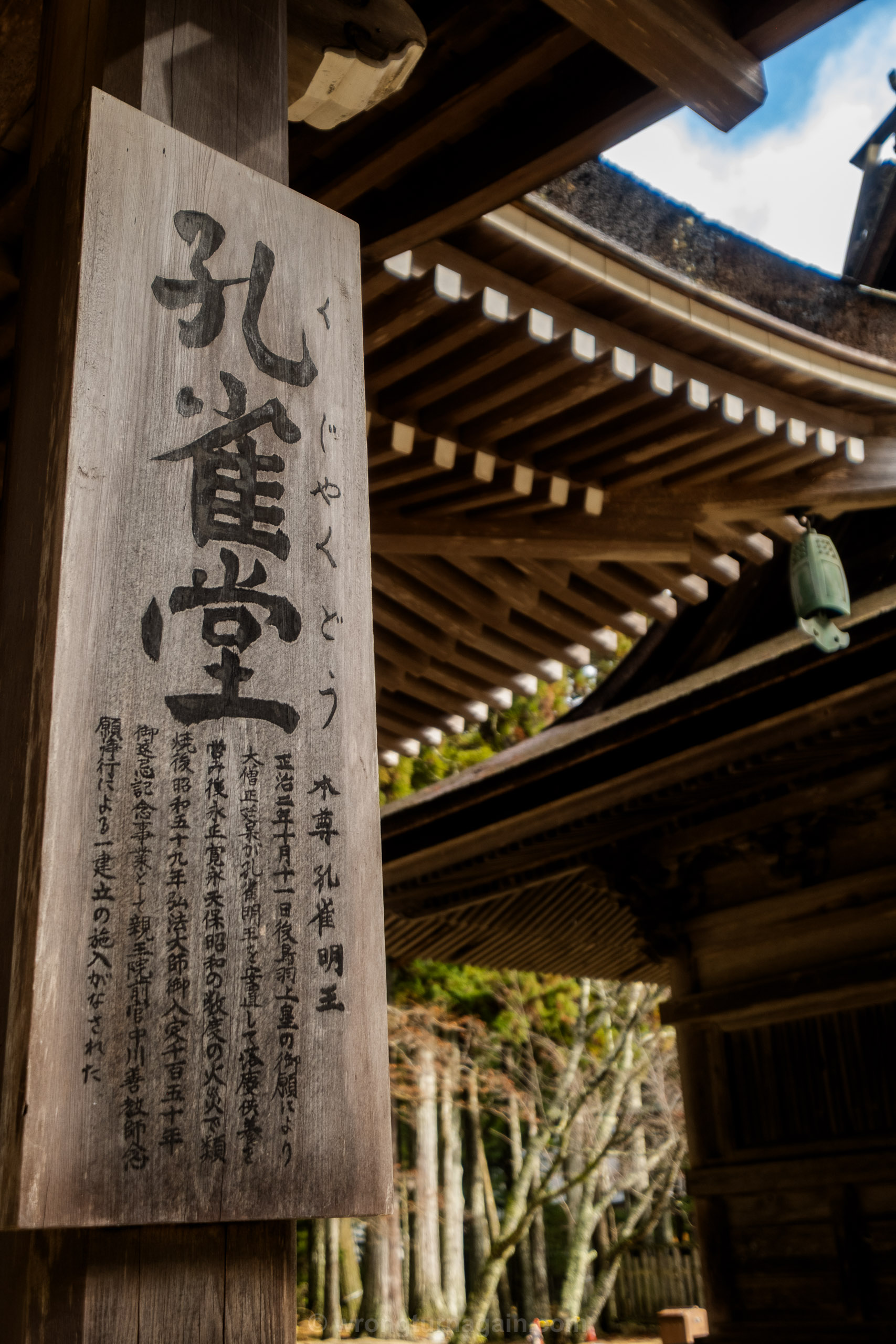
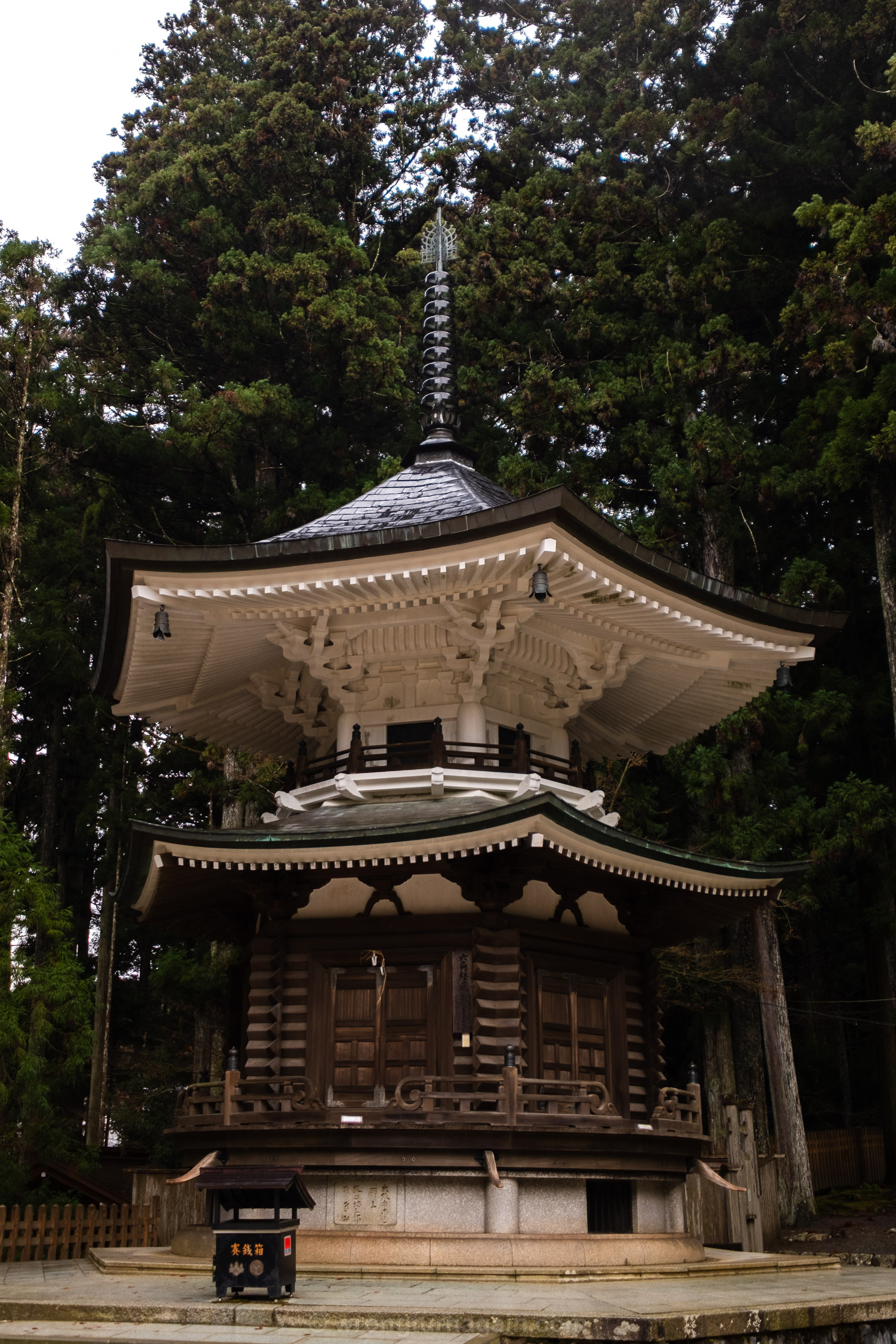
The crown jewel here is the Tahōtō Pagoda, built in 1223. It is the oldest surviving pagoda on Mount Koya and a designated National Treasure of Japan. Inside, a “hidden Buddha” (hibutsu) is enshrined, adding to the site’s mystery.
Don’t miss the small path behind the pagoda. It leads to an evocative, mossy graveyard—perhaps the most poetic and quiet corner of the temple.
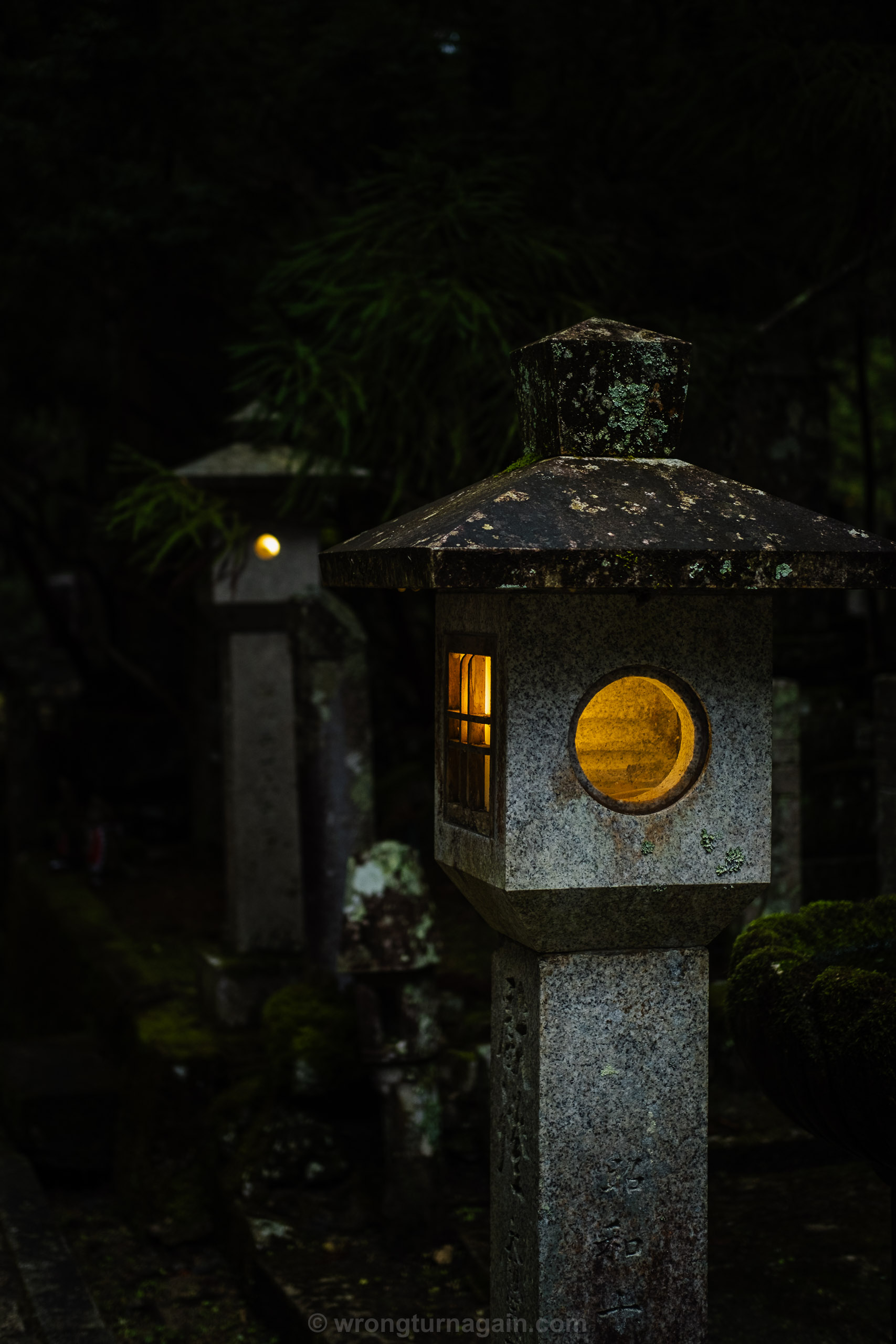
7. Okunoin Cemetery: The Spirit of Koyasan
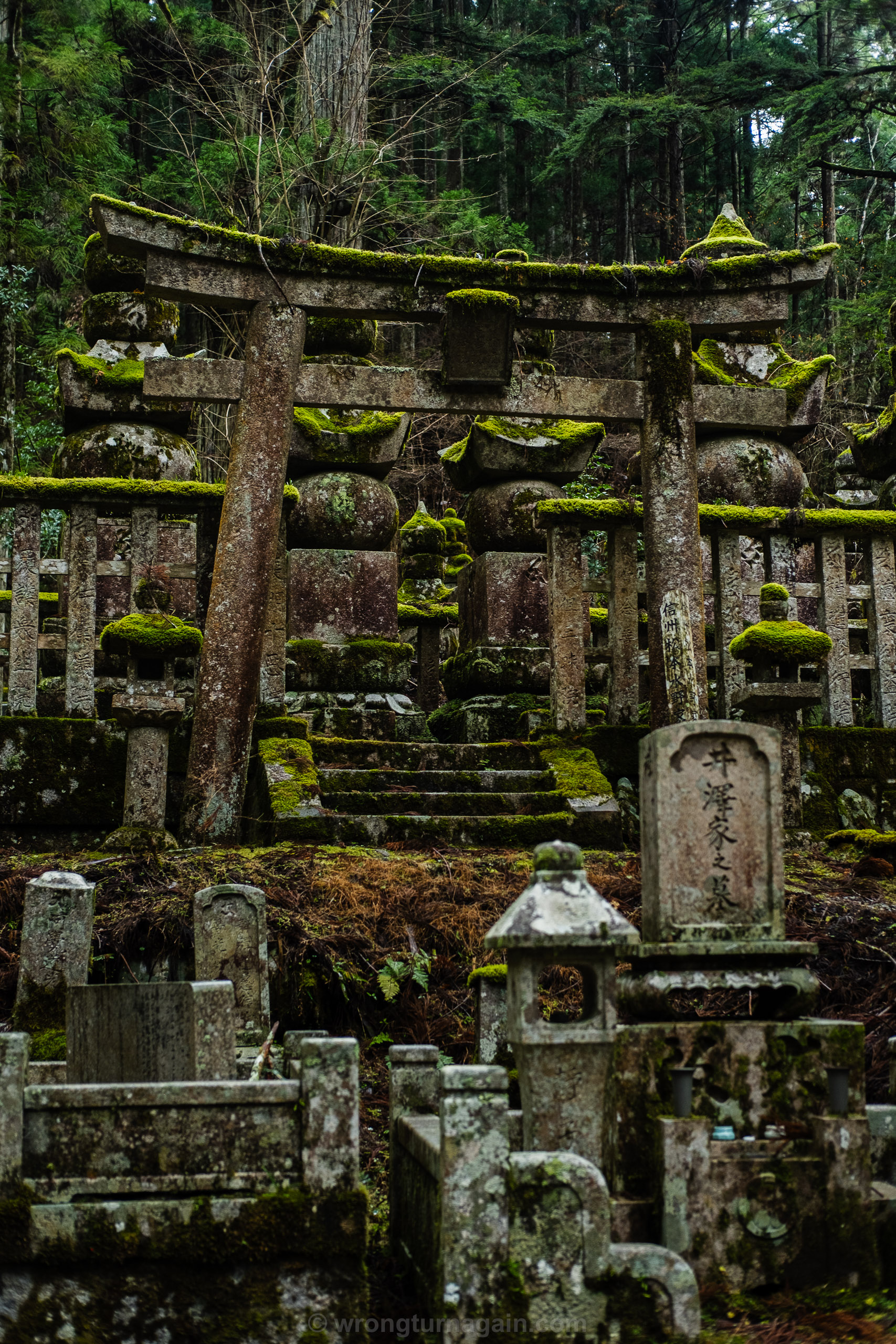
With over 200,000 graves, Okunoin is not just the largest cemetery in Japan; it is one of the most spiritual and atmospheric places you can visit in the entire country. It is considered the holiest ground on the mountain, as it houses the mausoleum of Kobo Daishi (Kukai), the founder of Shingon Buddhism. For centuries, samurai, monks, feudal lords, and commoners have been buried here, all wishing to rest close to Kobo Daishi to ensure their salvation.

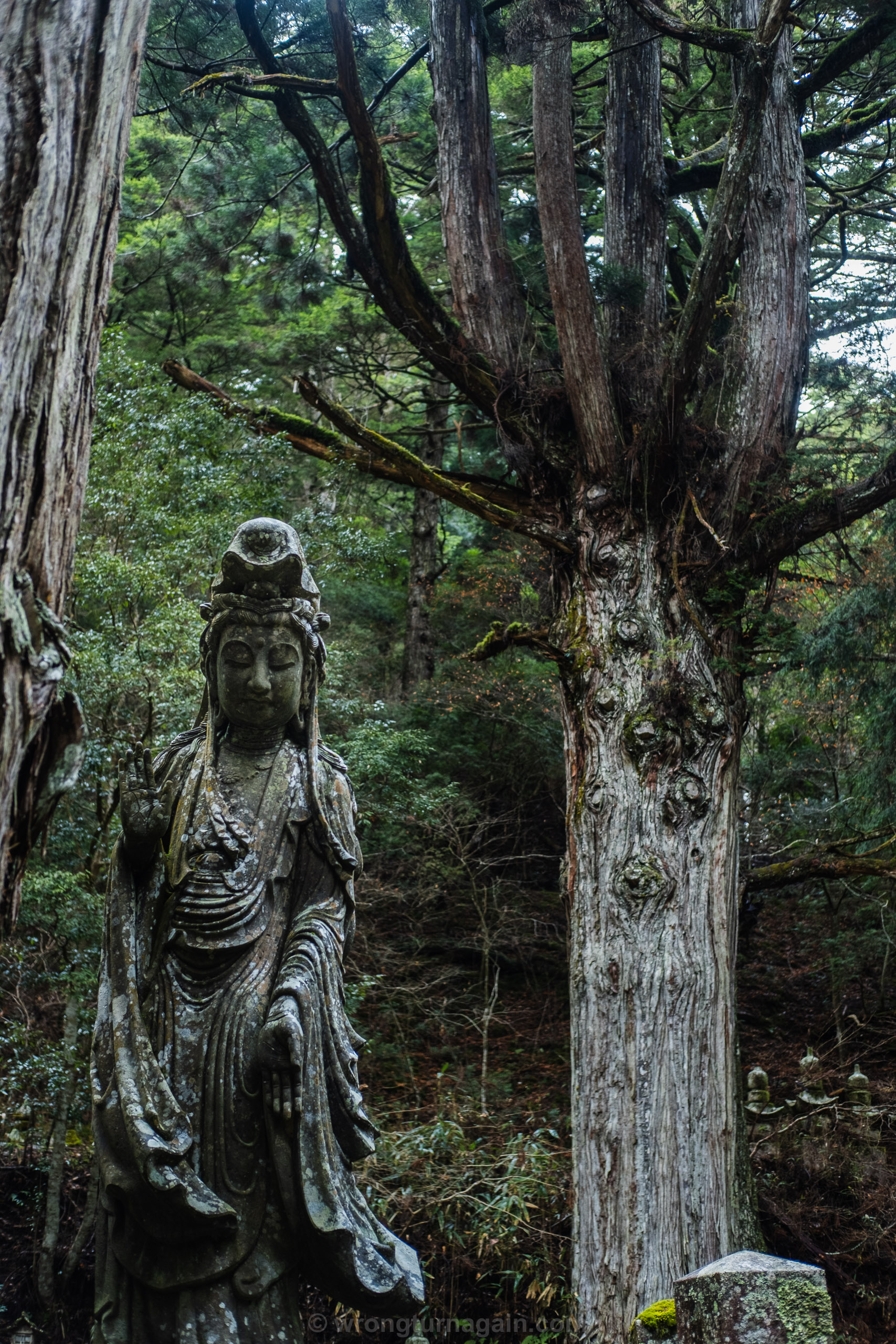
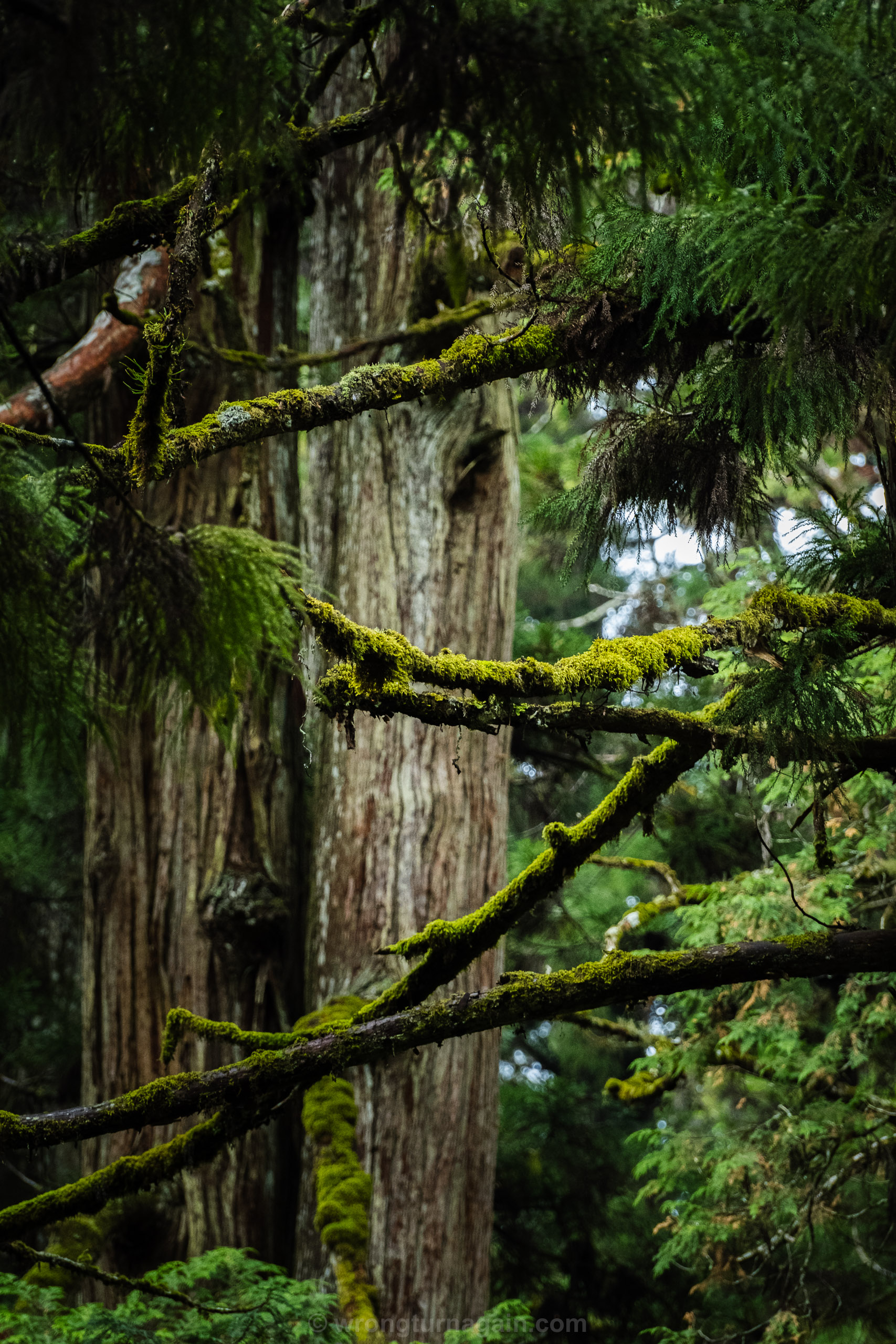
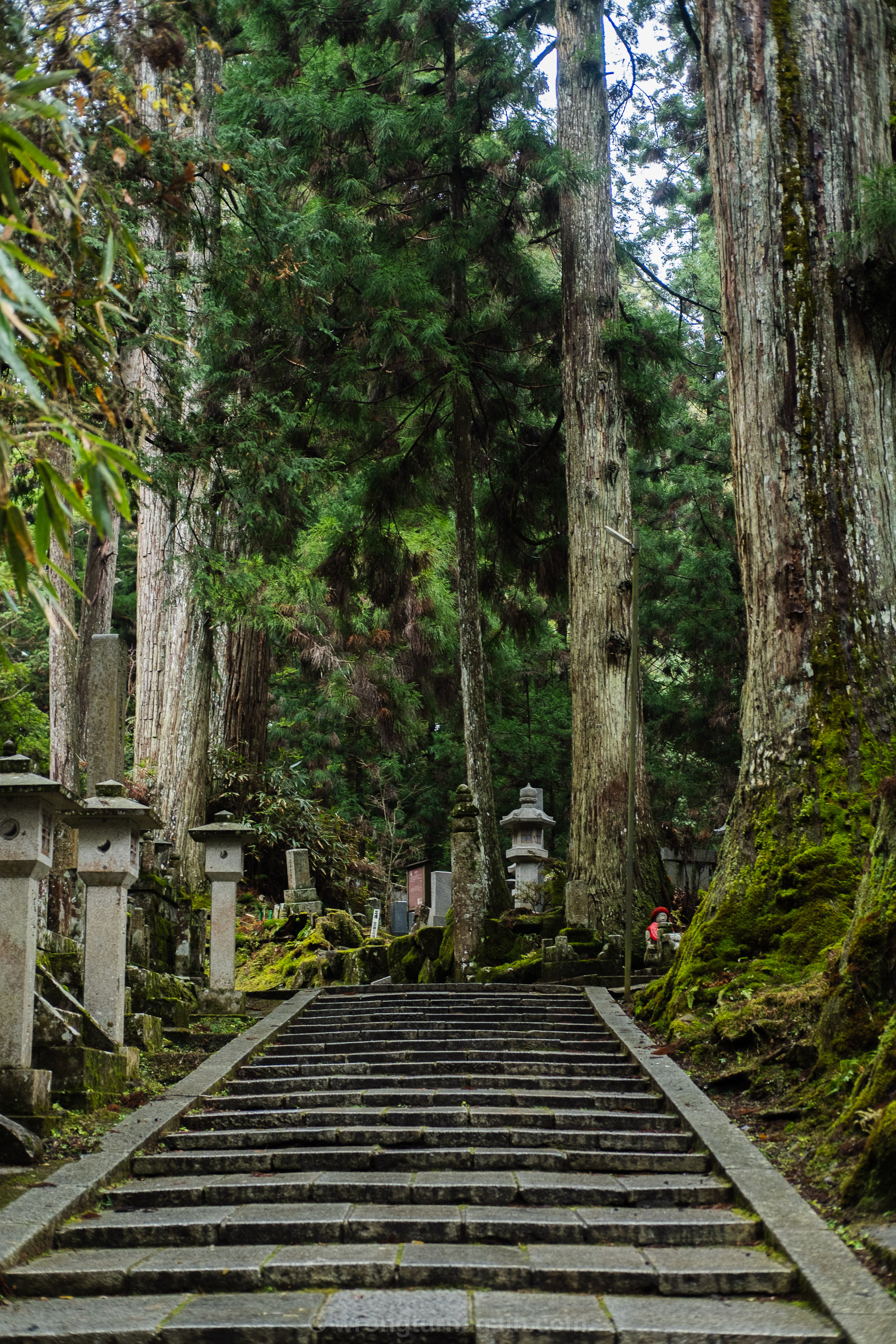
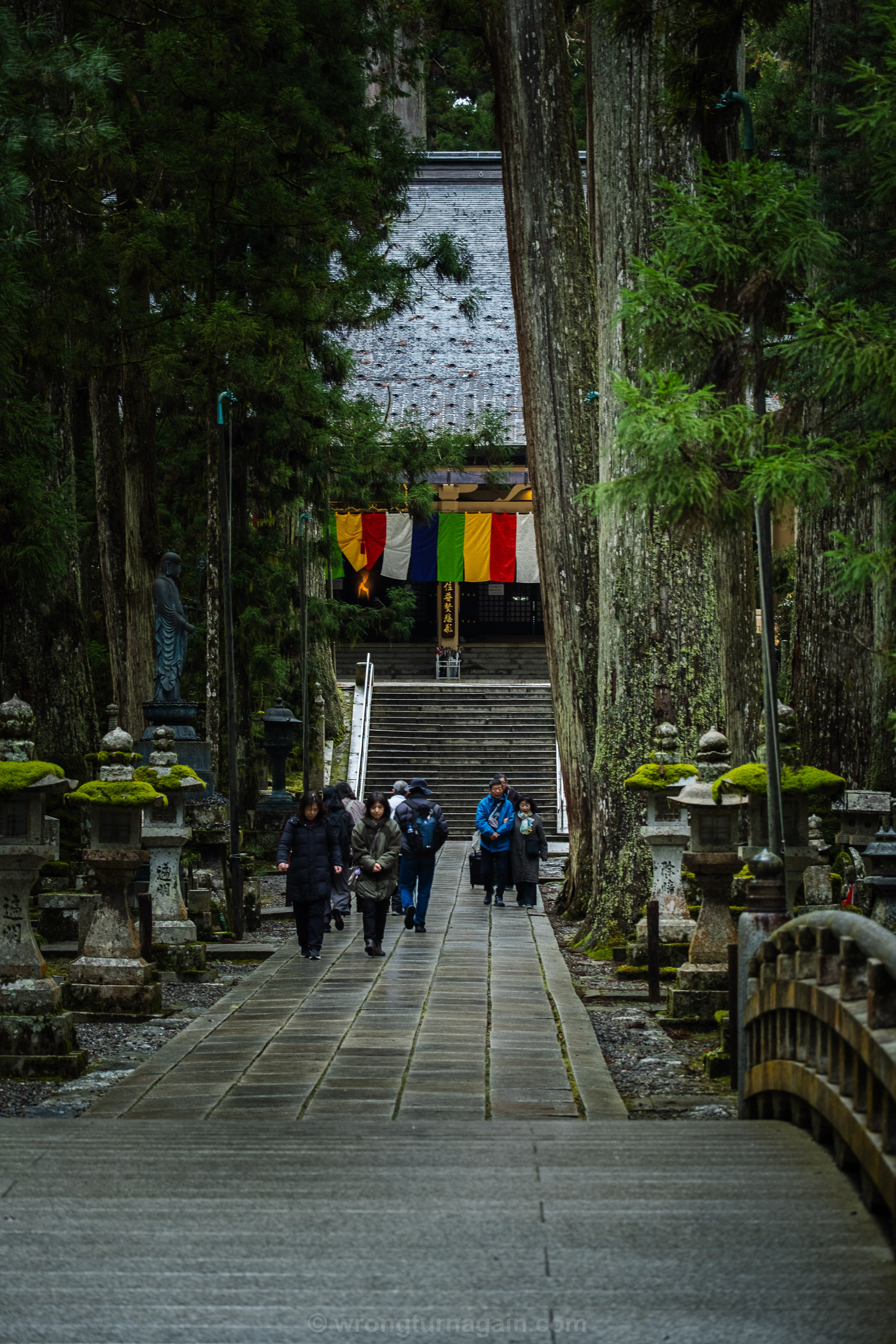
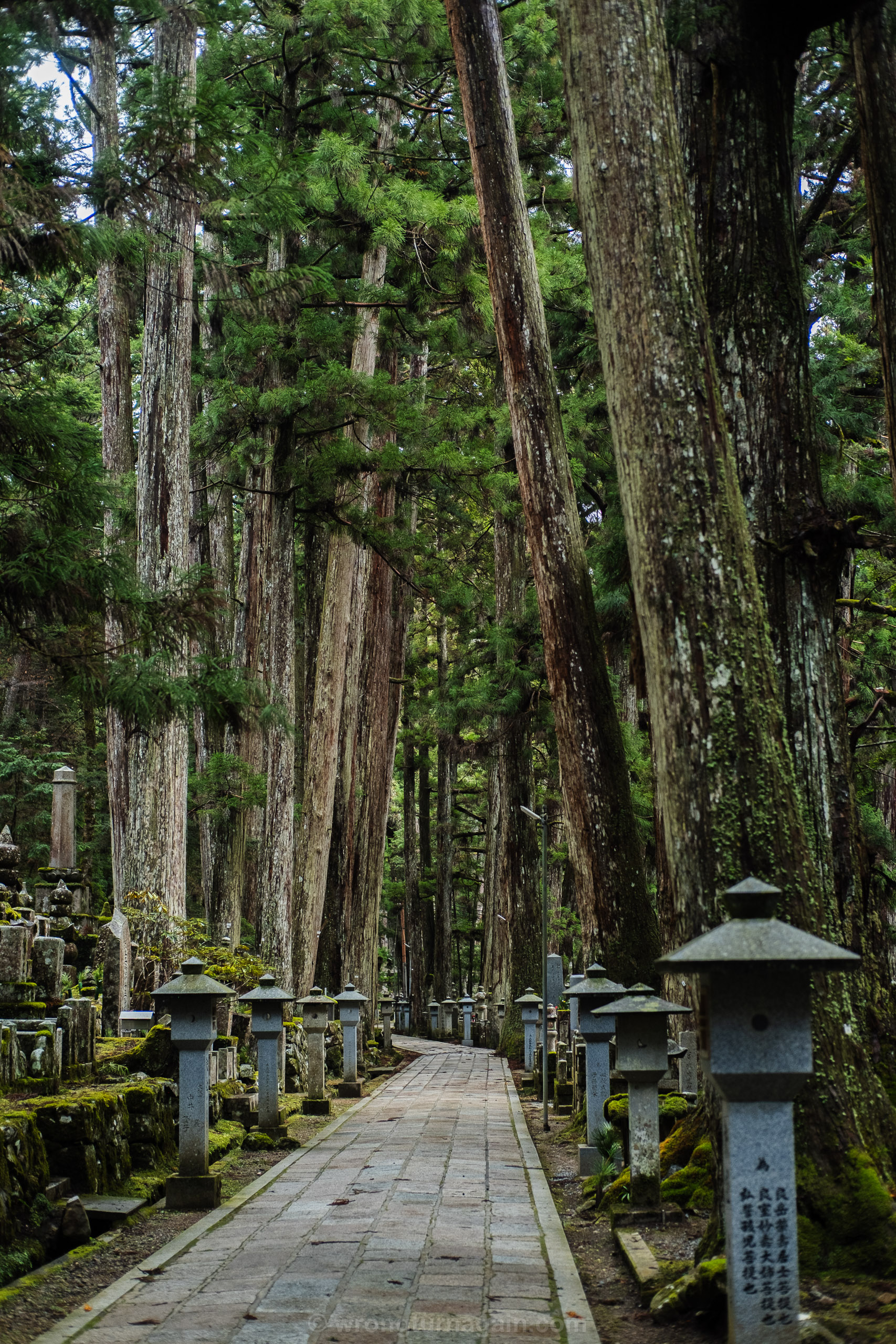
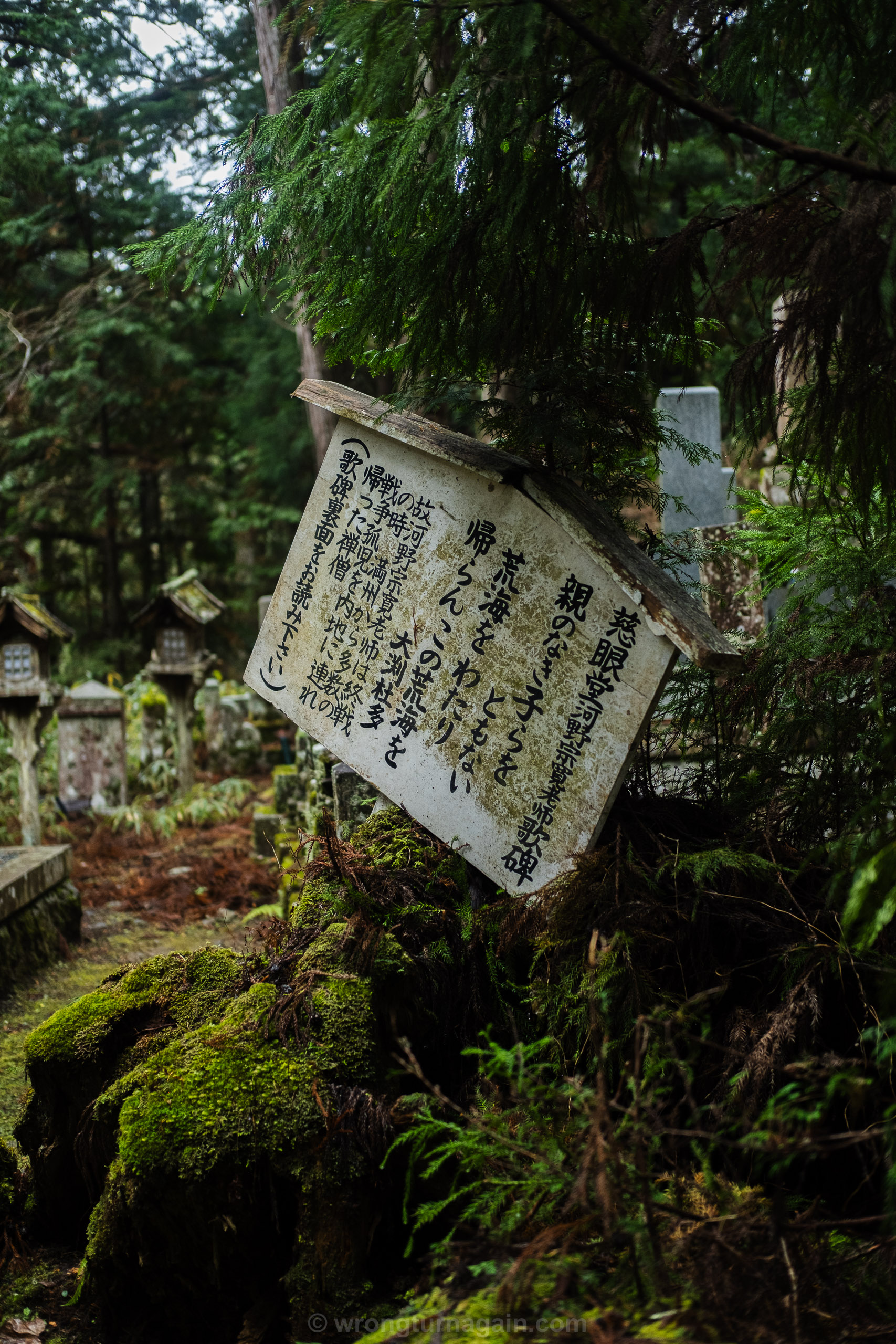
While you can take a bus to the Okunoin-mae stop (10 min, 270 ¥), we strongly recommend starting at the traditional entrance: Ichinohashi Bridge (First Bridge). Here, pilgrims bow to pay respect before crossing, symbolically leaving the secular world behind. From this point, a 2-kilometer cobblestone path winds through a forest of ancient cedars (some nearly 1,000 years old). The atmosphere is thick with silence, moss, and history.
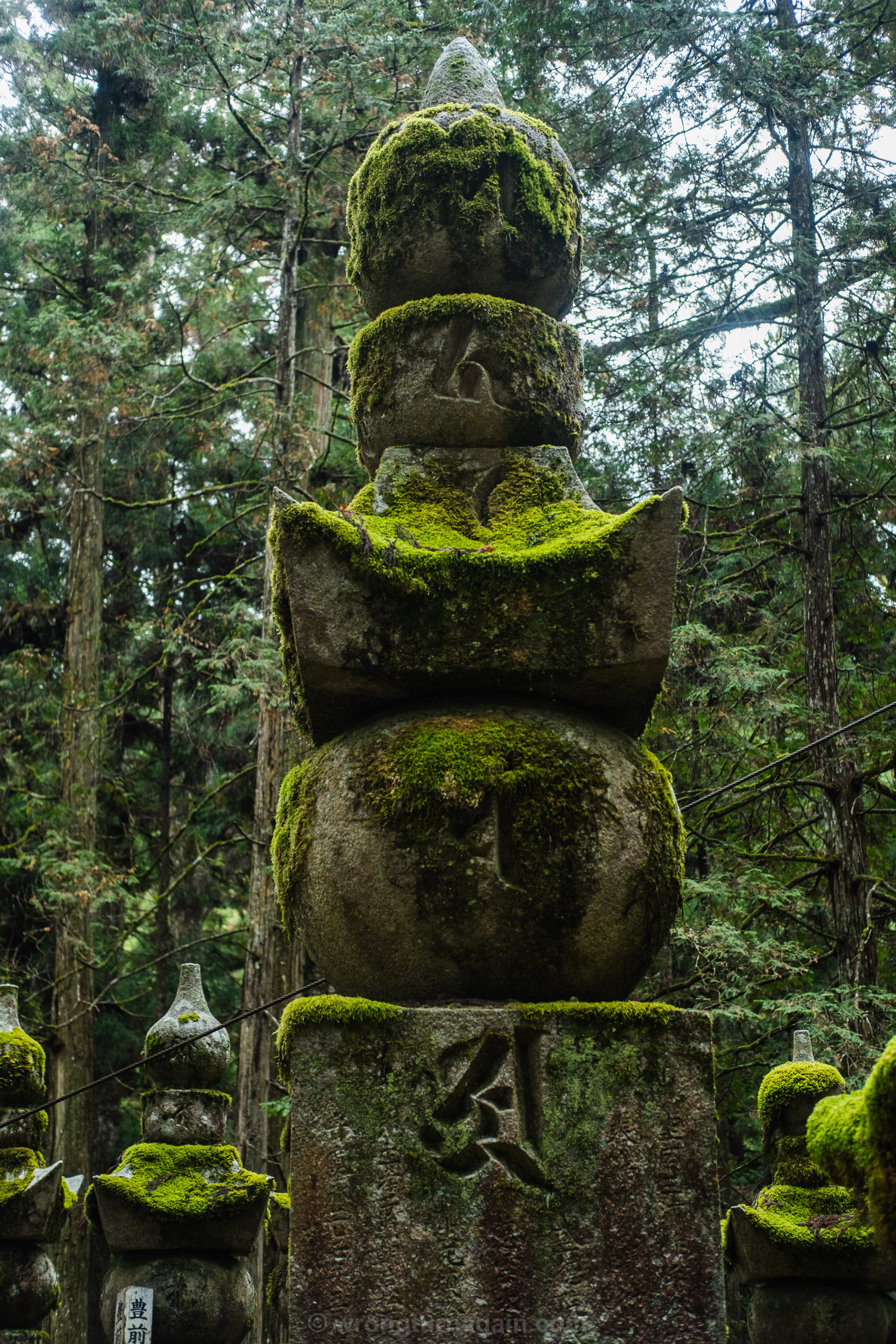
The Monuments & Mizumuke Jizo
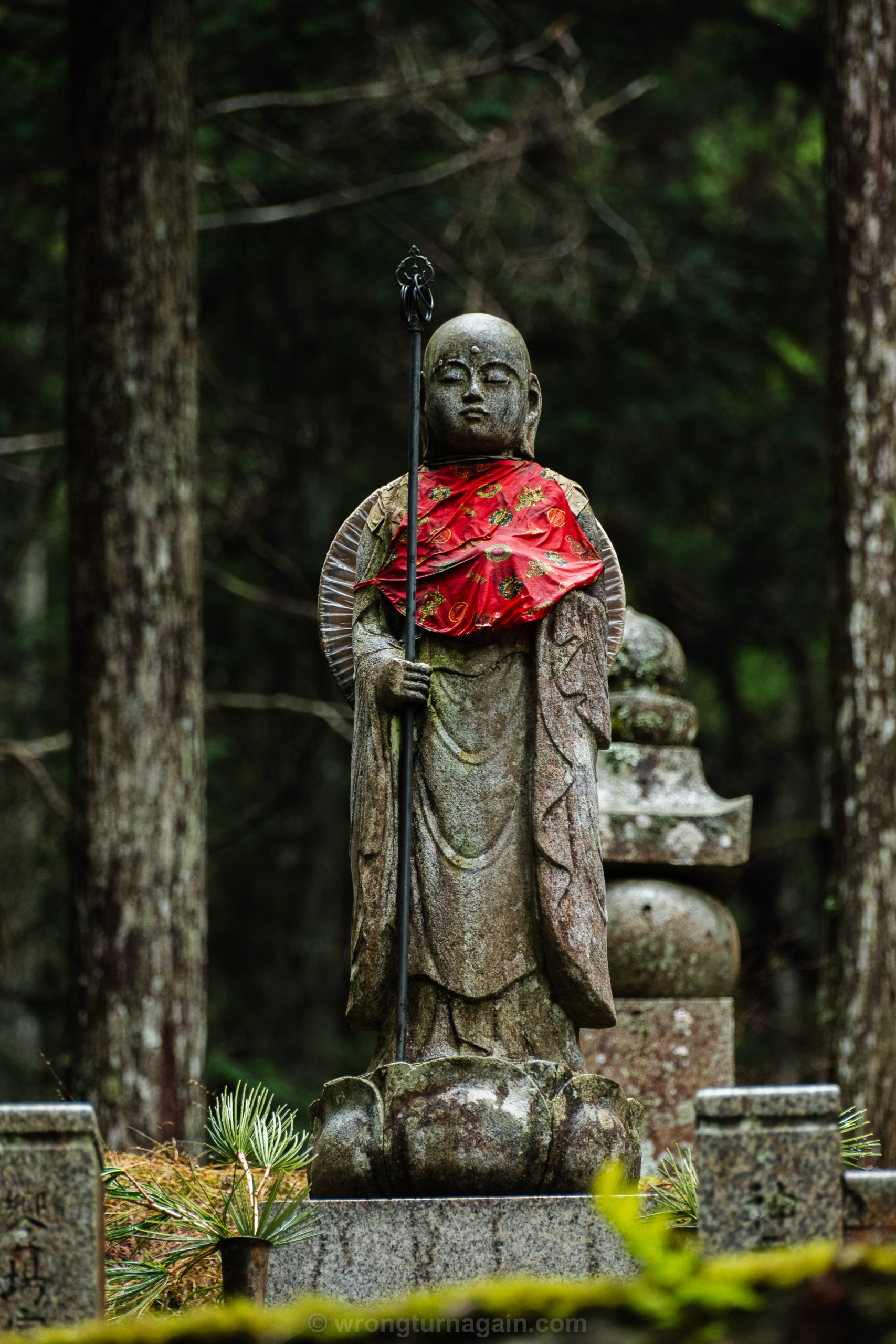
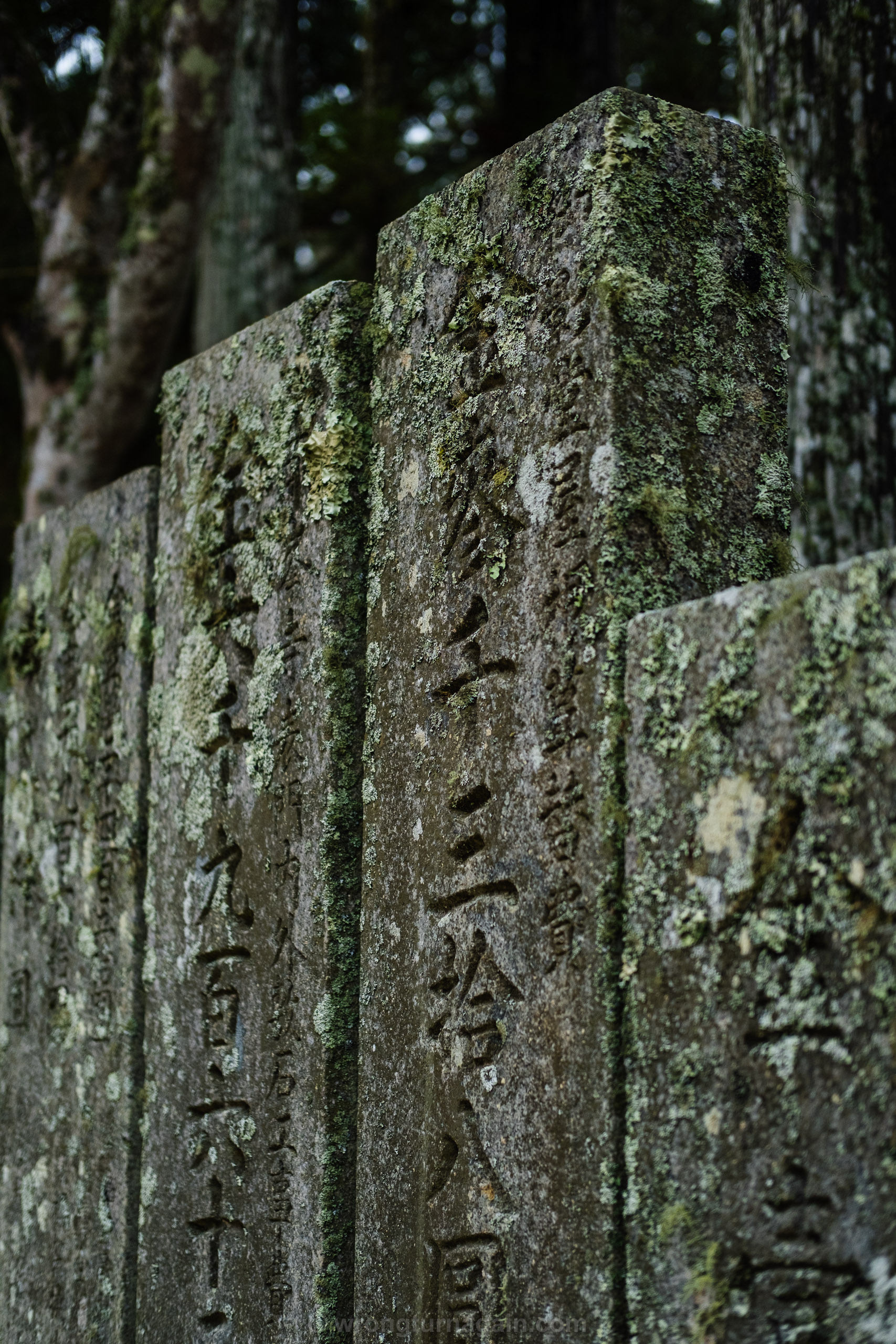
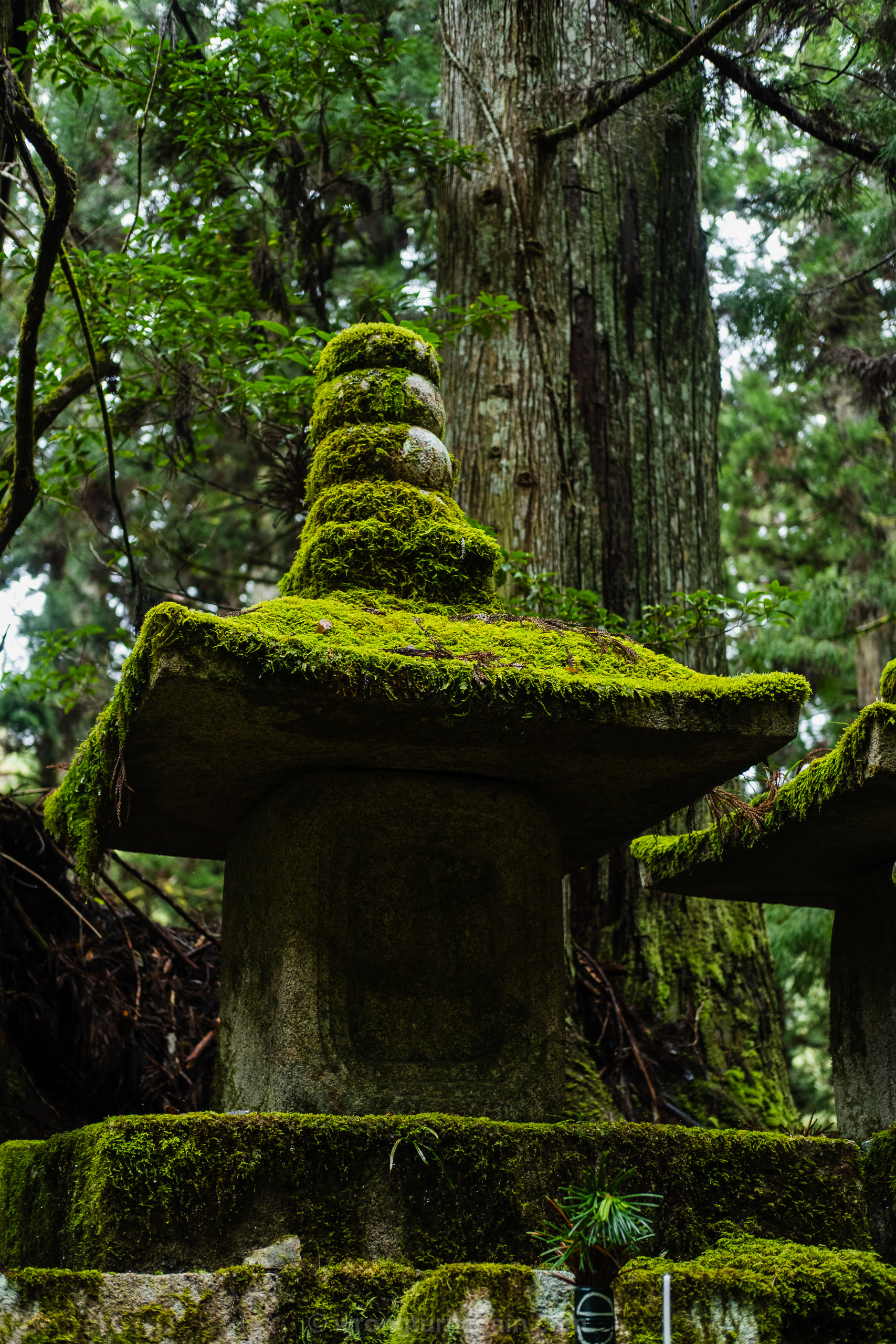
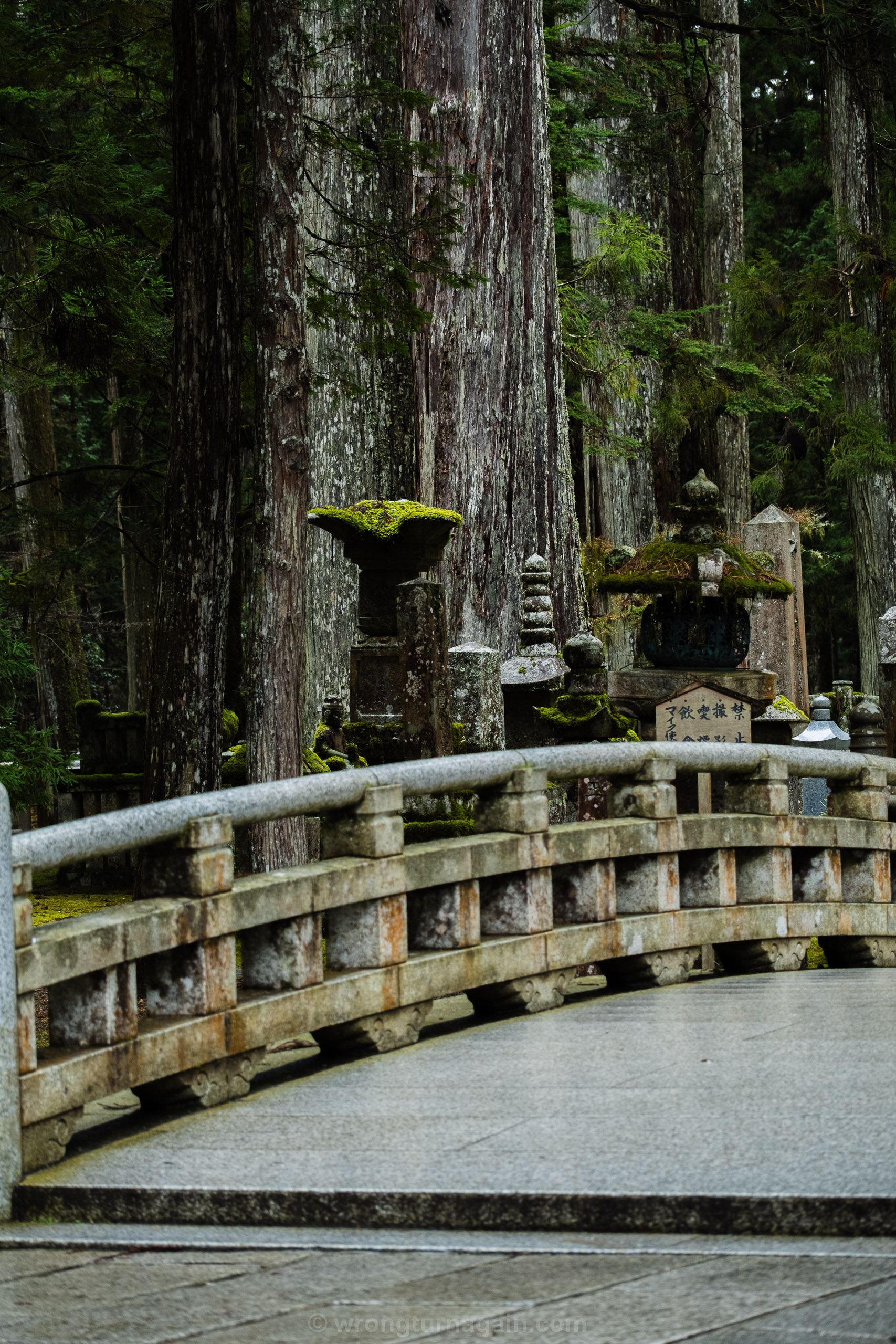
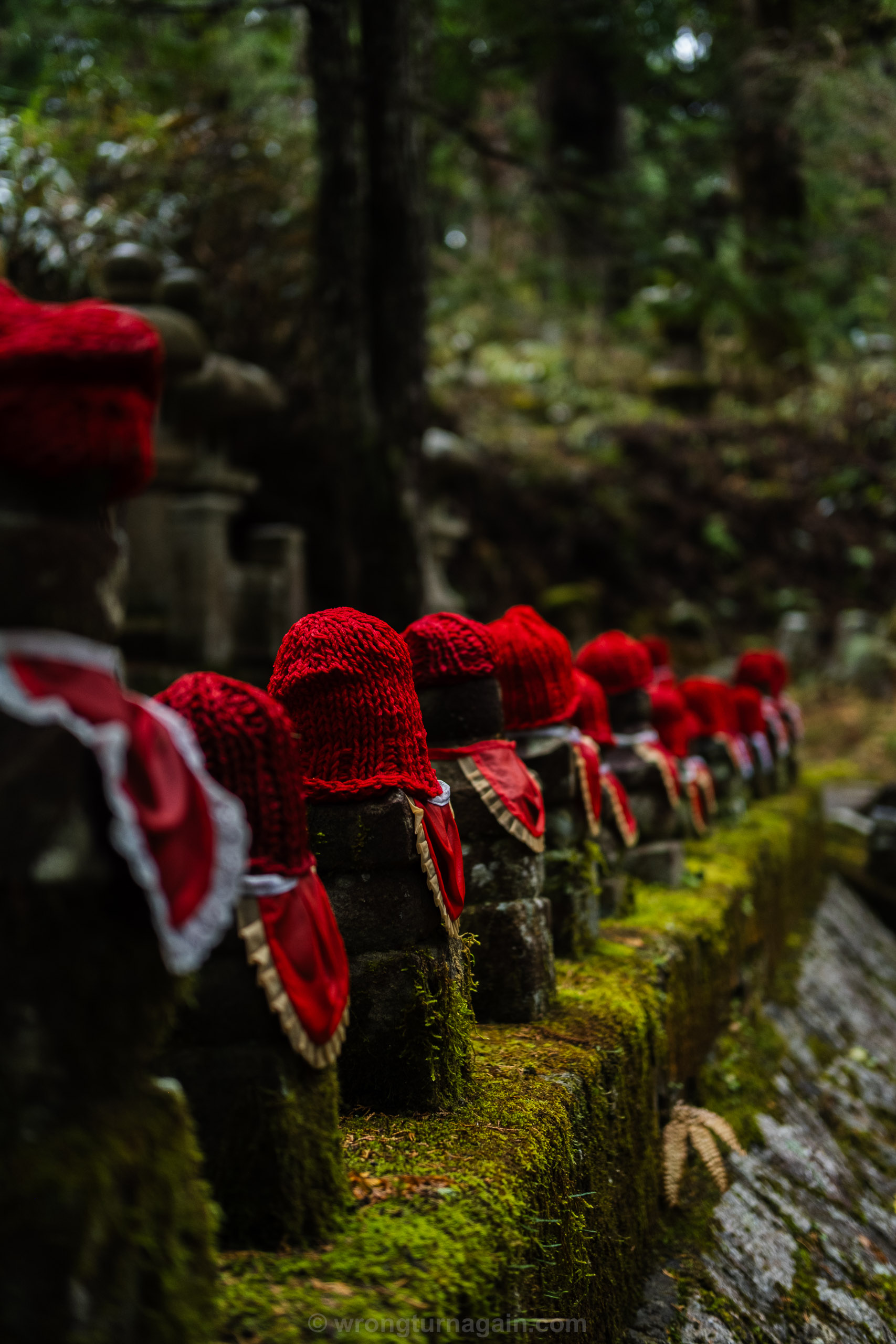
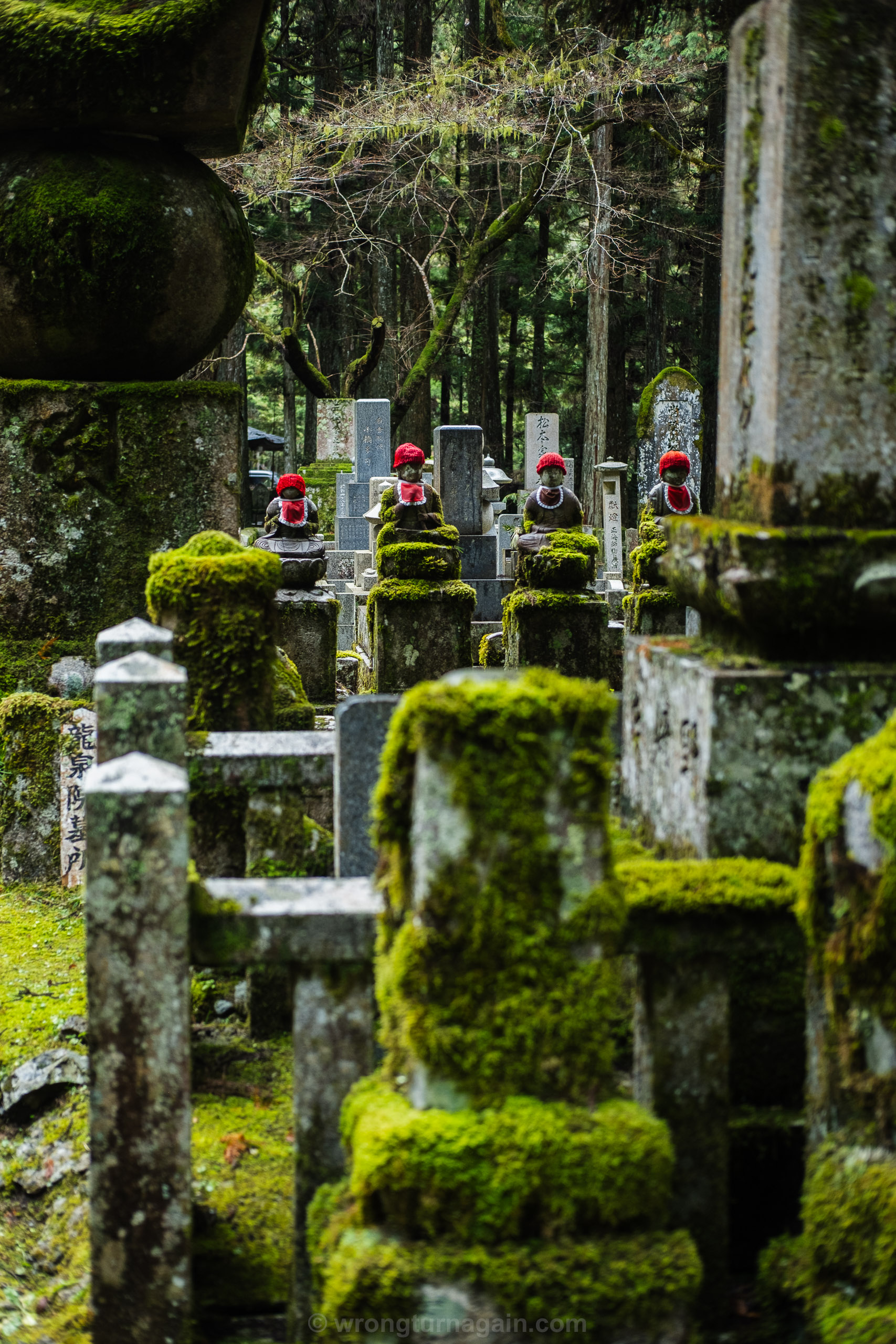
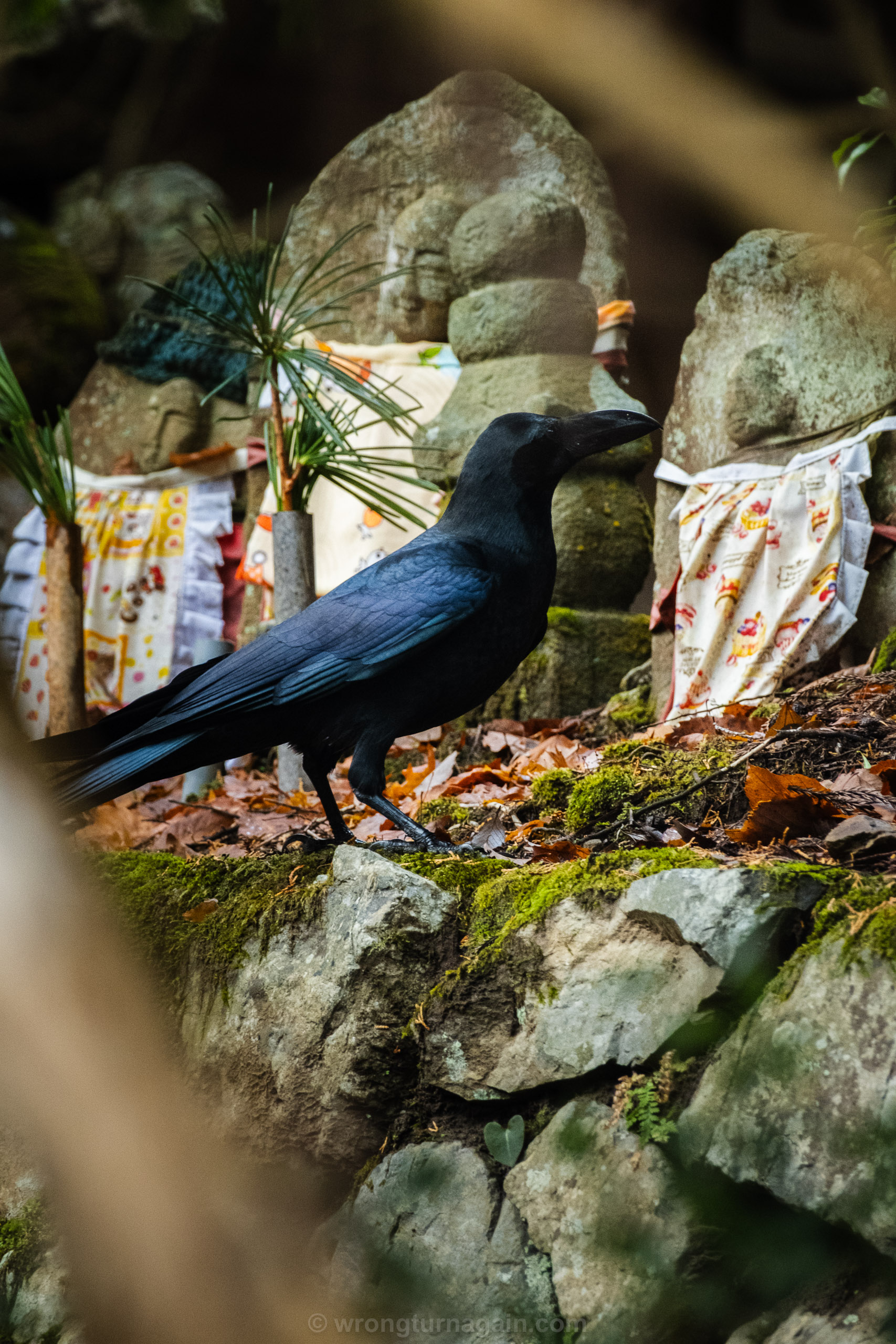
As you walk the path, you will pass countless stone monuments and gorinto (five-tiered stupas representing the elements of earth, water, fire, wind, and space). Look out for the statues of Jizo Bosatsu, the protector of children and travelers, often wearing red bibs and warm hats knitted by believers.
Just before the inner sanctuary, you will find the Mizumuke Jizo (Water Covered Jizo). Here, visitors throw water over the statues using a ladle to offer prayers for the deceased—a ritual believed to ease the suffering of ancestors.
Gobyobashi Bridge & The Sacred Core
The path ends at the Gobyobashi Bridge. This marks the boundary of the most sacred ground. From this point on, photography, eating, and wearing hats are strictly prohibited. You must bow before crossing.
- Torōdō Hall (Hall of Lamps): This is the main hall for worship, located directly in front of the mausoleum. Inside, over 10,000 lanterns glow eternally. Two are particularly famous: the Kishin Lantern, offered by a poor woman who sold her hair to buy it, and the Shirakawa Lantern, offered by an emperor. Both have reportedly been burning for over 900 years.
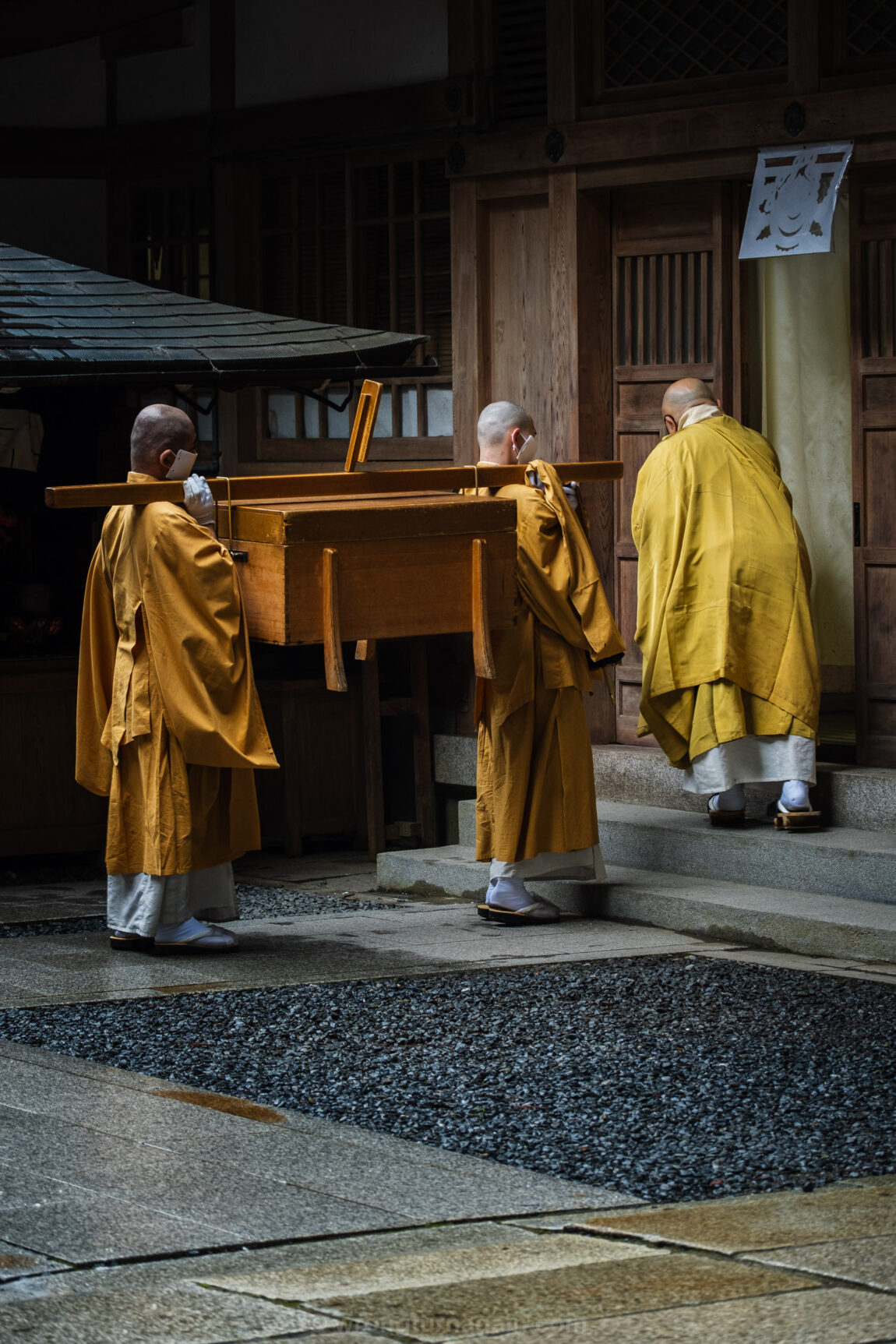
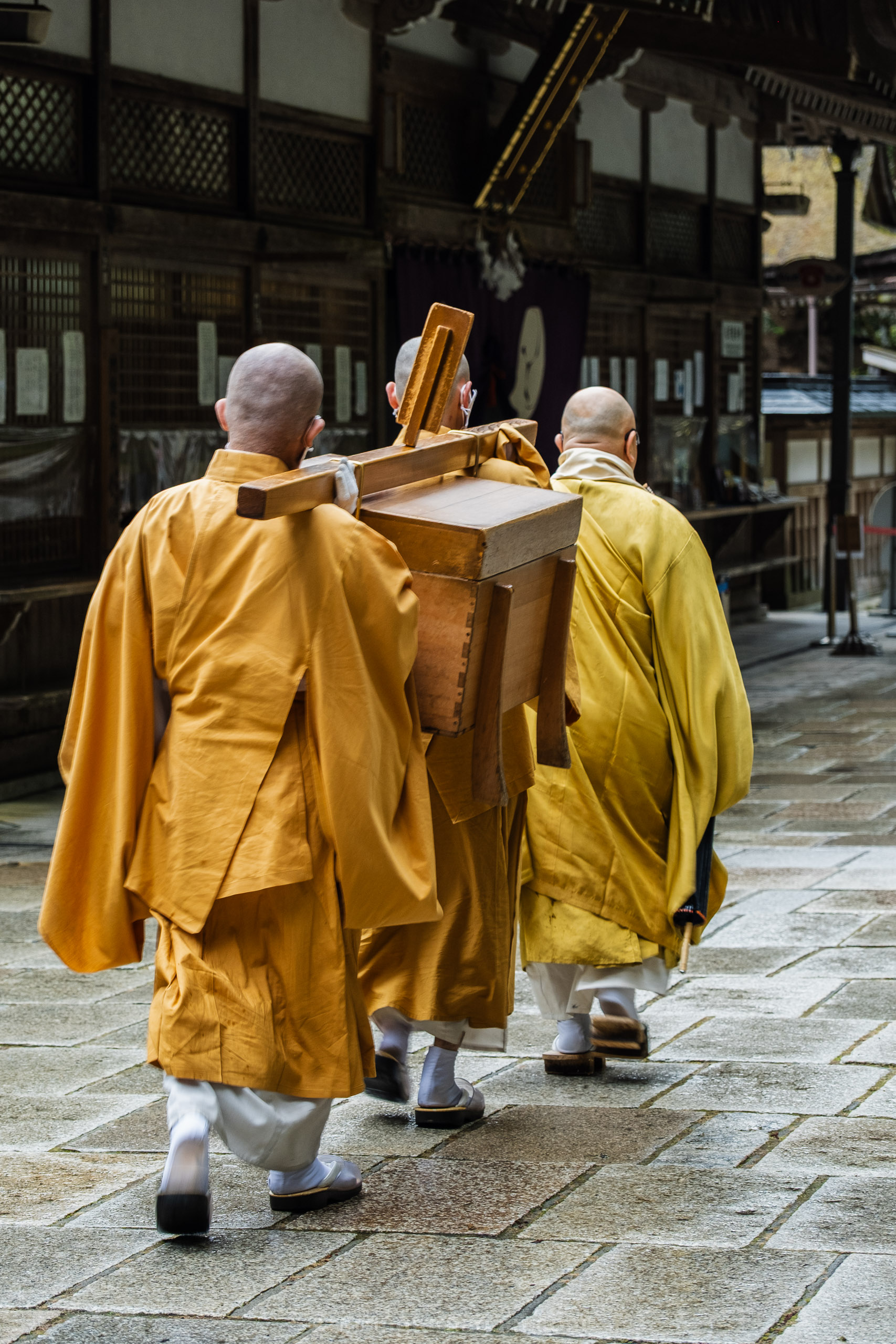
- Kobo Daishi’s Mausoleum: Behind the hall lies the tomb of Kobo Daishi. According to Shingon belief, he is not dead; he is in eternal meditation (nyujo), awaiting the Buddha of the Future (Miroku) and praying for the salvation of all beings. Twice a day (at 06:00 and 10:30), monks carry meals to the mausoleum in a ritual called Shojingu. This tradition has continued uninterrupted for 1,200 years.
Look for the Miroku Stone (Miroku-ishi) in a small cage on the grounds. Try to lift the stone with one hand. Legend says it feels light to those with a pure heart and heavy to those carrying the burden of sin.
Best Time to Visit (Day vs. Night)
The atmosphere of Okunoin shifts dramatically with the passing of the day. Visiting at dawn or during the early morning offers a serene, almost cinematic beauty, as sunbeams filter through the ancient cedars and the scent of incense wafts along the path.
However, when darkness falls, the cemetery takes on an intensely mystical quality. Lit only by faint stone lanterns and moonlight, the forest feels alive with history. If you have the chance, walking the path at night—or joining a guided Okunoin Night Tour—is an unforgettable way to experience the spiritual weight of the mountain behind the shadows.
8. Nyonin-michi Trail
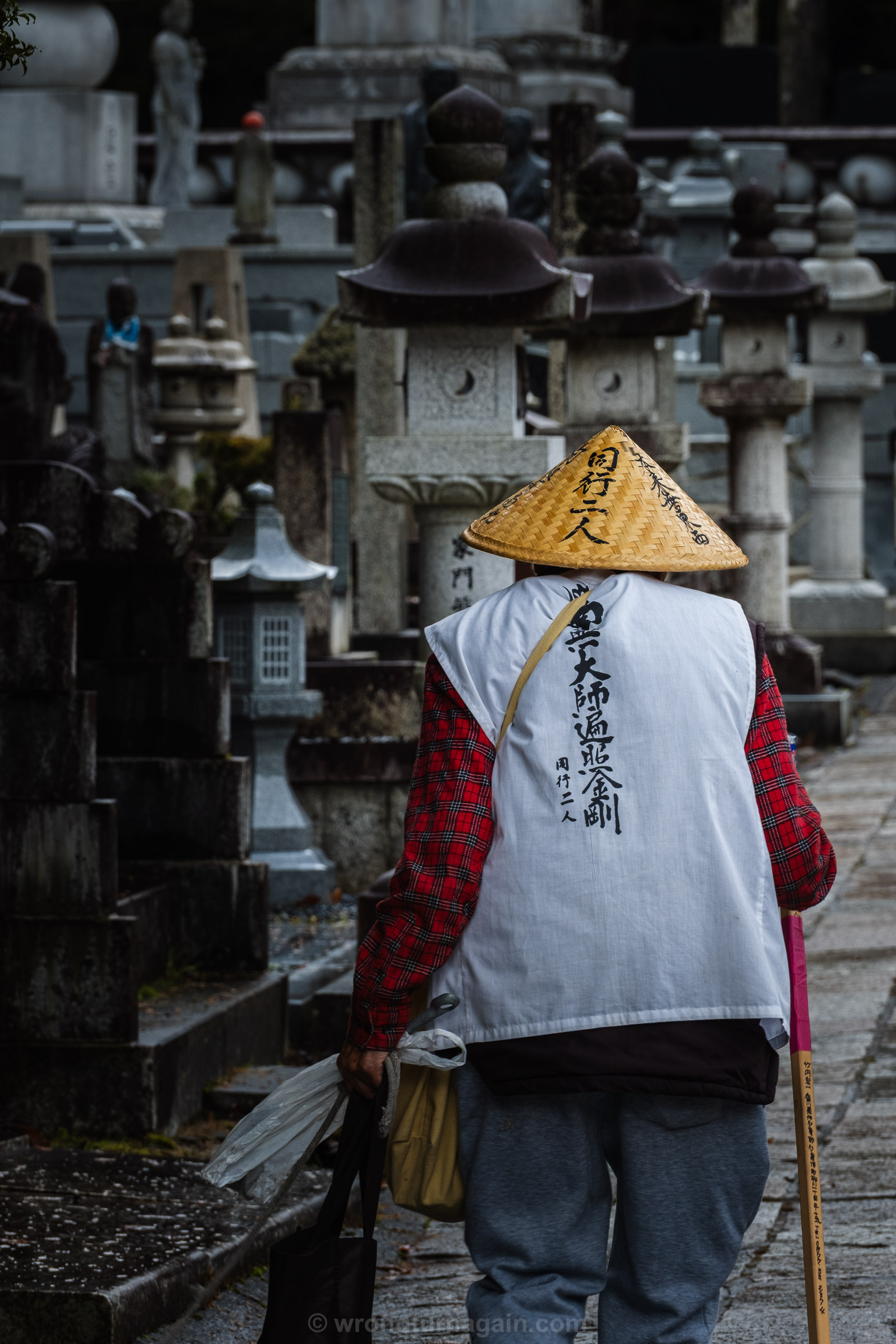
If you want to experience Koyasan beyond the main temples, hiking the Nyonin-michi Trail is one of the most authentic activities available. Translating to the “Women’s Pilgrimage Route,” this circular trail traces the ancient boundaries of the sacred mountain, offering peace and solitude away from the crowds.
For over a millennium —until the late 19th century— women were strictly banned from entering the central temple complex of Koyasan, which was reserved for the monks’ ascetic training. Instead, female pilgrims would walk this perimeter path, stopping at seven entrances (guchi) to pray towards the sanctuary they were forbidden to enter.
The Hike: The trail is clearly marked and winds through serene cedar forests and gentle slopes. The full loop covers approximately 16 kilometers and takes about 5–6 hours to complete. It typically starts at the Daimon Gate and connects the sites of the seven historic gates, eventually leading to Fudozaka-guchi, home to the only surviving Nyonin-do Hall(Women’s Hall).
How to Get to Koyasan
Koyasan (Mount Kōya) is located deep in the mountains of Wakayama Prefecture, approximately 80km south of Osaka. As part of the UNESCO World Heritage site “Sacred Sites and Pilgrimage Routes in the Kii Mountain Range,” it is a destination that requires a bit of effort to reach.
However, the journey itself—winding through deep valleys or ascending via a steep cable car—is an essential part of the transition from the secular world to this sacred plateau.
By Car
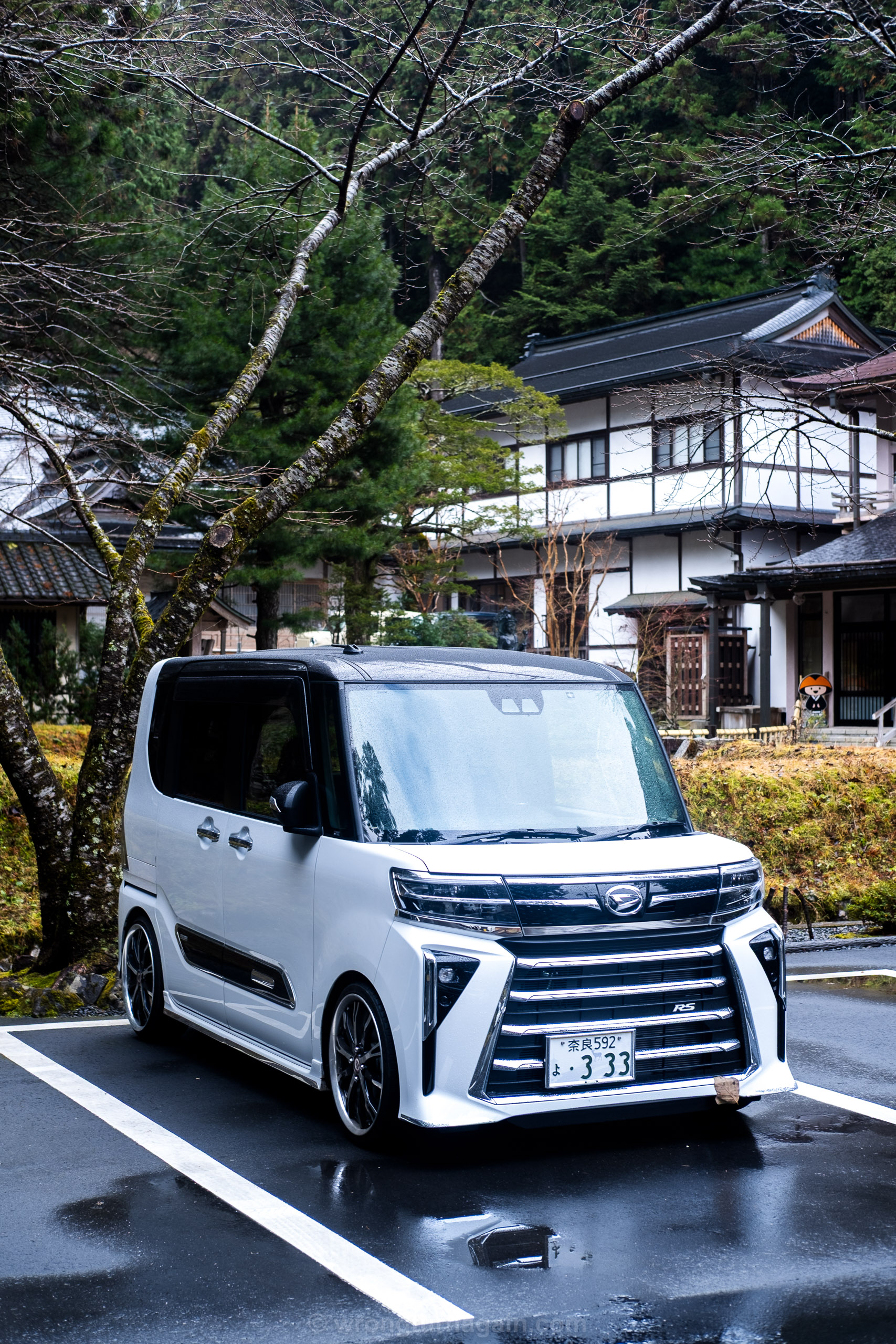
You can reach Koyasan via National Route 480. The final stretch (Hashimoto to Koyasan) is narrow and winding but offers beautiful mountain views.
Parking: Cars are allowed in the village, but roads are narrow. We recommend the large free parking lots at Daimon Gate or next to Okunoin-mae. Smaller paid lots exist along the main road.
3-Day Road Trip Idea: Osaka/Kyoto > Koyasan (1N) > Hongu Taisha > Yunomine Onsen or Nachikatsuura (1N) > Nachi Falls
By Public Transport from Osaka
This is the standard route. We recommend the Koyasan World Heritage Digital Ticket to save money.
From Namba Station or Shin-Imamiya Station, take the train to Gokurakubashi Station.
From Gokurakubashi, transfer to the Koyasan Cable Car. It climbs 340 meters.
At the top station, take the Nankai Rinkan Bus to Danjo Garan, Kongobuji, or Okunoin.
If you prefer to walk, you can hike from Gokurakubashi Station following this trail.
By Public Transport from Kyoto
From Kyoto Station, take the JR or Kintetsu Line to Osaka (Namba Station). Then follow the “From Osaka” directions above.
Operated from April to November. Check availability here.
Prefer to have all logistics handled for you?
Book this organized day trip from Osaka
Getting around Koyasan
Koyasan is a plateau town stretching about 3 kilometers from west to east. While the town is compact and walkable, the most efficient way to see all major sites without exhaustion is to combine walking with the local bus system.
The Nankai Rinkan Bus connects all major attractions, running frequently (every 15–20 minutes) between 07:30 and 17:45. Single fares range from ¥210 to ¥430.
Don’t pay per ride. The Koyasan World Heritage Ticket is your best friend here. It covers your round-trip train from Osaka, the cable car, and includes unlimited bus rides within Koyasan for two consecutive days. It is available as a physical ticket at Nankai stations or digitally here.
Recommended Walking Route
Hand-picked for this route
Where to Eat in Koyasan
Dining in Koyasan isn’t just about sustenance; it is a spiritual extension of your stay. If you book a night at a shukubo (temple lodging), your meals will likely be prepared by the monks themselves, serving as a prime example of Shojin Ryori.
Rooted in the ancient principle of ahimsa (non-violence), this traditional Buddhist cuisine respects all forms of life, strictly excluding meat and fish to create a meal designed to purify both body and mind.
It’s not just meat that is forbidden. Shojin Ryori also excludes “pungent roots” like garlic and onion, as they are believed to disturb spiritual focus. Instead, monks strive for the “Rule of Five” (go-mi, go-shoku): every meal must perfectly balance five colors, five flavors, and five cooking methods.
If you aren’t staying overnight, you can still experience Shojin Ryori or light Japanese dishes at small restaurants and cafes lining Koyasan Chuo-dori, the town’s main street.
Lunch & Dining
Cafes & Light Bites
Where to Stay in Koyasan: The Shukubo Experience
To truly understand Koyasan, you shouldn’t just visit; you must stay. Spending a night at a shukubo (temple lodging) is the highlight of any trip here. Over 50 active temples welcome guests, inviting you to step into the quiet rhythm of monk life.
Accommodation is limited, especially during spring and autumn. Temples fill up months in advance, so book as early as possible via the Koyasan Shukubo Association or booking sites.
What to Expect from a Temple Stay
Rooms are traditional Japanese style, featuring tatami floors, sliding shoji screens, and futon bedding. Most temples have shared baths and toilets (often gender-segregated), though some offer private restrooms in upgraded rooms. Amenities are minimalist—expect no TVs or loud music, just silence. Dinner is served early (around 17:30) and features exquisite Shojin Ryori.
However, the spiritual core of the stay begins the next morning around 06:00 with the Otsutome (morning service). You will hear the chanting of sutras accompanied by the rhythmic sound of the mokugyo (wooden fish drum). Depending on the temple, you may also experience Ajikan meditation, Shakyo (sutra copying), or the powerful Goma fire ritual for spiritual purification.

Our Top Koyasan Temple Picks
 KOMYO-IN
Famous for its stunning moss and rock gardens. A peaceful, authentic retreat serving delicious Shojin Ryori.
 EKO-IN TEMPLE
The most foreigner-friendly choice offering daily Goma fire rituals, meditation classes, and the Okunoin night tour.
 FUDO-IN TEMPLE
A historic temple offering a luxury experience with exquisite architecture, spacious rooms, and high-end cuisine.
When to Visit Koyasan
The most spectacular time to visit Koyasan is from late October to mid-November, when the forests—particularly around Danjo Garan and Okunoin—are painted in fiery reds and golds by the maple and ginkgo trees. Spring is equally enchanting (late April to mid-May), offering a second wave of cherry blossoms long after they have fallen in Kyoto, accompanied by vibrant fresh greenery.
Winter (December to February) transforms the mountain into a silent, snowy sanctuary. While temperatures frequently drop below freezing, the temples remain open, and the atmosphere becomes profound, mystical, and blissfully free of crowds.
Key Festival: Mieku-e
On March 21st, Koyasan holds its most significant annual ceremony, the Mieku-e, honoring Kobo Daishi on the day he entered eternal meditation. Before dawn, thousands of pilgrims walk silently toward the Okunoin mausoleum carrying lanterns—a deeply moving ritual that is a highlight of the Buddhist calendar.
How Long to Stay in Koyasan
To truly experience the spiritual essence of the mountain, one night at a temple (shukubo) is essential. This allows you to see the town in the quiet morning mist before the day-trippers arrive and to walk the lantern-lit paths at night. While a day trip from Osaka or Kyoto is possible, the long travel time makes an overnight stay the far superior choice.
Koyasan Budget Breakdown
Visiting Koyasan is generally affordable, with one major exception: the accommodation. Staying at a temple (shukubo) significantly raises the budget, but considering it typically includes lodging and two elaborate Shojin Ryori meals (dinner and breakfast), it is a once-in-a-lifetime experience that offers excellent value for money.